

News
News Center
CCTV: Stem cells help a cerebral palsy patient take their first steps in over 20 years.
来源:CCTV-10
2021-05-25
On the second day after Tang Dezhen underwent his third stem cell transplant, He took his very first step in life. After more than 20 years, Tang Dezhen finally managed to stand up and take his first steps—so much so that he even burst into an excited shout.
Due to a lack of oxygen to his brain at birth, Tang Dezhen was diagnosed with cerebral palsy. For more than 20 years, he had never been able to stand up—walking on his own had always been his deepest desire. But after undergoing stem cell transplantation therapy, he finally managed to stand and take his first steps!
Currently, there is no effective treatment for cerebral palsy. In recent years, research into stem cell transplantation as a therapy for cerebral palsy has been steadily increasing, opening up promising new avenues for treatment. Human embryonic stem cells, in terms of both morphology and function, exhibit neuronal characteristics, forming synaptic connections with host neurons, receiving electrical impulses transmitted by the host cells, and integrating seamlessly with the patient's brain—ultimately enabling regenerative processes that could offer a fundamental cure for cerebral palsy.
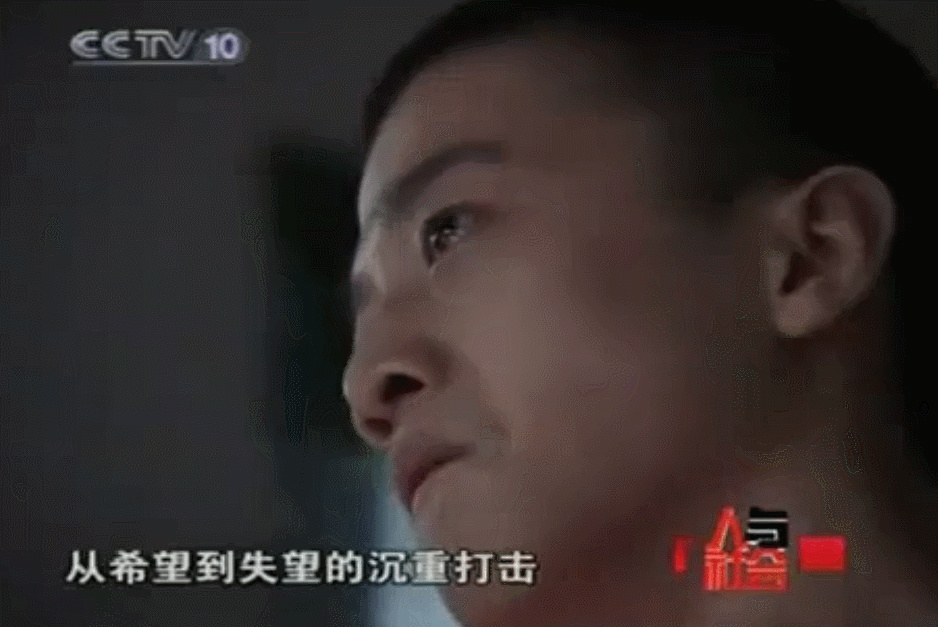
A 20-year-long journey seeking medical treatment—moving from disappointment to despair.
Tang Dezhen suffered from cerebral palsy at birth due to brain hypoxia caused by premature delivery. From an early age, he was unable to stand or walk—and until he turned ten, he essentially grew up lying across his mother's back.
But as he grew older day by day, his mom could no longer carry him on her back, so the family specially crafted a wooden chair for him—and he’s been sitting in it ever since, for over a decade.

Cerebral palsy refers to a non-progressive brain injury syndrome that occurs during the early stages of brain development, from before birth up to one month after birth, caused by a variety of factors. It primarily manifests as central motor impairments and abnormal postures, and may also be accompanied by intellectual disability, epilepsy, sensory-perceptual disorders, speech difficulties, and behavioral or psychological abnormalities. This condition is one of the leading causes of physical mobility disabilities in children.
Tang Dezhen's cerebral palsy has left him with slurred speech, a twisted body that prevents him from standing, and an inability for his brain to control his limb movements. For more than 20 years, he has spent his days confined to a wheelchair. My biggest wish is simply to be able to stand up, even if only for a brief moment.
To help their son stand on his own, the family has made tremendous efforts. Every day, Tang Dezhen diligently "picks corn"—carefully gathering each kernel one by one into a basin—to improve his finger dexterity and coordination. While this task is incredibly simple for most people, it’s exceptionally challenging for Tang Dezhen. Yet, despite the difficulty, he perseveres with his training for four to five hours each day, firmly believing that one day, a miracle will happen.
Over the years, his family has traveled to major hospitals across the province, embarking on a long and arduous journey in search of treatment—but unfortunately, the results have always fallen short of expectations. Cerebral palsy in Tang Dezhen is a global challenge, and unfortunately, it remains nearly incurable.
Meanwhile, this family, which was never well-off to begin with, started facing financial strain, and its members, feeling their hopes slipping away, began to lose all sense of hope.
Stem Cell Transplantation: Hope in Despair
Just when the whole family was feeling hopeless, things suddenly took a turn for the better.
One morning, Tang Dezhen was watching TV at home when he happened to catch a program showcasing stem-cell transplantation technology used to treat children with cerebral palsy. This instantly reignited his hope for recovery, as it was the most advanced treatment method he had encountered in over 20 years of battling the illness. He firmly believed that this groundbreaking technique would surely help improve his condition.
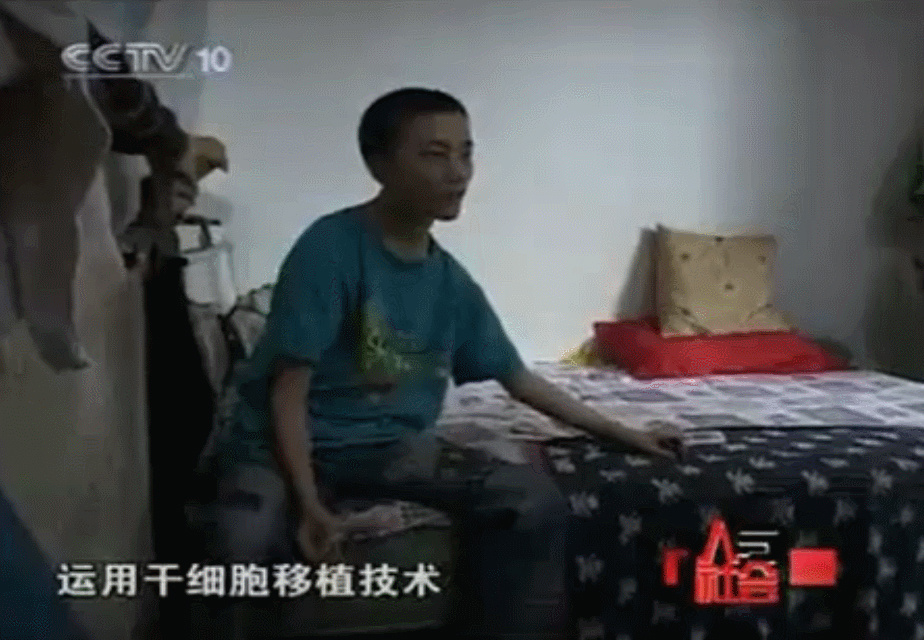
So, filled with hope, the family traveled to this hospital in Shenyang, renowned for its expertise. However, their optimism quickly turned to disappointment, as the hospital has recently been treating mostly children with cerebral palsy aged 10 to 15—and has never before admitted a patient older than 20. This presents a significant challenge for the hospital.
After some persuasion—and with a "let's give it a shot" attitude—the hospital finally agreed to admit Tang Dezhen, and soon he was wheeled into the operating room for the long-awaited stem-cell therapy.

After a series of pharmacological responses, Tang Dezhen’s cerebral palsy symptoms indeed showed noticeable improvement. Combined with a period of rehabilitation training, Tang Dezhen’s limb mobility has significantly enhanced.
And most excitingly, Just the day after Tang Dezhen completed his third stem cell transplant, he took his very first step in life. After more than 20 years, Tang Dezhen finally managed to stand up and take his first steps—so much so that he even burst into an excited shout.

The mother, who had waited 20 years for her son to stand, finally shed tears of happiness, while the medical staff couldn’t help but feel deeply moved and joyful for him.
After being discharged from the hospital, Tang Dezhen returned home but continued to stick to his exercise routine. Over the course of more than a year of rehabilitation training, his physical condition has dramatically improved—now he can not only eat independently but also walk on his own for over three hours!
Most heartening of all, his cognitive abilities have also significantly improved—now, he can almost recite both the complete map of China and the world map by heart. For Tang Dezhen, who lived with cerebral palsy for more than two decades, these achievements are nothing short of miracles. Thanks to stem cell transplantation technology, he’s finally been able to fulfill his deepest aspirations.
Today, stem cell technology has become increasingly advanced, demonstrating remarkable therapeutic efficacy in the treatment of many challenging and complex diseases, and offering new hope to patients suffering from conditions that were once considered incurable.
Related News

Here is the title—h1 placeholder text


Copyright © Jiuzhitang Maker (Beijing) Cell Technology Co., Ltd.
Powered by: 300.cn SEO | Privacy Policy