

News
News Center
World Hepatitis Day | Stem Cells Offer New Pathways for Treating Liver Cirrhosis
2020-07-28
Hepatitis is an inflammation of the liver, with viral hepatitis being the most common type. Other causes include autoimmune conditions and alcohol abuse.
Viral hepatitis is classified into types A, B, C, D, and E, with hepatitis B and C being particularly concerning as they can lead to liver cirrhosis and liver cancer, placing a significant disease burden on people worldwide.
According to the World Health Organization, approximately 2 billion people worldwide have been infected with the Hepatitis B virus (HBV), among whom 240 million are chronic HBV carriers[1]. China is a major country affected by liver diseases, with an estimated 93 million people living with chronic hepatitis B infection.
In China, the leading factor causing liver cirrhosis is hepatitis B. Hepatitis B patients who fail to maintain healthy lifestyle habits significantly increase their risk of developing liver cirrhosis.
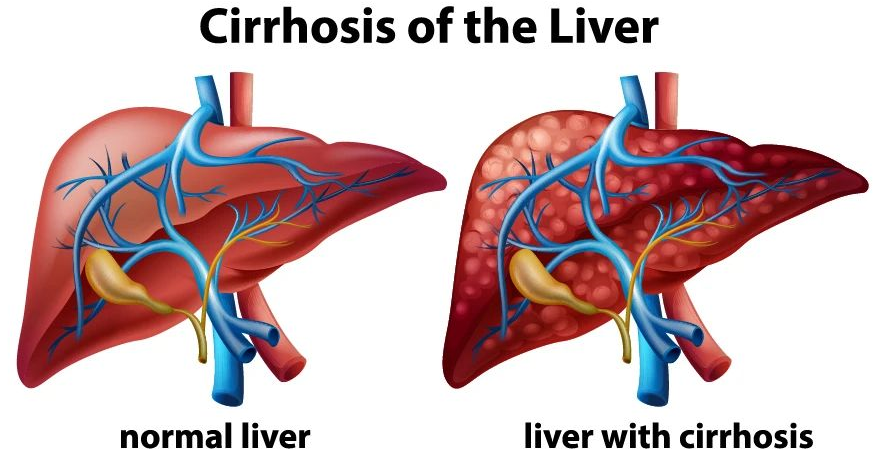
A comparison image of a normal liver versus a cirrhotic liver
Although liver transplantation is the most effective treatment for liver cirrhosis, its widespread adoption remains limited due to challenges such as the shortage of donor organs, high surgical costs, and postoperative rejection risks. As a result, research into alternative interventions for liver cirrhosis has become a major focus in the medical community [2].
Stem cells offer a new pathway to recovery for treating liver cirrhosis.
Stem cells hold vast potential for applications in immune regulation, reducing inflammatory responses, and promoting tissue repair. As our understanding of stem cells continues to deepen through ongoing research, they are poised to play an even greater role in the treatment of liver cirrhosis.
Research has revealed that the self-renewal and multidirectional differentiation capabilities of stem cells make them ideally suited for treating liver diseases. After stem cells are infused into damaged livers, patients experience a significant reduction in oxidative stress, inflammatory responses, and hepatocellular necrosis, leading to a marked improvement in liver injury severity. In clinical studies involving patients with liver damage, stem cell therapy not only helps curb inflammatory reactions but also enhances immune function, ultimately prolonging postoperative survival. Building on these findings, scientists have proposed the innovative approach of using stem cell transplantation as an alternative to traditional liver transplantation [3].
The Mechanism of Stem Cell Therapy in Treating Liver Cirrhosis
There is extensive research on using stem cell transplantation to treat liver cirrhosis, and the currently accepted mechanisms of action primarily include the following aspects:
1. Promotes the regeneration of hepatocytes. Mesenchymal stem cells release nutrients and various cytokines that enhance the local liver microenvironment, thereby stimulating the regeneration of both parenchymal and interstitial cells within the liver [4-5].
2. Immunomodulatory effects: Mesenchymal stem cells regulate both innate and adaptive immune responses through multiple pathways, helping to reduce the secretion of various inflammatory factors and preventing ongoing liver damage [6].
3. Inhibits the activation of hepatic stellate cells, thereby slowing down the progression of liver fibrosis. Hepatic stellate cells (HSCs) play a central role in the development and progression of liver fibrosis. When factors such as ongoing liver cell inflammation persist, HSCs become activated. Once activated, these cells accelerate liver tissue fibrosis by proliferating and secreting extracellular matrix components. Mesenchymal stem cells have been shown to suppress the activation of hepatic stellate cells [7].
4. Mesenchymal stem cells directly differentiate into hepatocytes. Extensive research has confirmed that mesenchymal stem cells can be induced to differentiate into hepatocytes in vitro. Animal studies have also demonstrated that mesenchymal stem cells can similarly differentiate into hepatocytes in vivo, effectively repairing liver damage [8].
Clinical Advances in Stem Cell Therapy for Liver Cirrhosis
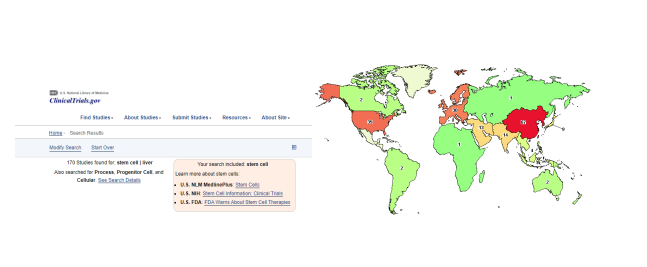
As of July 2020, there were 170 clinical research projects registered in the U.S. Clinical Trials database that focus on stem cell therapy for liver diseases, with 74 of these specifically targeting liver cirrhosis. Preliminary results from some published clinical trials have demonstrated promising efficacy of stem cells in treating liver cirrhosis.
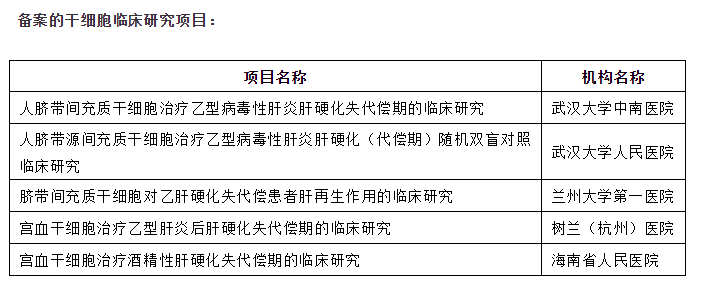
Currently, five clinical research projects in China focusing on stem cell therapy for liver cirrhosis have completed registration in accordance with the "Provisional Measures for the Administration of Clinical Research on Stem Cells" (Guo Wei Ke Jiao Fa [2015] No. 48), and most of these projects have already been launched.
Meanwhile, many universities and hospitals across the country have also conducted clinical studies on the therapeutic efficacy of stem cell treatment for liver cirrhosis.
Clinical study results from Songgang People's Hospital in Shenzhen, Guangdong Province, involving 80 patients with hepatitis B-related liver cirrhosis, indicate that mesenchymal stem cell-assisted therapy can improve liver function and slow disease progression in these patients, demonstrating significant clinical benefits [9]. Twelve patients with decompensated liver cirrhosis admitted to the Affiliated Hospital of Shandong Medical College received intravenous infusions of mesenchymal stem cells. The results demonstrated that mesenchymal stem cell transplantation is safe and feasible, effectively alleviating clinical symptoms in liver cirrhosis patients and showing promising reparative effects on liver tissue function [10].
The 153rd Hospital of the People's Liberation Army treated 67 patients with decompensated alcoholic liver cirrhosis. Among them, 33 alcohol-related liver cirrhosis patients (average age 54) underwent conventional combined stem cell transplantation, while 34 patients receiving standard care served as the control group. After a 2-month follow-up, serum levels of TBIL, ALB, PT, and HA were assessed in the observation group [11].
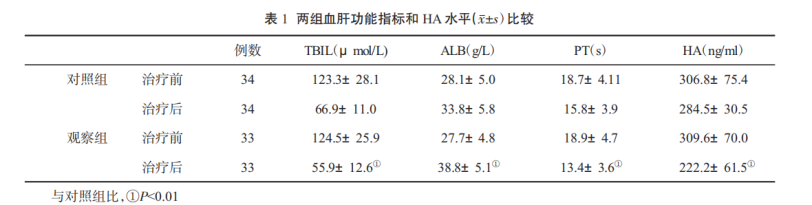
A comparison of serum liver function markers and HA levels between the two groups revealed that, after 2 months, the stem cell group showed more significant improvements in all measured parameters compared to the control group, indicating a marked enhancement in patients' liver function [11].
Outlook
As clinical trials leveraging stem cells for the treatment of liver cirrhosis continue to expand and research deepens, the mechanisms underlying stem cell therapy for liver cirrhosis will become better understood. Looking ahead, stem cell therapy holds great promise as a new frontier in treating liver cirrhosis—and could ultimately help transform the current landscape of liver cirrhosis treatment in our country.
References:
[1] Jin Caiting, Guo Liwei, Liang Weifeng. Advances in Non-invasive Serum Diagnostic Markers for Hepatic Fibrosis in Chronic Hepatitis B[J]. Chinese Journal of Experimental and Clinical Infectious Diseases (Electronic Edition), 2018, 12(1):11-14.
[2] J. Byam, J. Renz, J.M. Millis, Liver Transplantation for Hepatocellular Carcinoma. Hepatobiliary Surg. Nutr., 22–30 (2013)
[3] Locke JE, Shamblott MJ, Cameron AM. Stem cells and the liver: clinical applications in transplantation. Adv Surg, 2009, 43:35-51.
[4] Du Z, Wei C, Cheng K, et al. Mesenchymal stem cell-conditioned medium reduces liver injury and enhances regeneration in reduced-size rat liver transplantation. J Surg Res, 2013. doi:10.1016/j.jss.2013.02.009.
[5] Yu Y, Yao A-H, Chen N, et al. Mesenchymal stem cells overexpressing hepatocyte growth factor enhance regeneration of small-for-size liver grafts. Mol Ther, 2007, 7:1382-1389.
[6] Prockop DJ, Oh JY. Mesenchymal stem/stromal cells (MSCs): their role as guardians of inflammation. Mol Ther, 2012, 20:14-20.
[7] Parekkadan B, van Poll D, Megeed Z, et al. Immunomodulation of activated hepatic stellate cells by mesenchymal stem cells. Biochem Biophys Res Commun, 2007, 2:247-252.
[8] Zhang Yi, Fan Yulan, Zhao Liansan, et al. In vivo differentiation of mouse bone marrow mesenchymal stem cells into hepatocytes. Journal of Biomedical Engineering, 2005, 3:521-524.
[9] Luo Guijin, Lei Pingguang. The Effects of Human Umbilical Cord Mesenchymal Stem Cell-Assisted Therapy on Liver Function, Fibrosis Markers, and Inflammation Levels in Patients with Hepatitis B-Related Liver Cirrhosis. Hainan Medical Journal. 2016. 22(11): 1069-1072.
[10] Xue Chao, Ma Wenna, et al. Clinical Efficacy of Umbilical Cord Mesenchymal Stem Cells in Treating 12 Cases of Decompensated Cirrhosis. Chinese Journal of Hepatology, 2020, 25(1): 66-68.
[11] Jiao Shuanlin, Zhao Xiaorui, Ouyang Hong, et al. Efficacy Analysis of Autologous Bone Marrow Mesenchymal Stem Cells Combined with Hepatocyte Growth Promoter in Treating Decompensated Alcoholic Liver Cirrhosis. Practical Journal of Hepatology, 2017, 20(6): 773-774.
Previous:
Related News

Here is the title—h1 placeholder text


Copyright © Jiuzhitang Maker (Beijing) Cell Technology Co., Ltd.
Powered by: 300.cn SEO | Privacy Policy