

News
News Center
"Nature" Sub-journal: Stem Cell Technology Revives Aging Cells
2020-04-16
Human aging is an inevitable natural process, but a report published on March 24 in *Nature Communications* reveals that scientists at the Stanford University School of Medicine have successfully used a type of messenger RNA (mRNA)—one that cannot "survive" long-term—to briefly induce the expression of Yamanaka factors. This temporary manipulation triggered partial reprogramming in aged human somatic cells, rejuvenating the cells and reversing the effects of aging at the cellular level.
The study found that briefly inducing these proteins in aged cells grown in laboratory petri dishes can reverse many molecular signs of aging, making the treated cells nearly indistinguishable from their younger counterparts.
By comparing methylation patterns that indicate cellular age, treated aged cells were found to be, on average, 1.5 to 3.5 years younger than untreated aged cells—while vascular cells even showed a remarkable rejuvenation of up to 7.5 years.
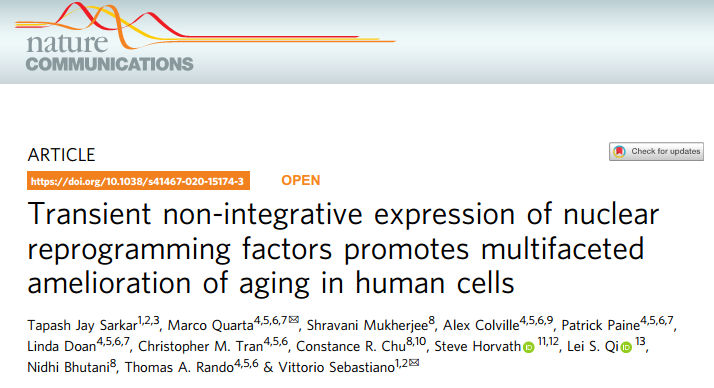
Yamanaka factors can reverse aging.
To determine whether this therapy could also be applied for broader anti-aging purposes, researchers prompted muscle stem cells from aged mice to express a specific set of proteins that are essential for embryonic development in the short term. They found that, after being transplanted back into the aged mice, these cells helped restore youthful strength to the animals.
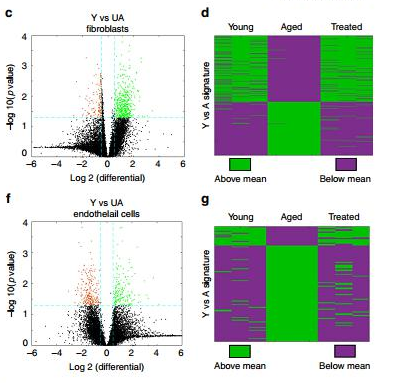
After transplantation, the gene expression in mice differentiated toward that of young endothelial cells.
A set of proteins that stimulate stem cells to express themselves are known as Yamanaka factors (note: the Yamanaka factors are Oct4, Sox2, Klf4, and c-Myc). These factors play a critical role in reprogramming adult cells into induced pluripotent stem cells (iPS cells), which have the remarkable ability to differentiate into nearly any type of human cell. This unique potential makes iPS cells a key focus in drug discovery and regenerative medicine research.
A research team at Stanford University has demonstrated that, during the process of reprogramming senescent cells derived from elderly individuals to express Yamanaka factors, many hallmarks of cellular aging are reversed—resulting in cells that closely resemble their younger counterparts.
Reversing aging extends mice's lifespan by 20%.
A team of researchers created iPS cells by exposing adult iPS cells to an in vivo environment.
Within two weeks, adult cells are exposed to brief RNA messages that carry the genetic instructions for producing Yamanaka proteins. Over time, these proteins work to reverse the cellular development timeline, prompting the cells to revert back to a pluripotent state—similar to that of an embryo.
During this process, these cells not only shed any memories tied to their previous identities but also regain a youthful state. They accomplish this transformation by erasing molecular tags embedded in their DNA—tags that not only distinguish between skin cells and heart muscle cells, but also help differentiate other age-related markers that accumulate as cells grow older.
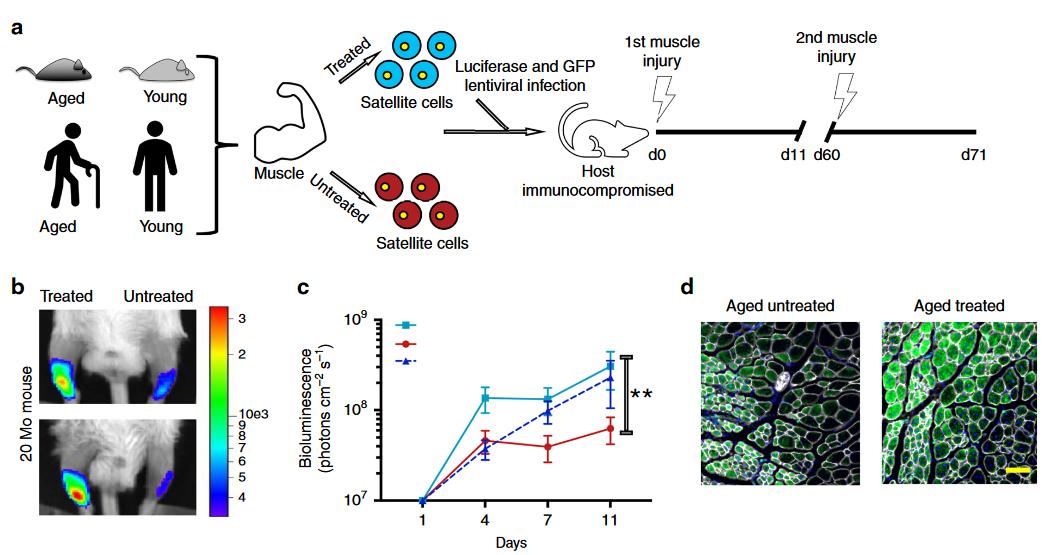
OSKMNL instantly restored the tissue-regenerating ability of MuSCs cells.
Additionally, to determine whether human cells function in the same way, researchers at Stanford University designed an experiment in which they used messenger RNA to briefly activate the expression of four Yamanaka factors—along with two other proteins—in vascular and skin cells from older adults. Because messenger RNA degrades quickly within cells, the duration of exposure to these factors can be precisely controlled. The researchers then analyzed the gene-expression patterns of these treated human cells, comparing them to those of control cells also derived from older individuals, as well as to untreated cells obtained from younger participants.

After the reply, a clear comparison shows the cells have visibly rejuvenated.
The results show that, in human cell experiments, the treated cells exhibited signs of age reversal after four days of exposure, with significantly lower levels of genes associated with various aging pathways compared to untreated, aged cells. In mouse studies, gene expression analysis revealed that the treated aged cells became more similar to young cells, leading to a 20% extension in the lifespan of prematurely aged mice.
Researchers analyzed the cells' methyl groups, which can reveal chronological age. Using this method, they found that treated cells appeared, on average, 1.5 to 3.5 years younger than untreated older cells—though in some cases, vascular cells showed an even greater rejuvenation, becoming as much as 7.5 years younger.
Stem cells, emerging as a rising star in the fields of biology and regenerative medicine, hold immense significance for human health and addressing population aging. In recent years, as stem cell research has deepened, their potential in anti-aging applications has been increasingly validated. We believe that with the continuous advancement of stem cell technology, humanity will ultimately reap the benefits of this groundbreaking approach to combating aging!
References: www.eurekalert.org/pub_releases/2020-03/sm-ohc032220.php
Reprint Notice: This article is reprinted from Stem Cell Talk.
Related News

Here is the title—h1 placeholder text


Copyright © Jiuzhitang Maker (Beijing) Cell Technology Co., Ltd.
Powered by: 300.cn SEO | Privacy Policy