

News
News Center
Stem cells hold promise in bringing hope to patients suffering from intractable, degenerative diseases.
2020-03-25
Stem cells, simply put, are a type of primordial cell capable of self-renewal and differentiating into various tissue-specific cell types. They act as the body's "engineer cells," ready to step in whenever other cells, tissues, or organs are damaged, inflamed, or when homeostasis within the body is disrupted. In such cases, stem cells can serve as the progenitor cells for blood, bone, skin, muscle, and more—ultimately differentiating into the specialized cells the body needs.
According to preclinical and some clinical studies, stem cell therapy holds promise for treating several challenging, degenerative diseases. In the future, as stem cell technology continues to advance and breakthroughs in related fields emerge, stem cells will benefit even more patients. The differentiation of stem cells
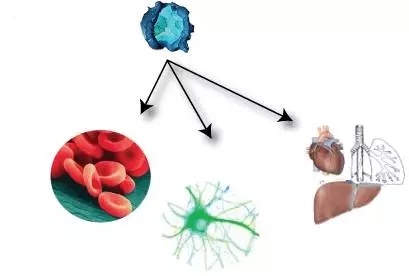
Stem cell differentiation
Stem cells hold promise for treating spinal cord injuries.
Spinal cord injury is a relatively common yet severely consequential type of trauma. It typically results in partial or complete paralysis below the site of injury, leaving patients with lifelong disabilities. In cases of high-level injuries, such as those affecting the cervical spine, patients often become completely dependent on others for daily living, placing a profound and lasting burden on both the individuals themselves and their families.
At the beginning of 2020, Mohamad Khazaei and colleagues discovered that Notch activation induced by spinal cord injury in the rodent spinal microenvironment biased the fate of neural progenitor cells (NPCs) transplanted into these animals toward astrocytes. During their screening for clinically relevant factors capable of modulating the Notch signaling pathway, they identified glial cell line-derived neurotrophic factor (GDNF). Importantly, GDNF attenuated Notch signaling by promoting the expression of DLK1 (delta-like 1 homolog)—a process unrelated to GDNF’s well-known role in enhancing cell survival. When transplanted into a rodent model of cervical spinal cord injury, human induced pluripotent stem cell–derived NPCs expressing GDNF (hIPSC-NPCs) exhibited a significantly higher propensity to differentiate into neurons compared to control cells. Moreover, GDNF expression not only protected the host tissue but also enhanced the electrical integration of the transplanted cells, collectively contributing to improved recovery of neurological function. These findings suggest that modulating the disrupted spinal microenvironment could enhance functional outcomes following NPC transplantation.
In December 2019, Yasuhiro Shiga and colleagues added an improved form of tissue-type plasminogen activator (tPA) to neural progenitor cells in the laboratory. Fifteen minutes later, they injected either tPA-treated or untreated neural progenitor cells into a rat model with severe spinal cord injuries. Two months after treatment, they observed that the tPA-treated neural progenitor cells had proliferated 2.5 times more than their untreated counterparts. Moreover, the tPA-treated cells had already begun differentiating into mature neurons. Most remarkably, four months post-treatment, the rats showed a threefold improvement in motor function.
In early 2019, Japan conditionally approved for market a mesenchymal stem cell therapy designed to treat spinal cord injuries. The therapy, named Stemirac, involves first extracting about 50 milliliters of bone marrow fluid and blood from the patient, then isolating the mesenchymal stem cells. These cells are subsequently expanded in culture to reach a count of 50 million to 200 million before being administered intravenously into the patient within 3 to 8 weeks following the injury. In clinical trials, 13 patients received the experimental treatment, and 12 of them showed significant improvements in their conditions. Specifically, 12 patients experienced at least one-level improvement in their assessment scores according to the American Spinal Injury Association’s “Impairment Scale.” Even more encouragingly, one patient who had been completely paralyzed regained the ability to move their feet after undergoing the treatment. The conditional approval allows the company to begin selling this therapy while granting them seven years to demonstrate its effectiveness. Over the next seven years, the team will need to collect comprehensive data from participants and provide robust evidence proving that the treatment delivers meaningful therapeutic benefits.
However, regarding this conditional approval, experts internationally have expressed differing views in a Nature News article, arguing that the therapy still lacks large-scale, double-blind studies to fully validate its effectiveness. According to the current data, the clinical trials demonstrating efficacy were conducted on just 13 participants—and crucially, without a control group—making this conditional approval seem overly hasty.
In August 2018, researchers from the School of Medicine at the University of California, San Diego, reported that they had successfully generated spinal cord neural stem cells (NSCs) using human pluripotent stem cells (hPSCs). These spinal cord NSCs differentiated into distinct cell populations capable of spreading throughout the entire spinal cord—and crucially, they could be maintained over an extended period. After transplanting the hPSC-derived spinal cord NSCs, grown in vitro, into damaged rat spinal cords, the researchers observed that the grafts were rich in excitatory neurons, enabling numerous axons to extend over long distances. As a result, the target structures formed by these neurons received robust neural innervation, ultimately facilitating strong and functional corticospinal regeneration.
Stem cells show promise in treating ALS.
Amyotrophic Lateral Sclerosis (ALS), commonly known as "Lou Gehrig's disease," is a chronic, progressive neurodegenerative disorder that affects motor neurons in the spinal cord's anterior horn cells, brainstem motor nuclei, and corticospinal tracts. It is characterized by the simultaneous degeneration of both upper and lower motor neurons, leading to progressively worsening muscle atrophy, weakness, and signs of pyramidal tract involvement. ALS is a fatal condition, with 80% to 90% of patients succumbing to the disease within 3 to 5 years of symptom onset—typically due to bulbar paralysis, respiratory muscle failure, or severe lung infections.
In July 2016, BrainStorm Cell Therapeutics Inc. conducted a randomized, double-blind, placebo-controlled Phase II clinical trial. Initial results indicated that adult stem cell therapy (NurOwn) transplantation was safe and well-tolerated in ALS patients, with the potential to yield clinically meaningful benefits. During treatment, certain inflammatory markers in the treatment group showed statistically significant reductions, a trend not observed in the placebo group.
In June 2016, a Phase II clinical trial for ALS patients enrolled 15 participants, who were randomly assigned to five treatment groups and received varying doses of stem cell injections. The study was an open-label trial—not double-blind—meaning the patients knew they were undergoing stem cell therapy.
All participants received bilateral stem cell injections into the cervical spinal cord between the C3 and C5 regions. The highest-dose treatment group also underwent bilateral injections in both the cervical spinal cord and lumbar spine, with stem cell doses ranging from 2 million to 16 million cells across the different treatment groups. Following the procedure, a 9-month follow-up was conducted, during which disease progression was assessed using the ALS Functional Rating Scale. When comparing the treated group with the control group, no significant differences were observed in the rate of disease progression between the two groups. Although the sample size was somewhat limited, the study suggests that administering stem cells directly into the patients' spinal cords is safe, paving the way for larger-scale clinical trials to further evaluate the efficacy of stem cell therapy in treating ALS.
Stem cells show promise in treating Parkinson's disease.
Parkinson's disease (PD) is a common neurodegenerative disorder, most often seen in older adults, with an average age of onset around 60. Young-onset Parkinson's disease—occurring in individuals under 40—is relatively rare. In China, the prevalence of PD among people aged 65 and older is approximately 1.7%. Most Parkinson's patients have sporadic cases, and fewer than 10% of patients have a family history of the disease.
The most prominent pathological change in Parkinson's disease is the degenerative death of dopaminergic neurons in the substantia nigra of the midbrain, which leads to a significant reduction in dopamine levels in the striatum and ultimately causes the disease.
In the past, most transplantation studies in PD have relied on human cells derived from aborted embryos. While these cells can survive and remain viable for years, they raise significant ethical concerns: the supply of fetal cells is limited, individual variations are substantial, and quality control proves challenging. As a result, only a subset of patients benefit, while others experience adverse side effects. Clinical trials using induced pluripotent stem cells were launched in Japan in 2018.
In November 2018, Yixi Chen and colleagues successfully engineered human embryonic stem cells (hESCs) resistant to Parkinson’s disease. Specifically, they employed an advanced technique called CRISPR/Cas9n to precisely remove DNA fragments from the hESCs. In doing so, they eliminated the SNCA gene, which is closely linked to the formation of toxic protein aggregates—known as Lewy bodies—that are a hallmark feature of brain cells in Parkinson’s patients. Laboratory tests revealed that these genetically edited stem cells could be differentiated into dopamine-producing neurons when grown in culture dishes. Remarkably, after being treated with a chemical agent known to induce Lewy body formation, the edited neurons failed to develop these harmful aggregates, unlike their unedited counterparts. While this breakthrough holds particularly promising implications for young Parkinson’s patients and those with aggressive forms of the disease, further validation through clinical trials in humans remains essential before it can be applied more broadly.
In October 2018, neurosurgeon Takayuki Kikuchi from Kyoto University Hospital in Japan used a technique to convert iPS cells into dopamine precursor cells that produce the neurotransmitter dopamine. These cells were then transplanted into the brain of a patient in his 50s, with 2.4 million dopamine precursor cells administered initially. The patient has shown positive progress and has not experienced any significant adverse reactions so far. If no complications arise over the next six months, an additional 2.4 million dopamine precursor cells will be implanted.
In August 2017, Jun Takahashi, a stem-cell scientist at Kyoto University in Japan, improved symptoms in monkeys with Parkinson’s disease by transplanting dopamine-producing neurons derived from human induced pluripotent stem cells (iPSCs) into their brains. Compared to the control group of crab-eating macaques that received solvent injections, the seven monkeys treated with dopaminergic neuron precursor cells—either derived from Parkinson’s patients or healthy individuals—showed a 40% to 50% improvement in symptoms over a period of at least one year. The study confirmed that these dopaminergic neuron precursors were capable of producing dopamine within the host body, though at levels roughly half those observed in healthy crab-eating macaques. Additionally, the transplanted cells successfully integrated and formed neural fibers, surviving for up to 24 months in the experiment without forming teratomas.
Hematopoietic stem cells hold promise for treating a variety of intractable diseases.
The primary sources of hematopoietic stem cells include bone marrow, peripheral blood, and umbilical cord blood. Hematopoietic stem cell transplantation can be used to treat a variety of serious conditions, such as acute and chronic leukemia, as well as certain types of malignant tumors.
In October 2019, researchers from the United States reported that hematopoietic stem cell transplantation can reverse the disease in patients with neuromyelitis optica. The patient had lost sight and the ability to walk within five years of diagnosis. However, most patients who underwent the transplant have maintained good health five years later.
In January 2019, Richard Burt and colleagues published in JAMA. A randomized clinical study showed that hematopoietic stem cell transplantation can reverse neurological impairments in patients with relapsing-remitting multiple sclerosis, with most patients experiencing either delayed or halted progression of functional decline—or showing no signs of new disease activity—over a period of more than five years.
In 2016, U.S. researchers launched the first clinical trial testing allogeneic hematopoietic stem cell therapy for mild to moderate dementia caused by Alzheimer’s disease, aiming to evaluate its safety, tolerability, and initial therapeutic effects. The study plans to enroll approximately 40 participants who have been diagnosed with mild to moderate Alzheimer’s-related dementia at least three months prior to recruitment.
The significance of stem cells in regenerative medicine and precision healthcare is undeniable—they serve as an immense source of inspiration and support for advancing life sciences. Looking ahead, as scientists continue to achieve groundbreaking discoveries, harnessing stem cells to treat challenging, degenerative diseases holds the promise of bringing hope and relief to even more patients.
Reprint Statement: This article is reprinted from BioValley.
Related News

Here is the title—h1 placeholder text


Copyright © Jiuzhitang Maker (Beijing) Cell Technology Co., Ltd.
Powered by: 300.cn SEO | Privacy Policy