

News
News Center
A delightful surprise! A patient with facial nerve paralysis showed improvement after stem cell treatment.
2020-03-24
Epidemic prevention and control is a battle fought without the sound of gunfire. Countless medical professionals have enthusiastically answered the call, bravely stepping forward to take on their responsibilities and generously facing the risks—diligently fighting on the frontlines of patient care and treatment. As of recently, the second batch of Jilin University China-Japan Friendship Hospital's medical team dispatched to Hubei has already spent over 40 grueling days and nights at Tongji Hospital’s Sino-French New City Campus. In the ward they oversee, critical cases of COVID-19 are being treated systematically, with all patients successfully stabilized and transferred out of danger. To date, a total of 51 patients have been cured and discharged, marking a crucial moment as the fight against the epidemic enters its final, decisive phase.
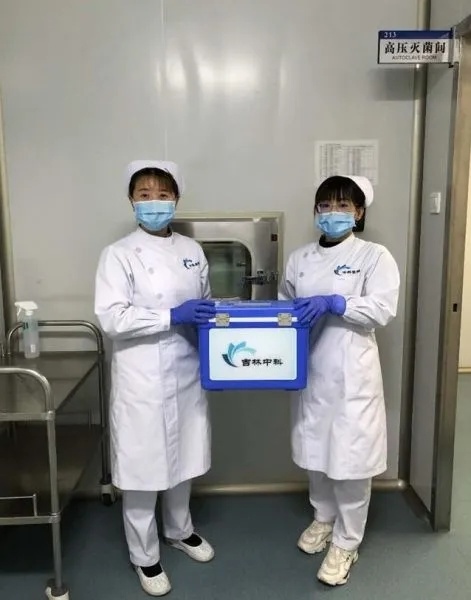
According to the "Diagnosis and Treatment Protocol for Novel Coronavirus Pneumonia" released by the National Health Commission, Jilin University China-Japan Union Hospital, as one of the country's first clinical trial bases for stem cells, has actively responded to the Ministry of Science and Technology's policy aimed at advancing stem-cell research and exploration in treating severe cases of COVID-19. Building on more than a decade of groundbreaking research, the hospital has partnered with Jilin University’s Bethune School of Medicine to launch a national-level scientific project titled "Clinical Study of Stem Cell Therapy for Multi-Organ Damage Caused by the Novel Coronavirus." This initiative systematically, rigorously, and scientifically outlines a clinical research plan for using mesenchymal stem cells to treat COVID-19, leveraging their anti-inflammatory, immune-modulating, and tissue-repairing properties. As per the study protocol, the first phase was successfully completed on March 13, yielding promising initial results. Following a clinical observation period, all critically ill patients have now fully recovered and been discharged from the hospital.
According to Liu Tianji, Vice President of the China-Japan Friendship Hospital affiliated with Jilin University, after a patient is infected with COVID-19, the virus rapidly replicates, triggering an overwhelming inflammatory response driven by excessive pro-inflammatory cytokines and chemokines. This cascade disrupts the delicate microvascular and alveolar epithelial barriers in the lungs, leading to an "cytokine storm"—a severe inflammatory reaction characterized by vascular leakage and pulmonary edema. Such inflammation not only intensifies but also causes widespread damage to lung tissue, ultimately resulting in profound hypoxia, progressive respiratory distress, and, in extreme cases, respiratory failure. Mesenchymal stem cells, on the other hand, are capable of producing and secreting cytokines that effectively combat a wide range of pathogens, including viruses. These cells play a crucial role in precisely regulating microbial infections, inflammation, and immune responses. Additionally, mesenchymal stem cells can synthesize and release various growth factors that promote the repair and regeneration of damaged blood vessels and lung tissue, helping to restore impaired organ function. As a result, they significantly improve patient outcomes while simultaneously preventing the dangerous accumulation of excessive cytokines.
This time, seven critically ill COVID-19 patients participated in a clinical trial. Notably, the patients showed significant improvements in vital signs, systemic inflammatory markers, and multi-organ function—particularly cardiac health—while also experiencing a shorter recovery period. This breakthrough has paved the way for exploring new therapeutic approaches and models in treating COVID-19. Among them, one patient not only achieved rapid negative results on nucleic acid tests and fully recovered from pneumonia, but also experienced an unexpected positive outcome: after receiving stem cell therapy, the patient’s facial nerve paralysis improved dramatically, with reduced facial numbness and noticeable correction of mouth asymmetry.
It is understood that, in response to the pandemic and following the directives of the Party Central Committee, the Ministry of Science and Technology has launched three batches of emergency research projects—totalling 16 initiatives—focused on "Scientific and Technological Responses to the Pneumonia Epidemic Caused by the Novel Coronavirus Infection." Additionally, the ministry has actively promoted the application of cutting-edge scientific and technological achievements already generated through two major national science and technology programs: the Major New Drug Development initiative and the Major Infectious Disease Prevention and Control program—as well as a range of other key national R&D projects—to support frontline efforts in epidemic prevention and control.
As clinical practice continues to advance, stem cell technology is already proving its effectiveness on the front lines of the fight against the pandemic, holding promising potential to bring hope to more critically ill patients.
Reprint Statement: This article is reprinted from China News Service.
Related News

Here is the title—h1 placeholder text


Copyright © Jiuzhitang Maker (Beijing) Cell Technology Co., Ltd.
Powered by: 300.cn SEO | Privacy Policy