

News
News Center
Xi Jinping: Advanced treatment methods such as convalescent plasma, stem cells, and monoclonal antibodies should be adopted to enhance the management of severe and critically ill patients.
2020-03-03
CCTV's "Xinwen Lianbo" reported that on the afternoon of March 2, Xi Jinping visited the Academy of Military Medical Sciences and the School of Medicine at Tsinghua University one after another. He inspected the scientific research efforts and clinical treatment initiatives aimed at tackling the COVID-19 pandemic, reviewed the progress in developing vaccines, antibodies, pharmaceuticals, and rapid-testing products, and learned about their practical applications. During his visits, he also extended greetings and encouragement to experts and researchers. Later, he chaired a symposium to listen to insights and suggestions from officials in charge of relevant departments as well as from the scientific community. At the meeting, he emphasized the need to adopt advanced treatment methods such as convalescent plasma, stem cells, and monoclonal antibodies to improve the management of severe and critically ill patients.
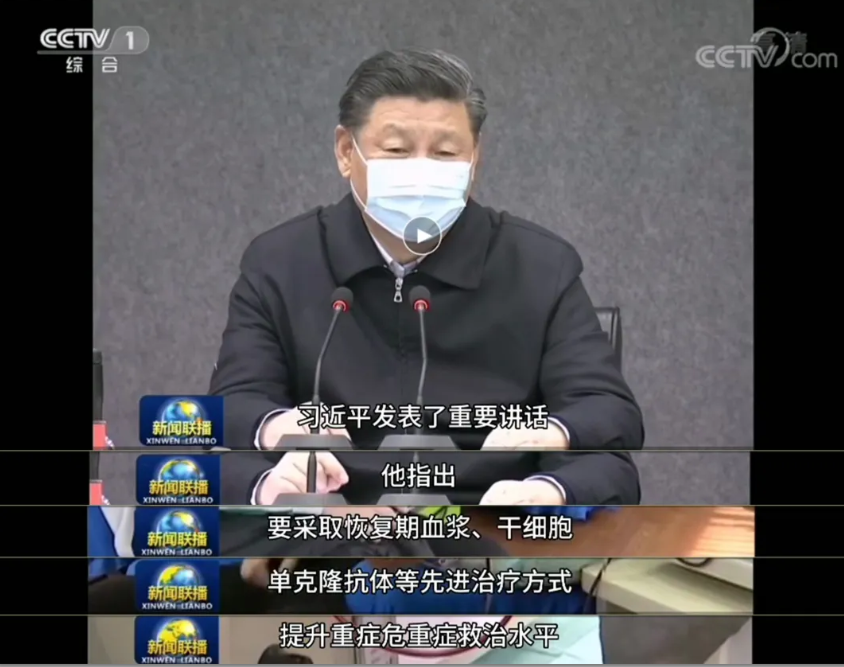
Xi Jinping emphasized that doing everything possible to save more patients' lives is the top priority and immediate task. He stressed the need to strengthen the integration of drug and medical equipment development with clinical treatment, effectively improving recovery rates while reducing mortality. Furthermore, he called for bolstering scientific research efforts to support and serve frontline treatment, ensuring close collaboration between clinical research and patient care, and directing more research outcomes toward practical applications on the frontlines. Efforts should also accelerate the development of new drugs, adhering to an integrated approach that combines traditional Chinese medicine with Western medicine and utilizes both types of therapies simultaneously. This includes speeding up the widespread adoption of already-developed and promising treatments, while also identifying additional effective therapeutic options tailored to the needs of frontline care. Ultimately, the goal is to explore innovative treatment methods and minimize the progression from mild to severe cases as much as possible. Advanced treatment approaches such as convalescent plasma, stem cells, and monoclonal antibodies should be adopted to enhance the management of severe and critically ill patients.

Related News

Here is the title—h1 placeholder text


Copyright © Jiuzhitang Maker (Beijing) Cell Technology Co., Ltd.
Powered by: 300.cn SEO | Privacy Policy