

News
News Center
Do you know about these rare diseases that have gained fame online?
2020-03-02
February 29 is International Rare Disease Day.
International Rare Disease Day, launched in 2008 by the European Organisation for Rare Diseases (EURORDIS), is observed annually on February 29—a date chosen deliberately to reflect the "rarity" of these conditions, which occur infrequently.
Rare diseases are those with extremely low prevalence rates, often referred to as "orphan diseases." According to the World Health Organization (WHO), a rare disease is defined as one that affects between 0.65‰ and 1‰ of the global population—there are approximately 5,000 to 8,000 rare diseases worldwide. Although individual rare diseases may impact only a small number of people, when these patients are combined, their total numbers approach 400 million. In other words, roughly 1 in every 15 people worldwide is affected by a rare disease.
"ALS patients," "porcelain dolls," "moon children," "children untouched by the world"—behind these enchanting, fairy-tale-inspired names lie relentless killers of rare diseases. These life-threatening conditions plunge countless families into fear and despair.
"Internet-famous" Rare Disease
The family of rare diseases is vast and diverse, with several "internet-famous" members among its ranks. Here are some of the more well-known conditions that our team has compiled.
1. ALS: Amyotrophic Lateral Sclerosis
ALS is a rare, progressive neurodegenerative muscle disease, also known as "Lou Gehrig's disease." This condition gradually attacks the upper motor neurons in the brain, brainstem, and spinal cord, while also affecting the lower motor neurons, as well as the muscles of the limbs and face. As the disease advances, patients experience muscle weakness, muscle atrophy, difficulty swallowing and breathing—and eventually, respiratory failure.
The renowned physicist Stephen Hawking and Stephen Hillenburg, the creator of SpongeBob SquarePants, were both ALS patients.


2. The Child Who Doesn’t Consume Earthly Delights—Phenylketonuria (PKU)
PKU is a common amino acid metabolism disorder caused by an enzyme deficiency in the phenylalanine (PA) metabolic pathway, preventing phenylalanine from being converted into tyrosine. This leads to the accumulation of phenylalanine and its corresponding keto acids, which are then excreted in large amounts through the urine. Patients often experience intellectual disability, have yellowish hair, emit a distinct mouse-like odor from their bodies, and suffer from persistent muscle twitching.
For children with PKU, milk, eggs, cakes, and even rice—foods that most people enjoy as part of their daily meals—are actually "toxins" that can hinder normal brain development and impair bodily functions. Because they cannot properly metabolize phenylalanine, an amino acid found in proteins, these children must rely on "specialized foods" for life to survive—they’re often referred to as "angels who live apart from the everyday world."
To grow up like typical children, PKU patients must maintain a special diet for life. If this specialized diet is interrupted, phenylalanine begins to accumulate in the bloodstream, impairing brain development and potentially leading to intellectual disability or even death. Moreover, the high cost of these essential "food supplies" has unfortunately cut off many PKU patients' chances of survival altogether.

3. Moon Children – Albinism
Albinism is a hereditary condition characterized by a lack of melanin or impaired melanin synthesis in the skin and associated organs, caused by a deficiency or reduced function of the enzyme tyrosinase. Affected individuals have unpigmented retinas, resulting in pale pink irises and pupils that are sensitive to light. Additionally, their skin, eyebrows, hair, and other body hairs appear white or yellowish-white. Albinism is an inherited, familial disorder following an autosomal recessive pattern of inheritance and is more commonly observed among populations with a history of consanguineous marriages.
With hair and skin as white as moonlight, they are incredibly prone to sunburn—making moonlit nights their true paradise.

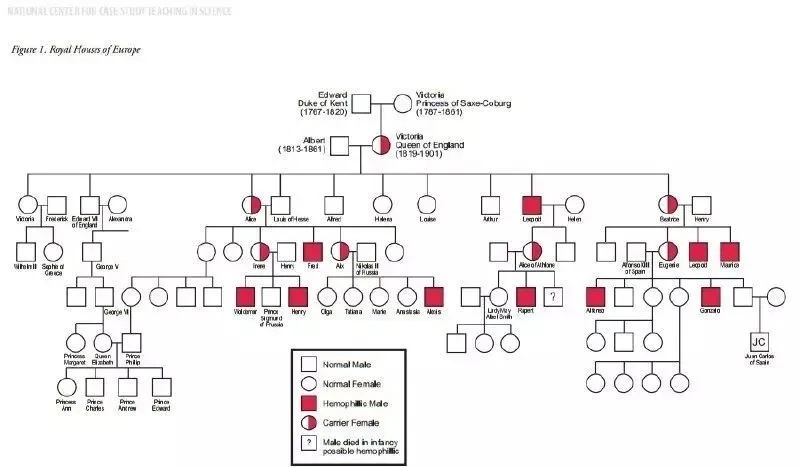
4. Royal Disease: Hemophilia
Hemophilia is a group of inherited bleeding disorders characterized by impaired production of active procoagulant factors, leading to prolonged clotting times. Individuals with hemophilia have a lifelong tendency to bleed even after minor injuries, and in severe cases, patients may experience "spontaneous" bleeding without any apparent trauma.
Queen Victoria, famously known as the "long-lived queen" and dubbed the "grandmother of European royalty," was a renowned carrier of a defective gene. Through her own lineage, she inadvertently introduced the hemophilia gene into nearly every major European royal family. As a result, this condition became one of the most infamous rare diseases in history, earning the nickname "the Royal Disease" and associating it with an aura of prestige reserved for Europe's elite and nobility.
Queen Victoria had a total of nine children, two of whom—unfortunately—were carriers of the hemophilia gene. One of her sons was also born with hemophilia, and several of their descendants went on to become either patients or carriers themselves. Tragically, many of these infants passed away during infancy.

5. Peter Pan: Facioscapulohumeral Muscular Dystrophy (FSHD)
FSHD is a hereditary muscle disorder that primarily affects muscles in areas such as the face, shoulders, upper arms, and waist. Because the shoulder blades on their backs protrude prominently, giving the appearance of tiny little wings, it’s also affectionately nicknamed "Peter Pan Syndrome."
In 2018, an online sensation called the "Orange Smile Challenge" took the internet by storm, as numerous celebrities and athletes shared videos of themselves holding half an orange against their lips. This challenge brought FSHD patients into the public eye—after all, facial muscle weakness is often the very first sign of FSHD, making it impossible for them to smile naturally.

6. The "Porcelain Doll" – Osteogenesis Imperfecta
Osteogenesis imperfecta, also known as brittle bone disease, congenital dysplasia, "porcelain doll" syndrome, primary osteoporosis, or periosteal dysplasia, causes children to be highly prone to fractures—even minor bumps can lead to severe breaks.
They’re petite and adorable, like dolls—but one hug, a single kick of the blanket, or even bursting into laughter while watching cartoons could easily cause them to break a bone.

The Dilemma Faced by Rare Diseases: No Available Treatments
Domestic drug developers in China tend to focus more on medications for common and prevalent diseases, often overlooking the development of orphan drugs. In contrast, international pharmaceutical companies have aggressively pursued orphan drug research, leaving many patients with rare diseases with limited options—either expensive imported treatments or no therapy at all. According to WHO data, globally, only about 5% of rare diseases currently have available treatment options, and domestically, the number of companies actively involved in orphan drug research remains extremely small.
Because of the low prevalence and limited number of patients, research on rare diseases inevitably requires significant investment with meager returns—and the risks are also difficult to manage. First, in clinical trials for rare-disease therapies, identifying and recruiting a sufficient number of patients to meet regulatory requirements is an enormous challenge. As a result, it’s particularly hard to attract capital to drug development for these conditions. Currently, in China, there’s virtually no interest from companies investing in the research and development of rare-disease treatments, not even generic versions—pharmaceutical manufacturers simply aren’t eager to get involved.
Stem cells may bring new hope to patients with rare diseases.
Alofisel, the product approved for marketing by the European Medicines Agency (EMA) in March 2018, is an allogeneic adipose-derived mesenchymal stem cell therapy indicated for Crohn’s disease complicated by anal fistulas—a condition that had previously been designated as an orphan disease. Developed by TiGenix, Alofisel is a stem cell-based treatment made from allogeneic cells and has become Europe’s first-ever stem cell-based medicinal product to receive marketing authorization, marking a significant milestone in regenerative medicine.
Alofisel is produced by utilizing liposuction to obtain fat stem cells from donor sources. These cells possess immunomodulatory properties and have already been tested in a Phase III trial involving more than 200 patients. The trial evaluated whether stem cell therapy could successfully close all fistulas, with no visible signs of residual infection detected on MRI scans. Thanks to these stringent efficacy criteria, a single dose of Alofisel achieved fistula closure in 50% of the patients. Additionally, a single dose of Alofisel demonstrated approximately 42% greater therapeutic effectiveness compared to the standard treatments typically administered to Crohn’s disease patients—most commonly a combination of infliximab and immunomodulators.
Stem cell therapies for ALS are advancing relatively quickly, and several promising new stem cell-based drugs have already entered late-stage clinical trials. Among them, the ALS treatment drug NurOwn has progressed to Phase III clinical trials and could potentially become the world's first FDA-approved stem cell therapy for ALS to reach the market.
Massachusetts General Hospital in the U.S. is conducting a clinical trial to explore stem cell therapy for ALS, using patients' own mesenchymal stem cells to repair damage in the brain and spinal cord—aiming to reduce brain inflammation that typically worsens the disease. Led by the U.S.-based company Brainstorm Cell Therapeutics, the trial is currently in its Phase III stage and has already completed enrollment of 200 patients.
Merit Cudkowicz, a ALS expert at Massachusetts General Hospital, explains that these stem cells function much like an anti-inflammatory drug. David Neufeglise, 41, who was diagnosed with ALS last January, is one of the participants in this clinical trial. He receives stem cell transplants every eight weeks and shares his hope: "I’m optimistic that this clinical trial will ultimately provide ALS patients with a powerful new tool to fight the disease." This is a randomized, double-blind, placebo-controlled, multicenter Phase III clinical trial investigating an investigational product called NurOwn® (MSC-NTF cells). The treatment uses mesenchymal stem cells, which are induced in vitro to differentiate into MSC-NTF cells capable of secreting neurotrophic factors (NTFs) through a specialized differentiation medium. The primary goal of this trial is to evaluate the safety and efficacy of repeated administrations of MSC-NTF cells, with results expected to be unveiled next year.
Stem cell technology is transforming the treatment landscape for a variety of intractable diseases, offering new hope to patients with some rare conditions. Clinically, the number of global research projects exploring stem cells as a therapy for rare diseases is growing steadily year by year. Looking ahead, we believe that stem cells will bring significant benefits to even more patients suffering from rare illnesses.
Jiuzhitang Re-enters and Expands Its Presence in the Regenerative Medicine Field
In 2017, Jiuzhitang initiated and established the Zhuhai Hengqin Jiuzhitang Yonghe Qihang Fund (hereinafter referred to as the Yonghe Qihang Fund). In 2018, the Yonghe Qihang Fund made an investment in Stemedica Corporation. At the same time, it invested in and established Jiuzhitang Maker (Beijing) Cell Technology Co., Ltd. in Beijing, serving as the sole Chinese partner for Stemedica’s stem cell technology. Meanwhile, Meike has already completed construction of a production and R&D facility at Beijing Daxing Biomedical Base—known as "China's Pharmaceutical Valley"—that meets both Chinese and U.S. cGMP standards. Moving forward, Meike plans to produce bone marrow mesenchymal and neural stem cell products at its Daxing facility in Beijing, ensuring that these products will be manufactured using processes and quality standards identical to those employed by Stemedica.
Responding to the Belt and Road Initiative, China-Kazakhstan Collaboration in Regenerative Medicine The center sets up in Horgos.
Responding to the Belt and Road Initiative, Jiuzhitang Group has partnered with Kazakhstan’s ALACO Company to jointly establish the Jiuzhitang-ALTACO International Medical Center at the China-Kazakhstan Khorgos International Border Cooperation Center. This center serves as an innovative collaboration platform for international stem cell research and clinical translation. The International Medical Center officially opened in September 2019, focusing on scientific research and clinical applications centered around ischemia-tolerant mesenchymal stem cells produced by Stemedica.
References:
1. Kingston H M. Queen Victoria's Gene: Hemophilia and the Royal Family[J]. BMJ Clinical Research, 1995, 311(7012):1106-1107.
2. Mays Medical
3. China Pharmaceutical Economic Report: "China's First Rare Disease Diagnosis and Treatment Guideline Officially Released!"
4. Office of the National Health Commission
Related News

Here is the title—h1 placeholder text


Copyright © Jiuzhitang Maker (Beijing) Cell Technology Co., Ltd.
Powered by: 300.cn SEO | Privacy Policy