

News
News Center
The National Development and Reform Commission and two other departments announced that cell and gene therapy companies in Guangzhou's Nansha area, after registering with the health authorities, will be permitted to conduct clinical applications of restricted cell transplantation therapies through medical institutions.
2024-01-10
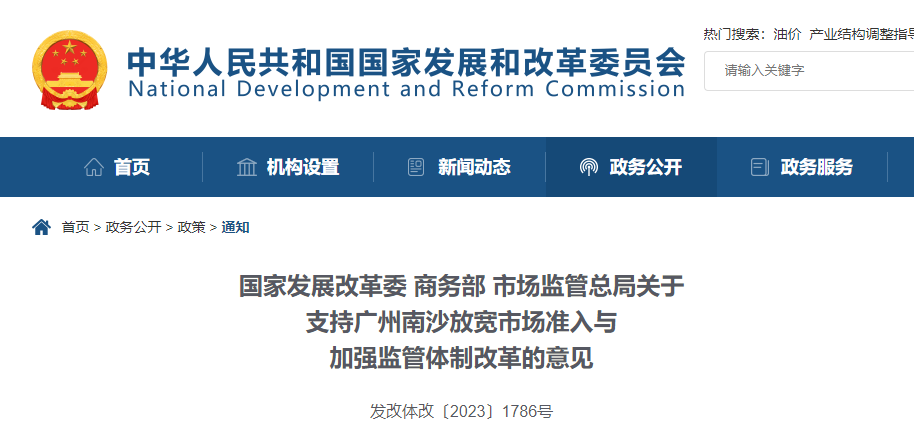
On January 9, the National Development and Reform Commission, the Ministry of Commerce, and the State Administration for Market Regulation jointly released the "Opinions on Supporting Guangzhou Nansha in Relaxing Market Access and Strengthening Regulatory System Reform" (hereinafter referred to as the "Opinions"). The measures to ease market access cover a range of areas, including innovation in trade in services, a comprehensive cross-border investment and financing service system for enterprises, and specialized financial initiatives. Additionally, they encompass key sectors such as integrated unmanned systems spanning sea, land, and air, high-end marine equipment manufacturing, biopharmaceuticals, green and low-carbon technologies, and the seed industry.
The opinion clearly states:
9. Relaxing Market Access Restrictions for Pharmaceuticals and Medical Devices
Support the refinement of R&D and application management standards for various new drugs and medical device technologies. Cell and gene therapy companies, after filing with the health authorities, will be permitted to conduct clinical applications of restricted cell transplantation techniques through medical institutions. Additionally, eligible Hong Kong and Macao-based enterprises will be allowed to utilize China's human genetic resources for medical research—excluding studies involving human stem cells, gene diagnostics, and gene therapy. To better leverage the role of the Guangdong-Hong Kong-Macao Greater Bay Area Review and Inspection Sub-center, explore opportunities to take on related functions. Encourage domestic and international biopharmaceutical and healthcare companies, as well as R&D institutions, to establish facilities in Nansha for developing a wide range of products. (Responsible departments: National Medical Products Administration, National Health Commission, General Administration of Customs; Guangdong Province and Guangzhou City will be responsible according to their respective duties.)
The full text is as follows:
National Development and Reform Commission, Ministry of Commerce, and State Administration for Market Regulation on
Supporting Guangzhou Nansha in easing market access and
Opinions on Strengthening Regulatory System Reform
NDRC Reform [2023] No. 1786
Relevant departments of the State Council, the Guangdong Provincial Development and Reform Commission, the Department of Commerce, and the Market Supervision Administration, as well as relevant central enterprises, China Certification and Accreditation Association :
To thoroughly implement the CPC Central Committee and the State Council’s directives on improving the market access system, and in line with the work requirements outlined in the "Overall Plan for Deepening Guangzhou Nansha's Comprehensive Cooperation with Hong Kong, Macao, and the World," we will optimize the market environment based on the principles of prioritizing standards, opening up diverse scenarios, leveraging capital, attracting industries, and upgrading the overall system. We will strengthen and standardize full-process regulatory oversight, uphold innovation and reform, adhere to the approach of establishing rules before dismantling existing ones, and introduce pioneering reform initiatives. This will enable Guangzhou Nansha to better play its leading and driving role in the development of the Greater Bay Area, helping to build a major strategic platform that is rooted in the Bay Area, collaborates seamlessly with Hong Kong and Macao, and reaches out to the world. The following opinions are hereby presented.
1. Promote the implementation and application of access standards for unmanned systems across all domains—land, sea, and air.
Participate in formulating and promoting the implementation of technical standards for integrated unmanned systems across air, land, and sea domains, and develop technical specifications for integrating unmanned systems into urban infrastructure. Explore comprehensive air-ground integrated urban transportation management approaches, fostering an efficient and inclusive market access environment. Conduct research to establish regional unmanned system control and dispatch systems, clearly categorize and designate low-altitude airspace and flight routes, streamline route approval processes, and take the lead in advancing industrial applications of unmanned equipment in sectors such as industrial production, logistics delivery, emergency rescue, urban management, and maritime search-and-rescue operations. Support participation in building a unified, intelligent unmanned system foundational data framework and an open service application platform. Accelerate pilot projects and commercial operations of smart (connected) vehicles in multiple scenarios, while also driving the development of electric vertical takeoff and landing (eVTOL) aircraft. eVTOL ) and closely linked with intelligent connected vehicles, establishing safety standards and management regulations that align with technological advancements, thereby fostering collaborative development of the autonomous systems industry and enabling cross-sector technology integration. We will also build a Greater Bay Area-based incubation base for the autonomous systems industry. (Responsible departments: National Development and Reform Commission, Ministry of Transport, Ministry of Housing and Urban-Rural Development, Ministry of Industry and Information Technology, Civil Aviation Administration of China—Air Traffic Management Office, Civil Aviation Administration of China, State Administration for Market Regulation; Guangdong Province and Guangzhou City are responsible according to their respective duties.)
II. Accelerate the Application of Marine Science and Technology Innovation Elements
Promote the integration of various innovation resources into the research, development, and commercialization of natural gas hydrates. Leverage the Southern Marine Science and Engineering Guangdong Provincial Laboratory (Guangzhou) and the National Engineering Research Center for Natural Gas Hydrate Exploration and Development, while utilizing advanced facilities such as the Cold Spring Ecosystem Research Facility and the Natural Gas Hydrate Drilling and Production Vessel. Together, these efforts will establish a national hub for R&D and commercial development of natural gas hydrates. Accelerate the development of a high-end marine equipment manufacturing base, driving the establishment of a pilot testing facility for smart ships. Streamline the application of cutting-edge technologies across key areas—including marine science and environmental protection, marine resource exploration, and marine engineering—ensuring seamless integration of technological advancements with innovative equipment, institutional frameworks, and policy initiatives. This will enhance the nation’s capability to independently develop advanced marine equipment, including high-tech vessels, deep-sea aquaculture systems, deep-diving gear, and sophisticated ocean exploration tools. Furthermore, encourage leading enterprises, research institutions, and local entities to collaborate on establishing global, cutting-edge scientific research mechanisms in the deep-sea domain. Actively participate in shaping international market access rules and standards, ensuring that breakthrough innovations in priority fields can be adopted swiftly and efficiently. By fostering the transfer and commercialization of marine technology advancements, we aim to achieve a harmonious integration of the innovation chain and industrial value chain, ultimately driving sustainable growth in the maritime sector. (Responsible departments: National Development and Reform Commission, Ministry of Science and Technology, Ministry of Natural Resources, Ministry of Transport, Ministry of Industry and Information Technology; Guangdong Province and Guangzhou City are responsible according to their respective duties.)
3. Optimize the Market Environment for Advanced Technology Applications
Leveraging Nansha Science City, the International Advanced Technology Application Promotion Center (Greater Bay Area) has been established to serve the needs of major projects. It will develop advanced technology application and commercialization processes, along with robust evaluation standards, to accelerate the growth of entire industry chains—including commercial aerospace, biopharmaceuticals, and marine science. The center aims to create new paradigms tailored to the unique challenges of technological innovation, particularly in areas like business models and financial partnerships, while also fostering innovative use cases that drive the market adoption of cutting-edge, disruptive technologies. Focusing on emerging productivity sectors such as industrial robotics, the center will actively attract and support the independent establishment of relevant international standards and certification bodies. This effort will help build a world-class framework for smart equipment industry standards and certification systems, offering testing and certification services specifically designed for core component manufacturers in the Greater Bay Area, as well as countries and regions participating in the Belt and Road Initiative. Additionally, the center will collaborate closely with universities and research institutions in Hong Kong and Macao to tackle critical technological challenges. It will also facilitate cross-border data circulation and trading between Guangdong, Hong Kong, and Macao—particularly for applications in scientific research—while drawing on Hong Kong and international best practices in managing research projects, including project reviews, budget allocation, and operational oversight. (Responsible departments: National Development and Reform Commission, Ministry of Science and Technology, Ministry of Industry and Information Technology, State Administration for Market Regulation; Guangdong Province and Guangzhou City are responsible according to their respective duties.)
4. Deepen Innovation in Trade in Services
Actively attract professional talent from Hong Kong, Macao, and other overseas regions, and explore the establishment of a list for recognizing foreign professional qualifications. Provide more convenient policies supporting work licensing, cross-border mobility, and daily life. For Hong Kong and Macao residents working in Nansha who are already covered by social insurance schemes in Hong Kong or Macao, they will be exempt from participating in Nansha’s basic pension and unemployment insurance programs. Foster innovative development in emerging service trade sectors such as R&D design, quality certification, inspection and testing, and cross-border leasing. Additionally, optimize the Pearl River shipping freight rate service index system and study ways to encourage enterprises registered in the Nansha New Area of Guangdong Pilot Free Trade Zone to engage in blending and blending operations of high- and low-sulfur fuel oils for ship supply purposes using bonded logistics practices. (Responsible departments: Ministry of Commerce, Ministry of Human Resources and Social Security, General Administration of Customs, National Immigration Administration, State Administration for Market Regulation; Guangdong Province and Guangzhou City are responsible according to their respective duties.)
5. Building a World-Class Comprehensive Cross-Border Investment and Financing Service System for Enterprises
Support the coordinated advancement of China's "Going Global" initiative through a collaborative approach involving central and local governments, seamless coordination among provincial, municipal, and district levels, synergistic use of resources from Hong Kong and Macao, and robust market participation. Establish provincially-based, fully operational Comprehensive Service Centers for Chinese Enterprises Going Global, offering one-stop services tailored to companies expanding overseas. Set up dedicated service windows within these centers to handle government-related administrative tasks for overseas investments, streamlining processes such as investment registration and other necessary procedures. Develop specialized service industry clusters by attracting leading professionals in fields like law, finance, accounting, and consulting to foster integrated growth. Additionally, explore joint initiatives with Hong Kong, Macao, and international partners to co-build and share overseas service hubs that support Chinese enterprises' global expansion efforts. (Responsible Departments: National Development and Reform Commission, Ministry of Commerce; Guangdong Province and Guangzhou City are responsible according to their respective duties.)
6. Accelerate the Development of Specialized Finance
Explore the development of green finance standards, evaluation frameworks, certification processes, and regulatory management systems aligned with international benchmarks. Support the Guangzhou Futures Exchange as it focuses on serving the high-quality development of the real economy, promoting green and low-carbon growth, advancing the construction of the Greater Bay Area, and jointly building the Belt and Road Initiative—while steadily expanding its product offerings. Strengthen policy measures to incentivize green building initiatives, pilot and refine pre-evaluation practices for green buildings, and encourage financial institutions to support green building development in line with market-oriented and rule-of-law principles. Accelerate the establishment of the Greater Bay Area (Guangzhou Nansha) Cross-border Wealth Management and Asset Management Center. (Responsible Departments: National Administration of Financial Regulation, People's Bank of China, China Securities Regulatory Commission, Ministry of Ecology and Environment, State Administration for Market Regulation; Guangdong Province and Guangzhou City are responsible according to their respective duties.)
7. Promote green, low-carbon, and high-quality development
The study aims to establish a comprehensive carbon emission statistics, accounting, and measurement system, while vigorously promoting green product certification and ensuring the acceptance of its outcomes. Efforts will accelerate the construction of the National Carbon Metrology Center (Guangdong). Additionally, pilot programs for climate-related investment and financing will be deepened, fostering innovation in climate finance models and tools. To further this goal, Guangzhou’s Nansha area will be developed into a pioneering green and low-carbon demonstration zone integrating Guangdong and Hong Kong. This initiative will explore new models for building and operating green, low-carbon parks, as well as investigate mechanisms for mutual recognition of carbon emission standards with countries along the Belt and Road Initiative and the European Union—supporting the global free flow of "zero-carbon" products. Moreover, the region will advance the utilization of clean energy sources like hydrogen, while proactively planning and deploying next-generation infrastructure for electric vehicles, including battery swap stations and high-voltage charging piles. Finally, green certificate and green electricity trading will be expanded, encouraging businesses of all types to purchase and use green certificates, thereby enabling the Nansha New Area of the Guangdong Free Trade Zone to achieve a high share of green electricity consumption. (Responsible Departments: National Development and Reform Commission, National Energy Administration, Ministry of Ecology and Environment, Ministry of Industry and Information Technology, Ministry of Transport, State Administration for Market Regulation; Guangdong Province and Guangzhou City are responsible according to their respective duties.)
8. Comprehensively Enhance the Efficiency of Market Access in the Seed Industry
Support the establishment of specialized seed industry innovation centers, seed technology transfer hubs, and Sino-foreign collaborative innovation centers in the seed sector. Optimize approval services for the production and trade of crop seeds, seedlings, breeding livestock and poultry, and aquatic larvae. Promote the exploration of a commitment-based market access system for the seed industry, support the delegation of provincial-level seed production and operation approval authority, and strengthen market supervision and enforcement mechanisms. Accelerate the development of the Guangzhou Nansha Agricultural Open Cooperation Pilot Zone, and streamline the procedures for variety evaluation and registration. (Responsible Department: Ministry of Agriculture and Rural Affairs; Guangdong Province and Guangzhou City are responsible according to their respective duties.)
9. Relaxing Market Access Restrictions for Pharmaceuticals and Medical Devices
Support the refinement of R&D and application management standards for various new drugs, medical devices, and cutting-edge technologies. Allow cell and gene therapy companies to conduct clinical applications of restricted cell transplantation techniques at medical institutions, provided they have registered with the health authorities. Additionally, permit eligible Hong Kong and Macao-based enterprises to leverage domestic human genetic resources for medical research activities—excluding stem cell therapies and gene-based diagnostics or treatments. Furthermore, enhance the role of the Guangdong-Hong Kong-Macao Greater Bay Area Review and Inspection Sub-center by exploring opportunities to take on related functions. Encourage both domestic and international biopharmaceutical and healthcare companies, as well as R&D institutions, to establish facilities in Nansha to develop a wide range of innovative products. (Responsible Departments: National Medical Products Administration, National Health Commission, General Administration of Customs; Guangdong Province and Guangzhou City are responsible according to their respective duties.)
10. Relax market access in other key areas related to people's livelihood.
Expand the functionalities of Guangdong Province's Electronic Prescription Center, optimize the healthcare services and pharmaceutical distribution system, and explore easing restrictions on the online sale of specific complete nutritional formula foods. Support efforts to implement the 144-hour visa-free transit policy for foreigners and the cruise ship visa-free policy in Nansha. Foster an internationally recognized, high-quality lifestyle hub, support the provision of public services aligned with Hong Kong and Macao, and encourage the establishment of Hong Kong-registered veterinarians and cutting-edge animal healthcare facilities in Nansha. Additionally, pilot a regional, designated-use model for veterinary medicines imported from Hong Kong. (Responsible departments: National Health Commission, Ministry of Commerce, Ministry of Transport, National Immigration Administration, General Administration of Customs, Ministry of Agriculture and Rural Affairs, State Administration for Market Regulation; Guangdong Province and Guangzhou City are responsible according to their respective duties.)
11. Launch a pilot program to recognize and adopt inspection, testing, and certification results
Implement the requirements for building a high-standard market system and firmly dismantle the market distortions caused by the current proliferation of excessive and chaotic standards. Tackling implicit barriers to market access, we will focus on key industry sectors such as electronic components and integrated circuits, as well as foundational and industrial software. By encouraging the market to recognize and adopt certification and inspection/testing results, we aim to facilitate "mutual recognition of outcomes and single-certificate-based access" with regions already piloting broader market-entry reforms. In principle, these regions and entities should refrain from requiring businesses to undergo redundant certification or testing, thereby helping to substantially reduce operational costs for enterprises. Additionally, we will foster healthy competition among inspection/testing and certification bodies, allowing market-driven mechanisms to naturally weed out less effective players while strengthening ongoing and post-event regulatory oversight. Pilot programs will also introduce credit evaluations for certification and testing organizations, promoting self-regulation and sustainable growth within industry associations and related institutions. (Responsible Departments: National Development and Reform Commission, State Administration for Market Regulation, Ministry of Industry and Information Technology, Ministry of Housing and Urban-Rural Development; Guangdong Province and Guangzhou City are responsible according to their respective duties.)
12. Establish a Comprehensive Regulatory System Covering the Entire Market Access Chain
Optimize the market access regulatory system, strengthen ex-ante, in-process, and ex-post oversight, effectively safeguard market order, and proactively manage and mitigate significant risks. Adhere to the principles of "establish first, then dismantle" and holistic planning, while innovating regulatory mechanisms and leveraging tools such as credit-based regulation, industry-specific oversight, "Internet+"-powered supervision, and trigger-based monitoring. Together, these approaches will help build a closed-loop management system integrating "access and regulation," enabling comprehensive, multi-faceted, and multi-channel oversight across all market entry areas. This will foster standardized, healthy, and high-quality development across various sectors. Additionally, we will continuously innovate and refine the market environment for emerging industries and new business models, ensuring legal protection of the legitimate rights and interests of all stakeholders, thereby unlocking greater market potential and vitality. (Responsible Departments: Relevant industry authorities; Guangdong Province and Guangzhou City are responsible according to their respective duties.)
13. Promote comprehensive cross-departmental regulatory oversight for market access
For regulatory matters involving multiple departments, characterized by high management complexity and prominent risk factors, we will establish and improve a comprehensive inter-departmental access and oversight system, strengthening the integration of vertical and horizontal management approaches as well as regional collaboration, to enhance… Access Regulation Its precision and effectiveness. Conduct comprehensive, cross-departmental assessments and coordinated responses to critical early warning information, leveraging IT tools to systematically enhance monitoring and sensing capabilities, enabling the timely identification and management of various risks and potential hazards. (Responsible Departments: Relevant industry authorities; Guangdong Province and Guangzhou City are responsible according to their respective duties.)
14. Strengthen Access Regulation in Key Areas
Establish a collaborative regulatory framework where government oversight, corporate self-regulation, industry self-governance, and societal monitoring mutually reinforce one another. Strengthen the ability of business entities to exercise self-discipline, leverage the自律 roles of industry associations, industrial alliances, and standards organizations, and develop robust industry-specific self-regulatory and management rules tailored to relevant entry sectors. Additionally, ensure smooth channels for public oversight and actively encourage and support participation from all segments of society in the monitoring process. (Responsible Departments: Relevant industry authorities; Guangdong Province and Guangzhou City are responsible according to their respective duties.)
15. Promote Collaborative Market Regulation
Establish a collaborative regulatory framework where government oversight, corporate self-regulation, industry self-governance, and societal monitoring mutually reinforce one another. Strengthen the ability of business entities to exercise self-discipline, leverage the自律 roles of industry associations, industrial alliances, and standards organizations, and develop robust industry-specific self-regulatory and management rules tailored to relevant entry sectors. Additionally, ensure smooth channels for public oversight and actively encourage and support participation from all segments of society in the monitoring process. (Responsible Departments: Relevant industry authorities; Guangdong Province and Guangzhou City are responsible according to their respective duties.)
All departments and units must place high priority on this initiative, take proactive measures, offer robust support, and work collaboratively to efficiently advance the implementation of all tasks. The National Development and Reform Commission, the Ministry of Commerce, and the State Administration for Market Regulation, together with relevant departments, will intensify coordination efforts, strengthen supervision and inspection, and organize specialized assessments. Based on conditions being fully met, they will roll out a new batch of reform measures. Any significant developments will be promptly reported to and approved by the Party Central Committee and the State Council. Meanwhile, Guangdong Province is encouraged to actively create favorable conditions for the successful implementation of these reforms, providing ample support and authorization within its provincial jurisdiction. Guangzhou City, in particular, must earnestly assume primary responsibility, adopting a comprehensive planning approach while executing the reforms step by step, ensuring meticulous execution of specific tasks and delivering tangible results.
Reprint Notice: This article is reprinted from the official website of the National Development and Reform Commission. If there is any infringement, please contact us for removal.
Related News

Here is the title—h1 placeholder text


Copyright © Jiuzhitang Maker (Beijing) Cell Technology Co., Ltd.
Powered by: 300.cn SEO | Privacy Policy