

News
News Center
Big news! Shanghai announces it’s working to allow foreign investors in human stem cells, gene diagnostics, and gene therapy technology development and applications—paving the way for collaborative projects in medical science and technology, while also removing foreign investment access restrictions!
来源:Shanghai Municipal People's Government Official Website
2019-08-14
On August 13, the Shanghai Municipal Government Information Office held a press conference, where Vice Mayor Xu Kunlin introduced the newly released "Several Measures for Further Opening Up Shanghai's Service Sector." Attendees included Hua Yuan, Director of the Municipal Commission of Commerce; Zhu Min, Deputy Director of the Municipal Development and Reform Commission; Cheng Meihong, Deputy Director of the Municipal Bureau of Culture and Tourism; and Peng Wenhao, Deputy Director of the Municipal Administration for Market Regulation, who jointly answered questions from reporters.
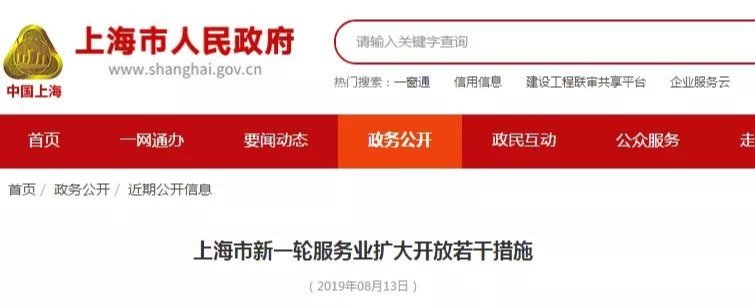
To deeply implement the "expanding opening-up of the service sector," as outlined in the report of the 19th National Congress of the Communist Party of China, and to align with the important remarks made by General Secretary Xi Jinping during his inspection of Shanghai, the Shanghai Municipal Party Committee and the Municipal Government recently issued the "Several Measures for the New Round of Expanding Service Sector Opening-Up in Shanghai" (hereinafter referred to as the "Several Measures").
The measures clearly state: advancing project collaborations in the medical technology sector and removing foreign investment access restrictions, with efforts underway to allow foreign investors to participate in the development and application of human stem cell technologies, as well as gene diagnostics and therapeutic techniques.
Explore establishing a streamlined, regularized mechanism for the convenient customs clearance of bio-materials used in R&D by biopharmaceutical companies. Implement a comprehensive assessment-based classification system and develop tailored measures to facilitate the customs clearance of bio-materials essential for research and development, helping companies overcome certification-related challenges in importing these materials and enhancing overall clearance efficiency. Additionally, foster enhanced medical technology exchange and collaboration between China and other countries, while refining regulations governing short-term medical practice by foreign physicians in China. Explore ways to shorten approval processes, streamline required documentation, and actively encourage outstanding foreign doctors to come to Shanghai and deliver high-quality healthcare services.
Full text published
Shanghai's New Batch of Measures to Further Open Up the Service Sector
(August 13, 2019)
To deeply implement the central government's strategic plan to significantly ease market access and expand the opening-up of the service sector, we will further leverage openness to drive reform, foster development, and spur innovation. This includes removing institutional, systemic, and policy barriers that hinder the growth of the service industry, while establishing an open institutional framework aligned with internationally recognized rules governing service-sector investment and trade. By doing so, we aim to create a fair, transparent, and efficient market environment, comprehensively enhancing the competitiveness and global standing of China's service industries. Ultimately, this effort will accelerate Shanghai's progress in becoming one of the "five centers" and a world-class, socialist modern international metropolis with global influence.
I. General Requirements
Guided by Xi Jinping Thought on Socialism with Chinese Characteristics for a New Era, we will comprehensively implement the spirit of the 19th National Congress of the Communist Party of China and the Second and Third Plenary Sessions of the 19th Central Committee. Upholding the development philosophy of innovation, coordination, green growth, openness, and shared prosperity, we will align our efforts with the nation’s strategic layout for opening up to the world in the new era, accelerating Shanghai’s service sector to embrace broader areas and deeper levels of openness. Focusing on key sectors and addressing critical gaps within the service industry, we will seize the opportunity presented by the establishment of the new area within the China (Shanghai) Pilot Free Trade Zone (hereafter referred to as the FTZ). This will further deepen Shanghai’s reforms and opening-up initiatives in the services sector, unlocking the immense potential for service-sector development. Ultimately, this approach will drive Shanghai’s economic restructuring and facilitate the transformation and upgrading of its trade sector amid this new wave of expanded openness.
II. Policy Initiatives
(1) Further ease market access restrictions for foreign investment in the service sector, creating a world-class business environment.
1. Lower the investment entry threshold to enhance attractiveness for foreign investors establishing investment companies, further easing the application requirements for foreign firms setting up investment entities in Shanghai. Specifically, the total assets of foreign investors in the year preceding the application will now be reduced to no less than USD 200 million, and the requirement limiting the number of existing foreign-invested enterprises a foreign investor can already have within China has been eliminated.
2. Further enrich the market players in the cultural performance industry by selecting specific areas where the cultural and entertainment sectors are concentrated, and explore allowing wholly foreign-owned performance agencies to establish themselves in Shanghai while offering services nationwide.
3. Promote the opening up of the tourism services sector to foreign investment, expand outbound travel destinations overseas, and explore piloting a program allowing wholly foreign-owned travel agencies established in Shanghai to operate outbound tourism services for Chinese citizens (excluding trips to Taiwan).
4. Promote the opening-up of the publishing industry to the outside world, and explore allowing foreign investment in audiovisual production businesses within Shanghai’s National Music Industry Base, Zhangjiang National Digital Publishing Base, Jinshan National Green Creative Printing Demonstration Park, and the bonded areas of the Free Trade Pilot Zone (limited to Sino-foreign cooperation, with the Chinese partner retaining operational control and final editorial authority over content).
5. Promote the healthy and standardized development of the art auction market, and explore allowing the establishment of Sino-foreign joint ventures, Sino-foreign cooperative enterprises, and wholly foreign-owned cultural relic auction firms within the free trade pilot zones. The scope of these auctions would be limited to artworks created by non-Chinese artists who passed away after 1949 and were collected from overseas sources.
6. Promote project collaborations in the medical technology sector and remove foreign investment access restrictions, striving to allow foreign investors to participate in the development and application of human stem cell technologies, as well as gene diagnostics and therapeutic techniques.
7. For pilot chain enterprises within regional headquarters of multinational corporations, implement the city-wide "one license, multiple locations" policy to enhance convenience for regional headquarters with prominent trade functions when opening chain stores.
8. Effectively ensure that foreign-invested enterprises enjoy national treatment under the law, with all relevant departments reviewing applications for licenses and related qualifications of foreign-invested enterprises according to the same criteria and procedures as those applied to domestic-invested enterprises.
(II) Implement high-level opening-up in cross-border trade in services, driving the transformation and upgrading of service consumption.
9. Accelerate the development of the medical tourism industry by leveraging Shanghai's high-quality medical resources and comprehensive healthcare system. Establish a robust management mechanism for the "List of Designated Medical Institutions in Shanghai," providing streamlined entry and exit procedures for international patients seeking treatment at facilities listed on the roster.
10. Promote the economic development of cruise tourism by deepening the construction of the Shanghai China Cruise Tourism Development Pilot Zone. Support Shanghai cruise ports in expanding their duty-free shops—both outbound and inbound—to offer a wider range of merchandise. Additionally, based on their operational performance and growth prospects, provide support for increasing retail space and scaling up business operations.
11. Continuously refine the tax refund policy for overseas travelers purchasing goods before departure, strengthen support for tax refunds on purchases made by international visitors, and explore expanding the range of items eligible for tax refunds upon departure. Additionally, strive to ease the qualification requirements for tax refund agencies and enhance the quality of their service offerings.
12. Accelerate the development of Shanghai as a global sports event capital, refine the layout for major international competitions, and actively explore and promote efforts to bid for sports events with worldwide appeal. Conduct comprehensive assessments of the impact and market value of internationally significant sporting events, aiming to host world-class sports events in Shanghai every year.
13. Fully leverage the exhibition industry as a vital platform in Shanghai's development as an international trade hub and its open-economy growth, aiming to establish Shanghai as a global leader in the international convention and exhibition sector. At key venues such as the National Exhibition and Convention Center (Shanghai) and the Shanghai New International Expo Center, explore pilot programs allowing overseas organizations to independently host economic and technological exhibitions, thereby boosting market dynamism and driving the transformation of exhibition services toward greater internationalization, specialization, market orientation, and brand-building.
14. Fully leverage the functions of Shanghai's International Trade Single Window, establish a dedicated service trade zone, and, building on the city-wide rollout of export tax rebates for goods trade, actively expand these rebates to include service trade exports as well.
(III) Establish an open, trade-facilitation service system and enhance the capabilities of international trade center development.
15. In accordance with the principles of "steady progress, standardized and orderly operations, and controllable risks," enterprises registered in Shanghai are permitted, after obtaining qualification filing approval from the Ministry of Commerce, to apply for second-hand vehicle export licenses and engage in second-hand car export activities—even without authorization directly from the original manufacturers.
16. Deeply advance the construction of comprehensive cross-border e-commerce pilot zones and support the development of cross-border e-commerce export models. Retail exports will be allowed to use the "manifest verification and release, consolidated statistics" method for customs clearance procedures, simplifying the export clearance process.
17. Optimize the business environment for cross-border trade and enhance Shanghai's trade facilitation level by implementing streamlined procedures for CCC exemption applications from our city's import companies that maintain excellent credit records, have robust traceability systems in place, and regularly submit multiple batches of declarations. With support from the State Administration for Market Regulation, Shanghai has established a self-pledge-based, hassle-free channel for CCC exemption applications. Eligible companies can now enjoy trade facilitation measures such as "self-pledge, self-reported data, and automatic certification," enabling paperless processing and eliminating wait times for CCC exemptions. At the same time, rigorous post-approval oversight will be strengthened to ensure compliance.
18. Continuing the implementation of trade facilitation measures that have already proven effective for the first China International Import Expo, Shanghai Customs, with authorization, will handle import procedures for animals, plants, and their products entering the country for the second China International Import Expo—specifically those subject to inspection, quarantine, and administrative approval processes. Meanwhile, the pre-approval process for the "Permit for Import and Export of Endangered Species," which involves items requiring approvals from the Ministry of Agriculture and Rural Affairs and the Ministry of Natural Resources (except for species specifically outlined in separate authorized announcements), will be managed by the Municipal Commission of Agriculture and Rural Affairs and the Municipal Greening and City Appearance Bureau, both acting under delegation authority.
19. Explore electronic monitoring of container yards, advance the development and promotion of insurance products covering container damage, contamination, and loss during the pick-up and return processes, and refine the mechanisms and standards for assessing and determining losses in container usage.
(IV) Enhance the ability to attract global innovation resources, supporting the development of a science and technology innovation hub.
20. Focusing on digital transformation and upgrading, we will strive to build a first-mover advantage in digital trade by piloting the development of a digital trade transaction promotion platform. This platform will expand services such as digital copyright confirmation, valuation, and trading processes aligned with international standards, while also establishing a robust digital content and product resource library.
21. Accelerate the development of digital services trade, explore the establishment of cross-border service zones dedicated to digital trade, allow qualified foreign digital trade companies to offer value-added digital trade services, and work toward establishing a high-level, open framework for cross-border data flows.
22. Expand new avenues for domestic and international technological cooperation, focusing on critical core segments and key component areas of the industrial chain. Explore and refine relevant policies such as tax and fiscal measures, and strengthen protection for intellectual property rights transferred to China by multinational corporations.
23. Optimize and enhance international communication service capabilities, strengthen the industry's support for outward-oriented enterprises—especially small- and medium-sized businesses and private companies—and accelerate the alignment of service standards, market regulations, and other institutional frameworks with global practices.
24. Explore establishing a streamlined, regular mechanism for the customs clearance of bio-materials used in R&D by biopharmaceutical companies. Implement a comprehensive assessment-based classification system and develop tailored measures to facilitate the customs clearance of these materials, helping companies overcome regulatory challenges and further enhancing the overall convenience of bio-materials import and export processes.
(V) Strengthen the outward outreach capability of modern shipping services and enhance global shipping resource allocation capacity.
25. Promote qualified foreign classification societies to conduct statutory and single-classification surveys for internationally flagged vessels registered within the free trade pilot zone, and facilitate conditional mutual recognition of statutory marine product inspections between foreign classification societies and China Classification Society, fostering healthy competition in the ship inspection sector.
26. Promote internationally recognized ship classification societies (or accepted insurance companies) to conduct towing inspection services for large international vessels, offshore facilities, or other major structures being towed from Shanghai Port. Additionally, encourage qualified foreign container inspection firms to provide inspection services for shipping containers owned by companies within the free trade pilot zone.
27. Leveraging comprehensive bonded zones and other customs-specialized regulatory areas, we will explore pilot programs for the regional circulation of "two-way external" aviation equipment maintenance and repair outsourcing. This initiative aims to support aircraft maintenance companies in taking on overseas aviation equipment maintenance and repair projects, help local enterprises expand their global share in the aviation equipment maintenance market, and encourage the establishment of wholly foreign-owned aircraft maintenance enterprises.
28. Further optimize Shanghai's airspace resources, strengthen the reciprocal opening of air rights with countries and regions along the Belt and Road Initiative, increase airport flight density, and appropriately allocate cargo aircraft slots that support the development of aviation cargo hubs. Actively apply for qualification as a full-container import port via air at Pudong International Airport and Hongqiao International Airport.
29. In accordance with the latest regulatory guidelines for setting up supervision and operation sites issued by the General Administration of Customs, we will promote the standardized construction of aviation-related supervision facilities, further increase the proportion of electronic waybills, streamline air transport documentation, and continuously enhance the overall efficiency of customs clearance for import and export air cargo.
(6) Promote a higher level of financial services sector opening-up and accelerate the pace of building an international financial center.
30. Support eligible institutions in applying for Qualified Domestic Institutional Investor (QDII) and Renminbi Qualified Domestic Institutional Investor (RQDII) qualifications. Expand the scope of QDII eligibility to include investment management firms established in our city by both domestic and overseas institutions.
31. Vigorously promote green lending, implement performance evaluations for green credit initiatives among banking and deposit-taking financial institutions, and encourage these institutions to strengthen their credit support for the green and environmentally friendly industries.
32. Support the establishment of an RMB cross-border trade financing and refinancing service system to provide RMB financing solutions for cross-border trade.
33. Promote the commercialization of intellectual property value, encourage enterprises to develop, register, and leverage their intellectual assets, support expanding intellectual property-backed financing, explore opportunities to advance financial leasing of intangible assets such as copyrights, patent rights, and trademark rights, and provide robust support for the growth and development of technology companies, particularly small, medium, and micro-sized enterprises.
34. Accelerate the development of the spot commodity market by allowing spot markets within free trade zones to engage in both bonded and non-bonded commodity trading, thereby expanding the scale of offshore spot trading and bonded delivery operations. Support financial institutions in providing cross-border financial services—based on free trade accounts—for offshore spot commodity trading and bonded delivery, in line with internationally accepted practices. Additionally, promote the coordinated growth of spot and futures markets, enabling commercial banks, under controllable risk conditions, to independently offer commodity-backed financing services as well as foreign exchange settlement and sales related to spot commodity and derivatives transactions.
(7) Enhance international exchange and cooperation mechanisms in the service sector, and build a hub for attracting global talent.
35. Promote Sino-foreign exchanges and development in medical technology, improve the management of foreign physicians practicing medicine temporarily in China, explore ways to streamline the approval process and reduce required documentation, and encourage outstanding foreign physicians to come to Shanghai to provide medical services.
36. Explore allowing professionals in fields such as planning, who hold practicing qualifications from Hong Kong and Macao, to provide specialized services to enterprises within the free trade pilot zone—subject to filing with relevant departments or institutions and operating strictly within the prescribed scope.
37. Accelerate the development of specialized technical talent in the service sector. Using the pilot program for evaluating senior-level economists as a key initiative, strengthen the building of a high-caliber team of advanced technical professionals in the service industry. Focusing on internationalization, organize advanced training programs for senior technical personnel in areas such as smart services, modern logistics, e-commerce, and financial accounting. Led by artificial intelligence, launch targeted training initiatives to address critical skill gaps and cultivate core talent in relevant service sectors, while also expanding the scale of training programs aimed at grassroots-level technical professionals in the service industry.
38. Further relax restrictions on overseas professionals taking professional qualification exams, and explore allowing them to sit for China’s real estate appraiser, registered urban and rural planner, auctioneer, and other professional qualification exams within the free trade pilot zones, with the possibility of practicing these professions right there in the zones.
39. Further explore ways and mechanisms to enhance business cooperation between Chinese law firms and their foreign counterparts, as well as between Mainland (China) law firms and those in Hong Kong, Macao, and Taiwan. Additionally, under the pilot program allowing domestic law firms to hire foreign lawyers as overseas legal advisors, appropriately lower the qualification requirement for participating foreign lawyers, specifying that they must have at least three years of professional experience practicing law outside China.
40. Support the pilot establishment of schools for children of expatriates, specifically those recruiting children of foreign nationals from the Yangtze River Delta region, to enhance our city's appeal to high-end foreign professionals and service talent.
3. Organization and Implementation
The above measures are implemented through the service industry expansion and opening-up promotion mechanism, led by relevant municipal leaders. All relevant departments and units should, according to their assigned tasks and timelines, focus on key initiatives and priority projects aimed at expanding openness. They should proactively seek support from national authorities, collaborate closely to ensure the effective implementation of all open-up measures, and expedite the approval processes for any measures requiring formal authorization, adhering to applicable regulations. Meanwhile, each district and development zone is encouraged to deepen openness in priority areas, tailored to local conditions, while simultaneously optimizing the business environment, enhancing supporting services, and amplifying the ripple effects of reform and opening-up. Pudong New Area and the Pilot Free Trade Zone should further embrace innovative thinking and boldly explore new frontiers, seamlessly integrating openness with reform and actively piloting groundbreaking measures. Finally, emerging trends and challenges arising from the broader opening-up of the service sector must be promptly addressed through careful analysis and ongoing refinement of relevant policies and practices.
Related News

Here is the title—h1 placeholder text


Copyright © Jiuzhitang Maker (Beijing) Cell Technology Co., Ltd.
Powered by: 300.cn SEO | Privacy Policy