

News
News Center
Stem cell therapy shows immense potential for treating liver cirrhosis and liver failure.
来源:Jiuzhitang Maker Stem Cells
2019-07-29
To honor the discoverer of the hepatitis B virus—late Nobel laureate Baruch Blumberg—July 28 has been designated as World Hepatitis Day.
Hepatitis is an inflammation of the liver, most commonly caused by viral infections. There are five main hepatitis viruses, known as types A, B, C, D, and E. Hepatitis A and E are almost always acute viral hepatitis cases, and with prompt, standardized treatment, most patients fully recover within six months—though a small number of severe cases may face the risk of liver failure. In contrast, hepatitis B and C tend to become chronic, and together they are the leading causes of liver cirrhosis and liver cancer.
Hepatitis B and C affect 325 million people worldwide, causing 1.4 million deaths annually. This makes it the second-deadliest infectious disease after tuberculosis, with the number of hepatitis virus carriers nine times higher than those infected with HIV.
Globally, there are approximately 300 million people living with hepatitis B, with China accounting for about 88.663 million of them. According to reports, roughly 15% to 40% of hepatitis B patients eventually develop liver cirrhosis, liver failure, or liver cancer.

Image sourced from the internet
Currently, the effectiveness of medical treatments for patients with liver cirrhosis remains limited—these therapies can only alleviate symptoms and slow disease progression, but they fail to provide a definitive cure. Once liver failure occurs, the only proven treatment option is liver transplantation; however, due to the high cost, coupled with the severe organ shortage in China and the risk of rejection after transplantation, access to this life-saving procedure is severely restricted. As a result, many patients tragically lose their lives while waiting for a suitable donor liver or during the critical period following transplantation due to rejection complications.
Therefore, the search for new treatment approaches for liver disease patients is urgently needed.
Stem cells have garnered significant attention due to their remarkable potential for proliferation and differentiation. Domestically, researchers have already conducted numerous clinical studies using various types of cells and stem cells, demonstrating that stem cell transplantation is an effective and safe treatment for liver cirrhosis—and holds immense promise for advancing the treatment of liver diseases!
Clinical research
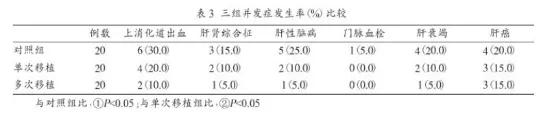
Zhang Junfei, Song Haiyan, and colleagues studied 60 patients with hepatitis B-related liver cirrhosis. Among them, 20 patients received a single intrahepatic stem cell transplant, while another 20 underwent multiple stem cell transplants. The remaining 20 patients served as a control group and received standard medical treatment. Patients were treated with 1 to 3 procedures, followed up for 36 months. The results showed that at the 12-month follow-up, the multiple-transplant group exhibited significantly better improvements in liver function compared to the single-transplant group. By the 24- and 36-month follow-ups, patients who received multiple stem cell transplants demonstrated further improvements in liver function markers, along with a notable reduction in the incidence of complications.
Huang Liwen, Liu Li, and colleagues conducted a study involving 87 hospitalized patients with decompensated liver cirrhosis (including 67 cases of hepatitis B-related cirrhosis and 2 cases of hepatitis C-related cirrhosis). They collected 200 ml of bone marrow, isolated and purified bone marrow stem cells, and then transplanted them into the liver via the hepatic artery. The results showed that hepatic arterial transplantation of bone marrow stem cells significantly improved liver function in these patients, with the most notable improvement observed in the liver's synthetic capabilities. By the fourth week after transplantation, patients exhibited markedly improved levels of albumin and prothrombin time compared to pre-treatment values (P < 0.05). Clinically, chest fluid disappeared in 10 patients, abdominal fluid resolved in 23, abdominal distension eased in 17, and lower-limb edema subsided in 21. Additionally, symptoms such as fatigue and poor appetite improved significantly in 21 patients (P < 0.05) compared to baseline. Notably, no serious adverse reactions or complications were reported during or after the procedure in any of the patients.

The research team led by Professors Gao Zhiliang and Lin Bingliang from the Third Hospital of Sun Yat-sen University has demonstrated through a randomized controlled trial that allogeneic bone marrow mesenchymal stem cell (BM-MSC) therapy for acute-on-chronic hepatitis B-related liver failure effectively improves liver function, reduces the incidence of severe infections, and significantly enhances 24-week survival rates among patients.
In 2019, a research team from Shihezi University conducted a meta-analysis to evaluate the clinical efficacy of mesenchymal stem cell transplantation in patients with decompensated liver cirrhosis. The analysis included statistical evaluation of eight clinical trials involving a total of 394 liver cirrhosis patients—219 in the MSCs treatment group and 175 in the control group. After three months of treatment, significant improvements were observed in end-stage liver disease scores and serum alanine aminotransferase levels. The study concluded that mesenchymal stem cell transplantation is effective for patients with decompensated liver cirrhosis, helping to improve liver function and reduce mortality rates.
Mechanisms of stem cell therapy for liver cirrhosis and liver failure
After liver transplantation, stem cells can directly reach the damaged areas of the injured liver. There, they can either differentiate into new liver functional cells, boosting the overall number of hepatocytes, or even "awaken" the body’s own liver cells. Alternatively, mesenchymal stem cells release a variety of cytokines that help repair and nourish the compromised liver cells.
Conclusion
The road to curing liver cirrhosis and liver failure remains long and challenging, but we believe that with advancements in regenerative medicine and translational research, the dream of using stem cells to treat liver cirrhosis and liver failure will eventually become a reality!
Reference Materials
Zhang Junfei, Song Haiyan, Chen Xi, Pan Jinjin, Liu Liwei, Chen Congxin, and Liu Bo. Clinical Study on the Treatment of Patients with Decompensated Hepatitis B-related Liver Cirrhosis Using Multiple Human Umbilical Cord Mesenchymal Stem Cell Transplants [J]. Practical Journal of Hepatology, 2018, 21(05):693-696.
Huang Liwen, Liu Li, Zhou Jian. Bone Marrow Stem Cell Hepatic Artery Transplantation for Decompensated Cirrhosis: A Report of 87 Cases[J]. Practical Journal of Hepatology, 2012, 15(03):247-249.
Lin BL, Chen JF, Qiu WH, et al. Allogeneic Bone Marrow-Derived Mesenchymal Stromal Cells for Hepatitis B Virus–Related Acute-on-Chronic Liver Failure: A Randomized Controlled Trial. Hepatology. 2017;66(1):209-219.
Li Jing, Zheng Xue, Xiang Hui, Chen Weigang. Mesenchymal Stem Cell Transplantation for Decompensated Liver Cirrhosis: A Meta-Analysis [J]. Chongqing Medicine, 2019, 48(03):438-442 + 446
Kwak KA, Cho HJ, Yang JY, et al. Current perspectives on stem cell-based therapy for liver cirrhosis. Can J Gastroenterol Hepatol, 2018, 29(1):l-l9.
Ahmer I, Irfan A. Could stem cell therapy hold the key to curing liver cirrhosis? J Clin Exp Hepatol, 2015, 5(2):142–146.
Related News

Here is the title—h1 placeholder text


Copyright © Jiuzhitang Maker (Beijing) Cell Technology Co., Ltd.
Powered by: 300.cn SEO | Privacy Policy