

News
News Center
[Science and Technology Daily] Stem cell research could spark a revolution in medical technology
2023-08-07
In recent years, rapidly advancing technologies such as spatial omics, single-cell spatiotemporal genomics sequencing, single-molecule techniques, ultra-sensitive proteomics analysis, and proximity labeling technologies have significantly propelled stem cell research, providing the technological foundation needed to achieve functional organ reconstruction.
"Currently, there are over 8,000 stem-cell research projects globally that have entered human trials, holding the promise of addressing some of humanity's most pressing medical challenges. These advancements could help realize the long-held dream of repairing injuries and pathological tissues, as well as curing end-stage diseases—potentially sparking a new wave of revolution in medical technology," said Shen Jianzhong, a researcher at the China Biotechnology Development Center, during the recently held 8th Youth Series Academic Discussion of the Xiangshan Science Conference.
More than 60 young scholars and experts from over 30 domestic institutions participated in the meeting, engaging in discussions on cutting-edge scientific challenges and key technologies in stem cell research.
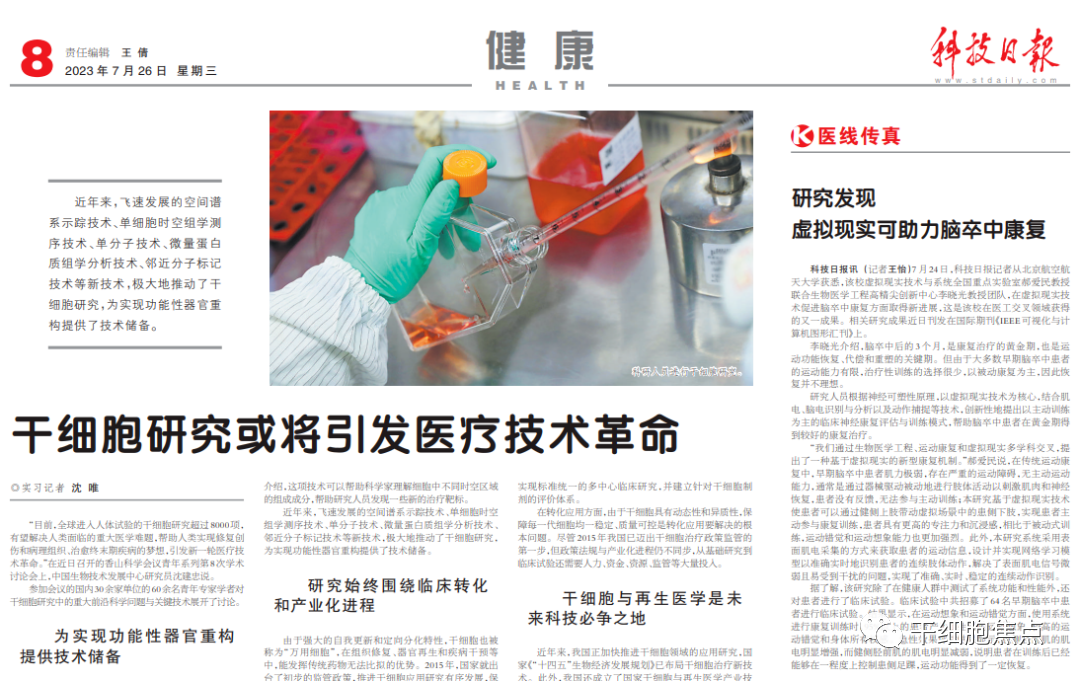
To provide a technological foundation for functional organ reconstruction
Stem cell research is booming. The development of new technologies and tools in stem cell research is crucial for addressing organ dysfunction caused by factors such as organ damage and aging.
Organoids are self-organized, three-dimensional structures formed spontaneously from stem cells and other types of cells—they’ve become a major focus in the field of stem cell research in recent years. Although organoids aren’t true human organs, they can closely mimic the structure and function of real organs. According to Dr. Gao Dong, a researcher at the Center for Excellence in Molecular Cell Science of the Chinese Academy of Sciences, organoids’ unique ability to self-renew and their tissue-specific characteristics enable them to effectively restore and repair damaged organs both structurally and functionally after transplantation. So far, researchers have already achieved several milestone breakthroughs in this area.
"For example, intestinal organoids derived from human cells can effectively integrate with and repair damaged human intestinal tissue. Similarly, bile duct organoids cultured in vitro, when transplanted into isolated human livers, have demonstrated the ability to restore and regenerate injured bile ducts. These cases highlight the unique advantages of organoid technology in recreating organ functions, while also showcasing the promising potential of organoids in the field of regenerative medicine," said Gao Dong.
"Understanding and mapping the molecular composition, dynamic changes, and interactions between stem cells and their niche within tissues and organs is crucial for uncovering the mechanisms underlying stem cell self-renewal, differentiation, and tissue regeneration. However, systematic methods for studying the components of the stem cell niche remain relatively limited," said Han Shuo, a researcher at the Institute of Biochemistry and Cell Biology of the Chinese Academy of Sciences. He added that, in recent years, proximity labeling techniques have emerged as a powerful tool for dissecting complex cellular molecular networks.
"Proximity labeling requires the use of tool enzymes and small-molecule substrates. The enzyme acts like a drawing pen, while the substrate functions as the ink. Using genetic engineering techniques, researchers can precisely position the 'pen' to target any specific region within a cell they wish to explore—and then, by dipping it into the 'ink,' they can map out the molecular composition of that particular area." Han Shuo explained, adding that this cutting-edge technology not only helps scientists unravel the intricate building blocks of different spatial and temporal regions within cells but also opens up new avenues for discovering promising therapeutic targets.
In recent years, rapidly advancing technologies such as spatial lineage tracing, single-cell spatiotemporal omics sequencing, single-molecule techniques, ultra-sensitive proteomics analysis, and proximity labeling approaches have significantly propelled stem cell research, providing the technological foundation needed to achieve functional organ reconstruction.
The research has always revolved around clinical translation and the industrialization process.
Due to their remarkable self-renewal and directed differentiation capabilities, stem cells are often referred to as "master cells," offering advantages in tissue repair, organ regeneration, and disease intervention that traditional drugs simply cannot match. In 2015, the government introduced initial regulatory policies to promote the orderly development of stem cell application research, ensuring public health and well-being.
“Currently, there are still many unresolved issues in China’s stem cell application research,” explained Su Shicheng, chief physician at Sun Yat-sen Memorial Hospital of Zhongshan University. He added that the two primary key indicators driving stem cell research—efficacy and risk—are particularly critical. Moreover, the long-term efficacy of most stem cell therapies remains less than ideal at present.
"The effectiveness of stem cell product formulations depends on factors such as their cell-replacement capacity and organ-targeting ability, as well as being closely tied to the cells' quality, the injection method, the optimal dosage, and the timing of treatment. 'Stem cells are inherently heterogeneous, which means stem cell preparations aren’t made up of a single component—and this heterogeneity directly influences therapeutic outcomes,' said Su Shicheng."
Additionally, some stem cell therapies carry safety risks, primarily including tumorigenicity, abnormal immune responses, and unintended differentiation. Su Shicheng explained that, since the purity of stem cell product formulations still needs improvement, undifferentiated cells may remain in the preparations. These cells could abnormally differentiate within the body, potentially leading to teratomas or other types of tumors.
Immune rejection is another significant risk associated with stem cell therapy. Currently, clinical approaches such as immunosuppressants, human leukocyte antigen (HLA) matching, and immune masking are employed to mitigate immunogenicity risks—but these techniques remain imperfect. For instance, while HLA matching and masking technologies offer the remarkable advantage of enabling coverage of the global population using just a small number of cell lines, they also come with drawbacks like off-target effects from gene editing.
Stem cell application research has always revolved around clinical translation and industrialization processes. Currently, several stem cell products have already been launched globally, but in China, no stem cell products or technologies have yet reached the market. Su Shicheng noted that the stem cell industry faces significant technological and talent barriers, and China urgently needs breakthroughs in core technologies—as well as a robust pool of expert talent—across critical areas such as stem cell isolation and extraction, large-scale expansion, variability regulation, and efficacy enhancement. Additionally, there currently remains no unified standard for clinical stem cell research protocols, while existing studies are often small in scale and generate limited data. Therefore, it is imperative to conduct multi-center clinical trials with standardized protocols and establish a comprehensive evaluation system specifically tailored to stem cell-based therapies.
In terms of translational applications, ensuring that each generation of cells remains uniform, stable, and of consistent quality is a fundamental challenge to address, given the dynamic and heterogeneous nature of stem cells. Although China took its first step in regulating stem-cell therapy policies in 2015, the policy framework still lags behind the pace of industrialization. Bridging the gap—from basic research to clinical trials—still requires substantial investments in human resources, funding, infrastructure, and regulatory support.
Stem cells and regenerative medicine are the battlegrounds of future technology.
In recent years, China has been accelerating its efforts to advance application research in the stem cell field. The country’s “14th Five-Year Plan for Bioeconomy Development” has already outlined plans for pioneering new stem-cell-based therapeutic technologies. Additionally, China has established the National Strategic Alliance for Stem Cell and Regenerative Medicine Industry Innovation, aiming to foster technological breakthroughs, facilitate the commercialization of research findings, and drive industry growth.
"As the cutting edge and strategic focal point of life science and medical research, stem cells and regenerative medicine represent a critical area of competition in the future development of science and technology," said Li Wei, a researcher at the Institute of Zoology, Chinese Academy of Sciences.
Regeneration refers to the body's ability to repair, replace, or restore damaged or missing tissues and organs, thereby recovering their structure and function. Traditional regenerative medicine primarily focuses on the physiological repair and functional reconstruction of tissue and organ damage caused by injury.
Li Wei stated that continuous breakthroughs in stem cell research have opened up new perspectives and directions for regenerative medicine. With advancements in fields such as 3D printing, gene editing, and biomaterials, emerging areas like cell therapy, gene therapy, and organ regeneration are rapidly taking shape. As a result, the scope and applications of regenerative research are expanding steadily, fostering a deep interdisciplinary integration of biology and medicine to form the evolving field of regenerative medicine.
Currently, regenerative medicine is primarily driven by stem cell research and applications, aiming to repair and reconstruct tissues and organs. It leverages principles and methods from diverse disciplines—including life sciences, materials science, computer science, and engineering—to explore and develop innovative techniques and medical approaches for tissue and organ regeneration and reconstruction at various levels, such as genes, cells, tissues, and organs.
As we enter the 21st century, technological advancements are advancing at an unprecedented pace. With groundbreaking developments in disruptive biotechnologies such as gene editing and synthetic biology continuously pushing boundaries, stem cell research is increasingly merging with cutting-edge technologies like artificial intelligence—revolutionizing the research paradigm in regenerative medicine and poised to drive transformative changes in the life sciences and healthcare industries.
"China is currently undergoing a critical period of economic and social transformation, marked by the convergence of multiple challenges. We urgently need to strengthen our strategic planning in stem cells and regenerative medicine, focusing even more intently on addressing key issues in this field. By adopting a systematic approach, advancing initiatives in an orderly manner, achieving groundbreaking original discoveries, and successfully translating these innovations into practical applications, we can secure a leading edge in future development—and ultimately support the nation’s drive to become a global science and technology powerhouse and an innovation-driven country," said Li Wei.
Reprint Notice: This article is reprinted from Science and Technology Daily. If there are any issues, please contact us for removal.
Related News

Here is the title—h1 placeholder text


Copyright © Jiuzhitang Maker (Beijing) Cell Technology Co., Ltd.
Powered by: 300.cn SEO | Privacy Policy