

News
News Center
Shandong Free Trade Zone, Jinan Area: Clinical Translation of Stem Cell Therapy and Other Innovations to Proceed Under Controllable Risk Conditions
2023-03-09
According to Shandong media reports on March 8, the Jinan Municipal Party Committee and Government held a series of press conferences themed "Focusing Hearts and Gathering Strength to Tackle Projects, Building Momentum and Unlocking Potential for Development." Chen Hao, Deputy Director of the Management Committee of the Jinan Area of the Free Trade Pilot Zone, stated that among the 140 new round of pilot tasks, the Jinan Area has taken on 93 high-standard openness initiatives, making it the region within the province that has undertaken the highest number of such initiatives and boasts the broadest scope of openness among the three pilot zones.

Empowering through higher-level industries to drive the effective clustering of projects. Focusing on four key sectors—biopharmaceuticals, the digital economy, international trade, and science & technology-driven finance—we aim to accelerate the transition from traditional to innovative growth drivers, fostering green, low-carbon, and high-quality development. Our goal is to meticulously build a modern industrial development cluster. First, we will leverage and amplify the distinctive advantages of the biopharmaceutical sector. This includes scaling up and strengthening traditional Chinese medicine (TCM) brands, establishing robust TCM diagnosis and evaluation systems, and promoting the standardized, large-scale transformation and upgrading of the TCM industry. Additionally, under controllable risk conditions, we will advance clinical translation of cutting-edge medical technologies such as stem-cell therapy and bioartificial liver treatments, while simultaneously building a comprehensive, end-to-end biopharmaceutical industry ecosystem.
Additionally, it was reported that in early 2023, the Shandong Provincial Government Information Office held a press conference. Zhang Xingcheng, Deputy Director of the Shandong Provincial Department of Commerce and Deputy Director of the Provincial Free Trade Office, introduced the development and release of the "China (Shandong) Pilot Free Trade Zone Deepening Reform and Innovation Plan." According to the introduction, the plan outlines Shandong's unique approach to enhancing the free trade zone strategy, marking the entry of Shandong's FTZ construction and development into its 2.0 era.
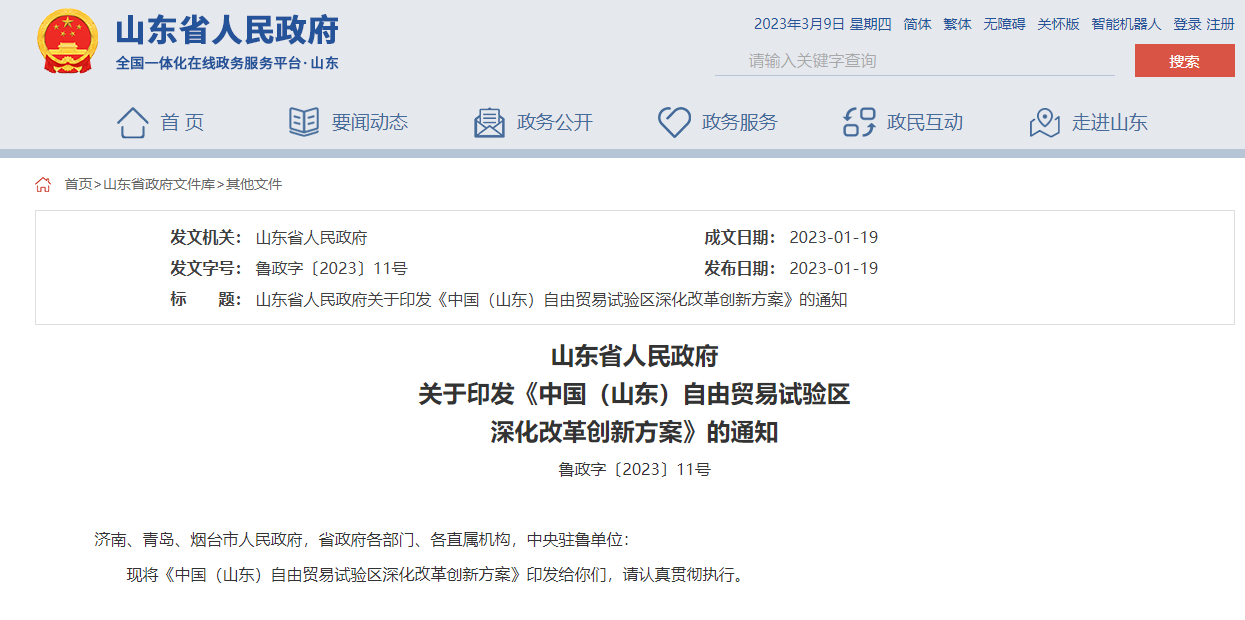
The plan explicitly states: Support multi-center clinical trials for biopharmaceutical products such as gene therapy and cell therapy, and implement mutual recognition of ethical review outcomes. Explore the development of a corresponding standards system, enabling pilot clinical translation applications—such as stem cell therapy and bioartificial liver—institutions under conditions where risks are effectively managed.
3. Building a Modern Industrial Development Cluster
(7) Drive innovative, full-chain development in the healthcare and wellness industry. Support multi-center clinical trials for biopharmaceutical products such as gene therapy and cell therapy, and implement mutual recognition of ethical review results. Establish public service platforms for food, drug, medical device, and gene technology R&D, offering comprehensive services spanning technology development, analytical testing, drug evaluation, and product registration. Explore the development of relevant standard systems and, under controllable risk conditions, pilot clinical translation applications like stem cell therapy and bioartificial liver treatments. Medical device manufacturers that have already obtained product registration certificates in other provinces (autonomous regions, or municipalities) and whose products align with national or provincial industry development plans will receive priority in inspection, review, verification, and approval when relocating their registered products to this province. Additionally, promote open sharing of healthcare data and refine data-sharing and exchange standards between commercial insurance providers and the healthcare sector. Finally, establish a robust framework of safety and efficacy evaluation methods and technical standards tailored specifically to traditional Chinese medicine.
Reprint Notice: This article is reprinted from the official website of the Shandong Provincial People's Government. If any infringement occurs, please contact us for removal.
Related News

Here is the title—h1 placeholder text


Copyright © Jiuzhitang Maker (Beijing) Cell Technology Co., Ltd.
Powered by: 300.cn SEO | Privacy Policy