

News
News Center
Shenzhen introduces the nation's first specialized legislation for the cell and gene industry, establishing a "fast-track channel" to accelerate the launch of innovative drugs.
2023-01-09
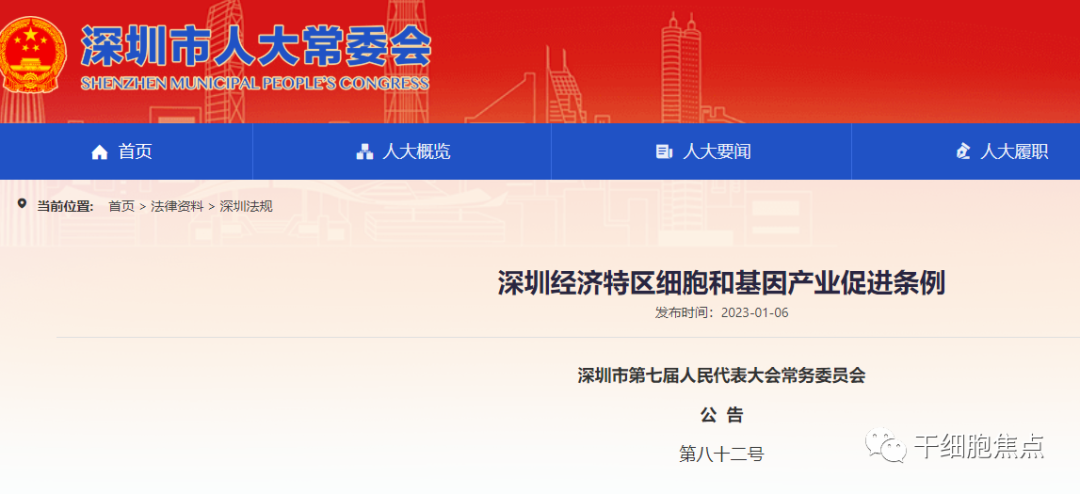
On January 7, the Standing Committee of Shenzhen Municipal People's Congress announced that China's first specialized legislation targeting the cell and gene industry, the "Shenzhen Special Economic Zone Regulations on Promoting the Cell and Gene Industry" (hereafter referred to as the "Regulations"), has been approved by vote and will come into effect on March 1.
The Regulations stipulate that, For cell and gene therapies currently undergoing clinical trials to treat life-threatening diseases with no effective treatment options available, if medical analysis indicates that the potential benefits outweigh the risks and the approach meets ethical standards, these therapies may, after regulatory review as per national guidelines and with informed consent obtained, be used in an expanded-access clinical trial setting within the medical institutions conducting the original trials. This allows patients with identical conditions who are unable to participate in the formal clinical trials to also benefit from these innovative treatments.
The Regulations also clearly stipulate that for conducting expanded clinical trials of cell and gene therapies, the applicant must have already completed the clinical trial phase supporting the new drug’s marketing authorization. Additionally, the drug registration applicant must have submitted a marketing license application to the National Medical Products Administration and, in accordance with national regulations, have formally applied for and received approval to proceed with the expanded clinical trials. This approach aims to further enhance access to these innovative therapies, building on the existing data that demonstrates their safety and efficacy.
Original text follows:
Shenzhen Special Economic Zone Regulations on Promoting the Cell and Gene Industry
(Adopted at the 14th Meeting of the Standing Committee of the 7th Shenzhen Municipal People's Congress on December 29, 2022)
Chapter 1 General Provisions
Article 1: To promote the healthy, sustainable, and high-quality development of the cell and gene industry, explore innovative industry models and regulatory approaches, enhance the overall advancement of the biopharmaceutical sector, and better meet the growing public demand for healthier lifestyles, these Regulations are formulated based on the fundamental principles of relevant laws and administrative regulations, tailored to the specific conditions of the Shenzhen Special Economic Zone.
Article 2: This regulation applies to activities such as the research, development, production, distribution, use, and safeguarding of cell and gene-based products intended for disease diagnosis and treatment within the Shenzhen Special Economic Zone.
Foreign investors and foreign-invested enterprises investing in the cell and gene industry must comply with the state's regulations regarding foreign investment access.
Article 3: The development of the cell and gene industries shall adhere to the following principles:
(1) R&D adheres to scientific rigor and ethical standards;
(II) Production adheres to risk management and comprehensive, end-to-end control;
(III) Applications should adhere to a health-oriented approach that benefits the public;
(4) Ensure sustained optimization of services to foster development.
Article 4: The Municipal People's Government is responsible for coordinating the city-wide development of the cell and gene industry, formulating policy measures to promote industrial growth, and addressing key issues in the industry's advancement.
The district people's government is responsible for coordinating the development of the cell and gene industry within its jurisdiction.
Article 5: The Municipal Development and Reform, Science and Technology Innovation, Industry and Information Technology, Health, Market Regulation, and other departments shall formulate and implement relevant policies to promote the development of the cell and gene industry within the scope of their respective responsibilities.
The municipal departments of science and technology innovation, health, and market regulation carry out cell and gene oversight activities within their respective areas of responsibility, in accordance with the law.
Article 6: The Municipal People's Government shall integrate the development of the cell and gene industries into the biopharmaceutical industry development plan.
To conduct statistical analysis and development assessments of the biopharmaceutical industry, it is essential to segment the development status of the cell and gene industries, while also enhancing industry information transparency and strengthening policy guidance.
Article 7: The Municipal People's Government shall strengthen the management and protection of human genetic resources, effectively prevent and address biosecurity risks, and promote the steady and healthy development of the cell and gene industries.
Biosecurity-related matters involved in the research, development, production, and application of cell and gene products must be handled in accordance with relevant national laws and administrative regulations.
Article 8: The municipal health commission, market supervision authorities, and other relevant departments shall implement appropriate management measures based on the risk level of cell and gene products.
Enterprises, research institutions, and healthcare organizations should establish comprehensive risk control systems for cell and gene products and implement necessary risk management measures.
Article 9: The Municipal People's Government shall enhance the clinical research and clinical trial system, establish a mechanism for coordinated development between clinical medicine and the cell and gene industries, and provide support for the growth of the cell and gene industry.
Article 10: Activities involving research, development, and application in the field of cells and genes must not jeopardize public health, national security, or the broader social interests, and shall undergo ethical review in accordance with relevant national regulations.
Article 11: Fully leverage the role of cell and gene-related industry organizations in areas such as research collaboration, policy recommendations, international exchanges, standard-setting, and self-regulatory management.
Article 12: The Municipal People's Government shall promote international and domestic cooperation in the cell and gene industry, supporting enterprises, universities, research institutions, and healthcare organizations to participate in the study and development of relevant regulations, facilitate scientific and technological exchanges, and foster innovation and growth within the industry.
Chapter 2: Cell Collection and Storage
Article 13: The collection of blood and tissue samples obtained through damaging or invasive methods must be conducted by medical and health institutions that possess the appropriate qualifications and facilities. If enterprises or research institutions need to collect cells using such methods, they must entrust the task to a qualified medical and health institution.
Article 14: Healthcare institutions collecting cells must comply with medical technical standards and carry out the collection activities strictly within the scope of their licensed practice.
Medical and healthcare institutions should establish a quality management system and standard operating procedures, equip themselves with personnel, facilities, equipment, and instruments that match their collection capabilities, and develop emergency response measures.
Article 15: Before collecting cells, enterprises, research institutions, healthcare organizations, and entrusted entities must clearly inform the individual being sampled about the purpose of collection, intended use of the samples, potential health implications, measures for protecting personal privacy, and the rights and obligations of the individual. Written consent from the individual must also be obtained.
If the person whose data is collected is a minor, lacks civil capacity, or has limited civil capacity, written consent from their guardian must also be obtained.
Article 16: Enterprises, research institutions, and healthcare organizations that store collected cells and the data generated from them must manage them in accordance with relevant regulations.
The management measures for cell collection and storage will be formulated separately by the municipal health commission in collaboration with the municipal market supervision department.
Article 17: Cell banks are encouraged to open up, in accordance with the law, to enterprises, institutions of higher learning, research organizations, and healthcare facilities, thereby fostering the sharing of industry resources and data.
Chapter 3: Cell and Gene Product Development
Article 18: Enterprises, higher education institutions, research organizations, and healthcare institutions are encouraged to establish research facilities in this city that are related to the cell and gene industry.
Encourage enterprises, universities, research institutions, and healthcare organizations to collaborate on industry-academia-research partnerships, share industry resources, and support fundamental research in areas such as cutting-edge cellular and genetic theories, pioneering technologies, and interdisciplinary fields at the forefront of innovation—ultimately fostering groundbreaking scientific and technological advancements.
Article 19: The Municipal People's Government shall consolidate its strengths and resources to establish a public service system that complies with quality management standards, thereby supporting the research and development of cell and gene-based products.
Article 20: Support enterprises, higher education institutions, research organizations, and medical institutions in collaborating to conduct clinical research and clinical trials in the fields of cell and gene therapies.
Clinical research, as defined in these regulations, refers to activities conducted by medical institutions that involve individuals or groups (including medical and health information) as the subjects of study. These activities are not aimed at product registration—for instance, for drugs or medical devices (including in vitro diagnostic reagents)—but rather focus on investigating the diagnosis, treatment, rehabilitation, prognosis, causes, prevention, and health maintenance related to diseases.
According to these regulations, a clinical trial refers to experimental activities conducted in qualified medical institutions—aimed at product registration—in accordance with national guidelines for clinical trial management. The purpose of these trials is to determine the safety and efficacy of drugs or medical devices (including in vitro diagnostic reagents).
Article 21: The Municipal People's Government shall increase financial investment in clinical research within the cell and gene fields, strengthen the cultivation of clinical research talent, establish clinical research funding programs, build public service platforms to support clinical research, and develop and refine an institutional framework that fosters the growth of clinical research initiatives.
Article 22: Clinical research and clinical trials in the fields of cell and gene therapies must uphold the dignity of participants and ensure their rights to life and health, informed consent, privacy, withdrawal, as well as access to medical care and financial compensation.
Article 23: Drugs used in clinical research and clinical trials in the cell and gene therapy fields must comply with Good Manufacturing Practice for pharmaceuticals.
Article 24: Encourage the effective accumulation of real-world data in clinical research within the cell and gene therapy fields, enhance the applicability of such data, and provide robust evidence on safety and efficacy to support new drug registrations—or serve as evidence for updating the labeling of already-marketed drugs.
Article 25: The municipal health department shall collaborate with the municipal market supervision department to strengthen oversight, management, and guidance of medical institutions in their proper conduct of clinical research and clinical trials in the fields of cell and gene therapies.
Article 26: The municipal health and wellness department shall collaborate with relevant departments to formulate policies that encourage tertiary medical institutions to conduct clinical research and trials in the fields of cell and gene therapies, and to establish internal clinical research management units and research-oriented patient wards.
Medical institution beds used during clinical research or clinical trials may, upon approval by the municipal health authority, be excluded from performance evaluations related to average length of stay, bed turnover rates, bed occupancy ratios, and associated cost metrics.
Article 27: Physicians, pharmacists, and other healthcare professionals are encouraged to conduct clinical research and trials in the fields of cell and gene therapies. The outcomes of such activities can be recognized as valid achievements for the professional and technical qualification assessment and appointment processes of healthcare personnel.
Article 28: Insurance companies are encouraged to develop insurance products such as clinical research and clinical trial liability insurance, product liability insurance, and commercial health insurance specifically tailored for the cell and gene therapy sectors.
For high-risk clinical research and clinical trial projects in the cell and gene therapy fields, commercial insurance coverage is encouraged to help bear the costs of treatment and provide appropriate financial compensation should subjects experience health-related injuries or fatalities linked to the study.
Chapter 4: Expanded Clinical Trials for Pharmaceuticals
Article 29: Cell and gene therapies currently undergoing clinical trials for serious, life-threatening diseases with no effective treatment options may, if medical analysis indicates that the potential benefits outweigh the risks and the trial meets ethical standards, be approved following national regulatory review and after obtaining informed consent. These therapies can then be used, via expanded access programs within the clinical trial sites, for other patients with identical conditions who are ineligible to participate in the drug’s clinical trials.
Clinical trials for the expanded use of cell and gene therapies must have already completed the clinical trial phases supporting the new drug’s marketing authorization. The drug registration applicant must have submitted a marketing license application to the National Medical Products Administration and, in accordance with national regulations, have formally applied to conduct the expanded clinical trials—and subsequently received approval.
Article 30: Before and during the conduct of expanded clinical trials for cell and gene therapies, applicants must communicate and exchange information with relevant authorities, such as the Center for Drug Evaluation under the National Medical Products Administration. The municipal market regulatory departments and other relevant agencies shall provide necessary guidance and support in this process.
Article 31: Cell and gene therapy drug applicants are encouraged, provided it aligns with the patients' wishes and best interests, to offer expanded-access clinical trial versions of their products to patients suffering from serious, life-threatening diseases for which no effective treatments currently exist. Safety data generated from these expanded-access trials can serve as valuable reference data to support the eventual approval and market launch of the drugs.
Article 32: Before conducting expanded clinical trials of cell and gene therapies, medical institutions and clinical trial sponsors must disclose to patients all essential information that may influence their decision-making. This includes the potential benefits, risks, adverse reactions, and available remedies associated with the use of cell and gene therapies. Additionally, patients must be specifically informed about the sources and possible consequences of these risks. Only after fully understanding this information should patients sign an informed consent form.
If the patient is a minor, lacks civil capacity, or has limited civil capacity, the medical institution and the clinical trial sponsor shall disclose the matters specified in the preceding paragraph to their legal guardian, who will then sign the informed consent form.
Article 33: Subjects have the right to unconditionally withdraw from the expanded clinical trial of cell and gene therapies in which they are participating at any time. Medical institutions and clinical trial sponsors must inform subjects about potential risks, adverse reactions, and available support measures that may arise after withdrawal.
Article 34: Clinical expansion trials of cell and gene therapies shall be terminated if any of the following circumstances occur:
(1) Serious, unexpected adverse reactions have occurred in the clinical application of cell and gene therapies;
(II) Quality issues arise with cell and gene therapies;
(III) Further clinical trial data for cell and gene therapies do not demonstrate efficacy;
(4) Cell and gene therapies receive approval from the national drug regulatory authority for market launch;
(5) Other circumstances that do not meet the requirements for conducting expanded clinical trials.
Chapter 5: Applications of Genetic Technology
Article 35: Support enterprises and research institutions in conducting research on gene sequencing technologies and bioinformatics analysis techniques, and in developing gene sequencing tools—as well as associated equipment, software, and databases—possessing core intellectual property rights.
Encourage enterprises and research institutions to participate in developing international, national, industry, and organizational standards related to gene sequencing and bioinformatics analysis.
Article 36: Sample collection and genetic testing institutions shall implement necessary measures, such as de-identification, during the handling of sample transfers and the transmission of test information, to protect the privacy of individuals tested and ensure the security of genetic data.
Article 37: The use of genetic sequencing information shall require the consent of the individual being tested. Where laws or administrative regulations stipulate that written consent must be obtained, such provisions shall prevail.
Article 38: Any judgments made regarding disease risk, medication plans, nutritional metabolism, reproductive risks, and other factors based on genetic sequencing results must be supported by sound rationale, along with a clear indication of the source of that rationale.
Article 39: Medical institutions are encouraged to utilize genetic diagnostic technologies in supporting clinical diagnosis.
Chapter 6: Marketing Authorization and Product Manufacturing
Article 40: The municipal market regulatory authority shall provide enterprises with pre-launch services such as policy consultation and end-to-end business guidance for applying for marketing authorization of innovative cell and gene-based drugs and medical devices.
Article 41: For products that meet the criteria for breakthrough therapeutic drugs, conditional approval for marketing, priority review and approval, or special approval procedures, the municipal market regulatory authority shall establish a convenient and efficient consultation channel. This channel will support and assist enterprises in communicating and engaging with the National Medical Products Administration and the Guangdong Provincial Medical Products Administration regarding registration, review, licensing, and other related matters. Authorities will promptly monitor the registration progress and provide guidance to companies as they apply for marketing authorization through the National Medical Products Administration.
Article 42: The municipal market regulatory authority may, in accordance with the regulations on innovative services for the biopharmaceutical industry, submit recommendations to the Guangdong Provincial Drug Administration for key projects, key enterprises, and priority regions. Additionally, applicants seeking registration for cell and gene therapies, as well as medical devices, are encouraged to apply directly to the Guangdong Provincial Drug Administration for inclusion in the province’s key biopharmaceutical initiatives and enterprise programs.
The municipal market supervision authorities and other relevant departments should provide convenient services to applicants registering cell and gene therapies, as well as medical devices—especially those projects, enterprises, or regions designated as priorities—thereby accelerating the time-to-market for these innovative treatments and technologies.
Article 43: Enterprises shall, in accordance with the Marketing Authorization Holder system for pharmaceuticals or the Registration and Filing System for medical devices, either conduct cell and gene product manufacturing themselves or entrust qualified enterprises to do so.
For contract manufacturing, the commissioning company and the contract manufacturer must sign a commissioning agreement and a quality agreement to ensure product quality and safety.
Enterprises should establish and improve relevant management systems in accordance with national and Guangdong provincial regulations on the direct reporting of adverse drug reaction reports by marketing authorization holders or adverse event monitoring by medical device registration/filing entities, and implement effective risk control measures.
Article 44: The production of cell and gene products shall comply with the requirements of Good Manufacturing Practice for Pharmaceuticals, Good Manufacturing Practice for Medical Devices, and their respective annexes.
Cell and gene product manufacturers should establish a risk assessment system, develop risk control strategies, and eliminate factors that could compromise the quality of cell and gene products.
Article 45: Cell and gene product manufacturing enterprises shall establish a comprehensive quality control system covering the entire process—from sample collection, transportation, and receipt, through product production and testing, to finished-product release, storage, and shipment.
Article 46: Cell and gene product manufacturing enterprises shall establish an information management system and an electronic traceability system to comprehensively record, track, evaluate, and manage product quality, ensuring that all-process information is authentic, accurate, complete, and readily traceable.
Article 47: Support the Shenzhen Institute of Pharmaceutical Inspection in undertaking cell and gene product quality testing and inspection tasks for national pharmaceutical testing institutions, as well as in drafting local and industry-specific standards for tissue and cell/gene products, and providing technical arbitration services. Additionally, support its application for qualification as a national biologic product lot release agency.
Encourage the establishment and introduction of qualified third-party professional inspection and testing institutions to provide quality inspection and testing services for cell and gene products.
Article 48: Promote the establishment of a municipal cell and gene product testing and inspection platform, led by the Shenzhen Institute for Pharmaceutical Inspection, with the participation of other qualified third-party professional testing and inspection organizations. This platform will conduct research on testing methodologies, quality standards, and safety evaluation technologies, thereby enhancing the overall capacity to provide testing and inspection services for cell and gene products.
Article 49: Enterprises, research institutions, medical and healthcare organizations, and others conducting promotional activities or providing explanations about cell and gene products must do so objectively, truthfully, and accurately. Any form of false or misleading advertising is strictly prohibited.
Chapter 7: Safeguard Measures
Article 50: The Municipal People's Government shall introduce relevant measures to provide support for the development of the cell and gene industry, including strengthening industrial foundations, improving industrial and supply chains, ensuring adequate industrial space, building a skilled talent pool, fostering scientific research, and offering financial assistance.
Article 51: The Municipal People's Government shall integrate the promotion of the cell and gene industry development into the coordination mechanism for biopharmaceutical industry growth.
Article 52: The municipal departments of Development and Reform, Industry and Information Technology, Health, Market Regulation, and others shall enhance the efficiency of administrative approvals for matters related to the cell and gene industry within their respective areas of responsibility.
Article 53: Support the establishment of the Guangdong-Hong Kong-Macao Greater Bay Area Branch Centers for Drug Review and Inspection under the National Medical Products Administration, as well as the Greater Bay Area Branch Center for Medical Device Review and Inspection, to foster the development of Shenzhen's cell and gene industries.
Article 54: The municipal departments of science and technology innovation, health, and market regulation, among others, shall provide consultation and guidance services to enterprises, research institutions, and medical and healthcare organizations applying for approvals related to human genetic resources. Efforts will be made to establish a dedicated approval management platform for human genetic resources, enhancing the capacity to review and approve such applications, and supporting the development of innovative medical products and technologies in cell and gene therapies.
Article 55: Promote collaborative partnerships within the cell and gene industry ecosystem, and encourage third-party service providers to offer comprehensive services such as pharmaceutical research, preclinical studies, clinical research, clinical trials, standard development, inspection and testing, and regulatory submissions. Together, these efforts will help establish a full-chain industry incubation system and enhance end-to-end industry support services.
Article 56: Support enterprises as the main actors in tackling core technologies related to essential reagents, consumables, and instrumental equipment required for the cell and gene industry chain, thereby fostering greater autonomy and control over both the industry and supply chains.
Article 57: Support the development of outsourcing service platforms for research and development, as well as for the production in the cell and gene industries.
Article 59: Public medical institutions conducting clinical research or clinical trials in the cell and gene fields, as well as applications for research outcome transformation (translation: technology transfer), may refer to and apply the scientific research and translation policies applicable to research-oriented public institutions.
Article 58: For imported reagents, consumables, instruments, and equipment required by the cell and gene industries—provided they meet biosafety standards—customs shall establish a green channel, streamline approval procedures, and significantly reduce both the processing and import timelines.
Companies, research institutions, and healthcare organizations that regularly engage in cell and gene research, clinical studies and trials, or the import/export of related products can submit applications to the city’s science and technology innovation department. In response, the department will establish a dedicated unit directory and periodically share it with customs authorities. Additionally, the department will collaborate with customs to provide tailored credit-building support for entities on the list, offering streamlined customs clearance benefits to units officially certified by customs.
Article 59: Public medical institutions conducting clinical research or clinical trials in the cell and gene fields, as well as applications for research成果转化 (translation: technology transfer), may refer to and apply the scientific research and translation policies applicable to research-oriented public institutions.
Article 60: Medical institutions are encouraged to establish performance incentive mechanisms for clinical research and clinical trials in the cell and gene fields, with performance allocations favoring teams actively engaged in such research and trials.
Article 61: The city's development and reform department shall coordinate the city's industrial spatial planning, designate specific areas for establishing specialized parks dedicated to the cell and gene industries, encourage the development of innovative industry clusters in these fields, and support major projects, key platforms, and essential infrastructure resources in the cell and gene sectors by directing them toward these designated parks.
Article 62: The Municipal People's Government shall promote the establishment of a collaborative mechanism for the cell and gene industries within the Guangdong-Hong Kong-Macao Greater Bay Area, explore partnerships in areas such as clinical research and trials, as well as industrial translation, strengthen industry linkages, and optimize cross-regional industrial planning.
Article 63: The municipal and district people's governments shall fully leverage the supporting role of government investment funds in the development of the cell and gene industry, guide social capital investments, and promote the research and development of cell and gene products as well as the commercialization of their scientific and technological achievements.
Article 64: Financial institutions are encouraged to provide financial support for the development of the cell and gene industry, increase lending support, and help reduce financing costs for enterprises.
Support qualified cell and gene companies in listing on the stock market.
Article 65: Strengthen intellectual property protection in the cell and gene fields, enhance inter-departmental coordination and collaboration, vigorously crack down on intellectual property infringement, and safeguard the rights and interests of intellectual property owners in accordance with the law.
Explore intellectual property financial services for cell and gene companies, such as IP-backed financing through asset pledges and IP insurance, and develop intellectual property securitization products for fundraising.
Chapter 8: Legal Liability
Article 66: In any of the following circumstances, the municipal health and wellness authorities, together with the market supervision departments, shall, according to their respective responsibilities, order an immediate cessation of the illegal activity and impose a fine ranging from 10,000 yuan to 50,000 yuan:
(1) The collecting entity does not comply with Article 13 of these Regulations;
(II) Failure to clearly inform participants about the details of sample collection;
(III) Failure to store collected cells and the data generated from them as required.
Article 67: Enterprises, research institutions, medical and health organizations, and their staff members who violate biosafety laws and regulations during the research, development, production, distribution, and use of cell and gene-based products shall be subject to penalties in accordance with the provisions of the "Biosecurity Law of the People's Republic of China," the "Law of the People's Republic of China on Guarding State Secrets," the "Regulations on the Administration of Human Genetic Resources of the People's Republic of China," and other relevant laws and regulations.
Article 68: Healthcare institutions and their staff members who violate medical and health laws and regulations during the conduct of cell and gene therapy activities shall be subject to penalties in accordance with the provisions of the "Basic Medical and Health Law of the People's Republic of China" and the "Shenzhen Special Economic Zone Medical Regulations," among other relevant laws and regulations.
Article 69: If a cell and gene product manufacturer engages in activities that violate pharmaceutical management laws and regulations during the research, development, production, distribution, or use of cell and gene products, it shall be subject to penalties as stipulated in the "Drug Administration Law of the People's Republic of China," the "Implementation Regulations of the Drug Administration Law of the People's Republic of China," and other relevant laws and regulations.
Article 70: Enterprises, research institutions, medical and health organizations, and others that engage in false or misleading advertising of cell and gene products shall be penalized in accordance with the provisions of the "Anti-Unfair Competition Law of the People's Republic of China" and the "Advertising Law of the People's Republic of China."
Article 71: Relevant departments and their staff members who abuse their authority, neglect their duties, or engage in corruption and malpractice while promoting the cell and gene industry shall be disciplined according to law for the directly responsible supervisors and other personnel with direct accountability. If their actions constitute a crime, they shall be held criminally liable in accordance with the law.
Chapter 9 Supplementary Provisions
Article 72: This regulation shall come into effect on March 1, 2023.
Interpretation of the "Shenzhen Special Economic Zone Regulations on Promoting the Cell and Gene Industry"
The "Shenzhen Special Economic Zone Regulations on Promoting the Cell and Gene Industry" (hereinafter referred to as the "Regulations") were adopted at the 14th Meeting of the Standing Committee of the 7th Shenzhen Municipal People's Congress on December 29, 2022, and will come into effect on March 1, 2023. An interpretation of the relevant details is provided below.
I. The Necessity of Legislation
Formulating the Regulations is essential to implementing the new development philosophy. The report from the 20th National Congress of the Communist Party of China emphasized, "We must promote the integrated and clustered development of strategic emerging industries, fostering a batch of new growth engines—including next-generation information technology, artificial intelligence, biotechnology, new energy, new materials, high-end equipment, and green environmental protection." Meanwhile, the CPC Central Committee’s Proposal on Formulating the 14th Five-Year Plan for National Economic and Social Development and the Visionary Goals for 2035, under the section on "Developing Strategic Emerging Industries," calls for accelerating the expansion of industries such as biotechnology. Cells and genes represent the most innovative and promising sub-sector within the biopharmaceutical industry. Therefore, enacting legislation to boost the growth of the cell and gene industry is a critical step in studying and implementing the spirit of the 20th CPC National Congress, putting the new development philosophy into practice, shaping a new development paradigm, and driving high-quality economic growth.
Formulating the Regulations is essential to implementing Shenzhen’s pilot program for comprehensive reform. The "Implementation Plan for Shenzhen’s Pilot Program of Comprehensive Reform as a Demonstration Zone for Building Socialism with Chinese Characteristics (2020–2025)" emphasizes supporting Shenzhen in expanding its legislative scope within the special economic zone, strengthening legislative exploration in emerging fields, and enacting regulations and rules tailored to the unique needs of the special zone under the law. The Comprehensive Reform Pilot Implementation Plan grants Shenzhen pioneering authority in cutting-edge areas such as artificial intelligence, autonomous driving, big data, biomedicine, and healthcare, enabling the city to fully leverage its special economic zone legislative powers for innovative experimentation. As one of Shenzhen’s “20+8” emerging industrial clusters, the biopharmaceutical industry stands at the forefront of this strategic initiative. By advancing legislation that fosters the growth of cell and gene-based industries, Shenzhen can better align these sectors with its innovation-driven development strategy, paving the way for a transformative leap forward in the city’s biopharmaceutical sector.
Formulating the Regulations is essential to driving the high-quality development of the cell and gene industry. As a key growth area for the future of the biopharmaceutical sector, the cell and gene industry has garnered significant attention from Shenzhen. The city has prioritized advancing both fundamental scientific research and industrialization in this field, actively attracting top-tier talent teams from home and abroad while establishing diverse innovation platforms in stem cells and cell therapy. However, compared to some other provinces and cities across China, Shenzhen’s cell and gene industry remains relatively underdeveloped, facing several critical challenges that hinder its full potential. These include the need to strengthen basic research, an incomplete industrial ecosystem, and insufficient capacity within medical institutions to meet the demands of clinical studies. By enacting legislation to foster the growth of the cell and gene industry, Shenzhen can systematically address the industry’s most pressing pain points, bottlenecks, and difficulties through institutional frameworks. This approach will not only encourage technological innovation but also propel the sector toward sustainable, high-quality development—ultimately enhancing public health and well-being while contributing to the broader vision of building a healthier China.
II. Key Content and Institutional Innovations
The Regulations represent the nation's first specialized legislation dedicated to the cell and gene industry, comprising nine chapters and 72 articles. These cover general provisions, cell collection and storage, research and development of cell and gene-based products, expanded clinical trials for pharmaceuticals, applications of gene technologies, market authorization and product manufacturing, safeguard measures, legal responsibilities, and supplementary provisions. The key contents of the Regulations are as follows:
(1) Standardize Cell Collection and Storage Practices
To enhance the management of cellular biological resources while meeting the needs of industrial development and safeguarding the rights of relevant personnel, the Regulations standardize the collection and storage of cells. First, the regulations aim to improve the efficiency of cell and gene collection while reducing associated costs. Specifically, it stipulates that the collection of blood and tissue samples obtained through invasive or damaging procedures must be conducted by medical institutions equipped with the necessary qualifications and capabilities. At the same time, since non-invasive and non-damaging methods—such as collecting cells from hair or excreta—require less stringent technical expertise from both personnel and equipment, these methods are not restricted to professional medical institutions. Second, the regulations clarify that medical institutions carrying out cell collection must adhere to established medical technical standards and operate strictly within the scope of their licensed practice. Third, before collecting cells, healthcare providers are required to clearly inform donors about the purpose of the collection, its intended use, potential health implications, measures for protecting personal privacy, and the rights and responsibilities of the donor—and only proceed after obtaining the donor’s written consent. Finally, to ensure effective implementation of these regulatory measures, the Municipal Health Commission, in collaboration with the Municipal Market Supervision Department, is tasked with developing comprehensive guidelines for the collection and storage of cells.
(II) Supporting the Conduct of Clinical Research and Clinical Trials
Clinical research and clinical trials are critical components of the cell and gene industry, playing a pivotal role in driving the sector’s overall growth and development. Guided by the needs of industry advancement, the Regulations focus specifically on clinical research and trials, aiming to propel the high-quality development of the cell and gene industry. First, the regulations promote integrated collaboration among industry, academia, and research institutions. They encourage enterprises, universities, research organizations, and medical institutions to engage in collaborative partnerships, fostering the sharing of industry resources. This support extends to fundamental research in key areas such as groundbreaking cellular and genetic theories, pioneering technologies, and cutting-edge interdisciplinary fields, while also enabling joint efforts in conducting both clinical trials and studies within the cell and gene domain. Second, the regulations prioritize the benefits of the public. They mandate that all clinical research and trials in the cell and gene field must uphold the dignity of participants, ensuring their rights to health, informed consent, privacy, and the ability to withdraw from studies at any time—as well as access to medical care and financial compensation when applicable. Additionally, by encouraging insurance companies to develop specialized insurance products tailored to the cell and gene sector, the regulations help mitigate risks associated with clinical research and trials, thereby boosting stakeholder engagement and safeguarding public interests. Third, the regulations emphasize the effective utilization of real-world data. They encourage the systematic accumulation of robust real-world data during clinical research in the cell and gene field, enhancing the practical applicability of such data. This, in turn, provides crucial evidence of safety and efficacy for new drug approvals or supports updates to the labeling of already approved medications. Finally, the regulations are firmly rooted in innovation-driven principles. By stimulating creativity and scientific breakthroughs in medical research, they aim to energize healthcare institutions and professionals, motivating them to actively participate in clinical research and trials.
(III) Enhance the System for Expanded Clinical Trials of Drugs
To enhance the accessibility of cell and gene therapies while ensuring their safety and efficacy, the Regulations provide specific guidelines for an expanded clinical trial system—without altering national approval authorities or lowering approval standards. First, the regulations further refine the framework for expanded clinical trials of cell and gene therapies. Specifically, they allow cell and gene drugs currently in clinical trials for treating life-threatening diseases with no other effective treatment options to be used, under certain conditions, in expanded clinical trials within the same medical institution where the original trial is conducted. These conditions include: - Medical analysis indicates that the potential benefits outweigh the risks; - Ethical requirements are met; - The use has been reviewed and approved according to national regulations; - Informed consent has been obtained from the patient. Additionally, the regulations clearly stipulate that any expanded clinical trial involving cell and gene therapies must already have completed the clinical trial phase required for new drug registration. Furthermore, the drug’s applicant must have submitted a marketing authorization application to the National Medical Products Administration (NMPA) and received approval to proceed with the expanded trial as per national guidelines. This approach strikes a balance by leveraging existing data to improve access to these innovative treatments while maintaining rigorous safety and efficacy standards. Second, the regulations place strong emphasis on safeguarding patients’ rights and interests. Before initiating an expanded clinical trial of a cell or gene therapy, medical institutions and sponsors are required to fully disclose to patients all critical information that could influence their decision-making process. This includes details about the potential benefits, risks, adverse effects, and available remedies associated with the treatment. Special attention must also be given to highlighting the sources and consequences of potential risks. Only after patients thoroughly understand this information can they sign an informed consent form. Moreover, the regulations explicitly grant participants the right to withdraw from the trial at any time without penalty or condition. To ensure transparency, medical institutions and sponsors are further obligated to inform participants promptly if they decide to discontinue their involvement in the trial.
(IV) Encourage the Development and Application of Genetic Technologies
The application of gene technology represents the future direction of the biopharmaceutical industry. Our city’s gene sequencing and bioinformatics analysis technologies have already advanced to the global forefront. To better support innovation in this field, the ordinance dedicates an entire chapter specifically addressing the application of gene technology. First, it encourages technological innovation by providing support for research into gene sequencing and bioinformatics analysis techniques, as well as for developing gene sequencing tools—and their accompanying equipment, software, and databases—that possess core intellectual property rights. Additionally, the ordinance fosters collaboration between enterprises and research institutions in shaping international, national, industry, and even consortium-based standards related to gene sequencing and bioinformatics analysis. Second, the ordinance emphasizes the protection of information security. Given the critical importance of personal biometric data generated through genetic testing, and considering the severe negative consequences—such as genetic discrimination—that can arise from leaks or misuse, the document mandates the implementation of de-identification measures at multiple stages of genetic testing. It also stipulates that the use of gene sequencing information must be explicitly authorized by the individual being tested, ensuring both data security and the safeguarding of participants' privacy. Finally, the ordinance clarifies guidelines for interpreting gene sequencing results. It stresses that any conclusions drawn about disease risks, medication plans, nutritional metabolism, reproductive risks, or other health-related factors based on gene sequencing outcomes must be grounded in sound scientific evidence, with clear documentation of the sources supporting those conclusions. Lastly, the ordinance promotes the broader adoption of gene diagnostics in clinical settings, encouraging healthcare institutions to leverage these technologies as valuable tools for enhancing diagnostic accuracy and patient care.
(5) Supporting Product Applications for Market Approval
To promote the translation and application of scientific research achievements in the cell and gene field, the regulations encourage and support companies in this sector to engage in R&D, registration, and production of cell and gene products, thereby driving the high-quality development of Shenzhen’s cell and gene industry. The regulations also facilitate the process of applying for marketing authorization and production licenses for cell and gene products. First, they mandate that market regulatory authorities provide enterprises with pre-launch services, including policy consultations and comprehensive business guidance, to assist them in filing applications for innovative cell and gene-based drugs and medical devices. Second, for products meeting specific review criteria—such as those qualifying as breakthrough therapies, eligible for conditional approval, suitable for priority review and approval, or fitting within special approval procedures—the regulations establish streamlined and efficient communication channels. These channels are designed to support and assist companies in engaging with both the National Medical Products Administration (NMPA) and the Guangdong Provincial Medical Products Administration on matters related to registration, review, and licensing. Authorities will promptly monitor registration progress and guide companies through the process of applying for marketing authorization at the NMPA. Third, in line with the provisions governing innovative services for the biopharmaceutical industry, the regulations enable provincial medical product authorities to receive recommendations for key projects, leading companies, and priority regions from Guangdong Province. This initiative supports applicants of cell and gene-based drugs and medical devices in submitting their applications as key projects or enterprises within the province’s biopharmaceutical industry, while offering convenient and tailored services to expedite the process. Finally, the regulations endorse the Shenzhen Institute for Drug Control to undertake critical tasks such as quality testing and inspection of cell and gene products on behalf of national drug-testing institutions. Additionally, the institute is encouraged to apply for accreditation as a national biological product release agency. Moreover, the regulations aim to foster the establishment of a city-level cell and gene product testing and inspection platform, led primarily by the Shenzhen Institute for Drug Control, with participation from other qualified third-party professional testing and inspection organizations. This collaborative effort will significantly enhance the overall capacity and efficiency of cell and gene product testing and inspection services in the region.
(6) Strengthen Support for Industry Sectors
The Regulations focus on promoting and supporting the cell and gene industry by implementing targeted support measures that span optimizing government services, covering the entire industry chain, strengthening talent development, and fostering innovative industrial clusters—thereby significantly boosting efforts to advance and nurture this cutting-edge sector. First, the regulations aim to fortify the industry’s foundation through initiatives such as enhancing approval efficiency, establishing green channels, and providing expert guidance services. Second, they support the establishment of the Greater Bay Area branch centers for drug review and inspection under the National Medical Products Administration, as well as the Greater Bay Area branch center for medical device evaluation and inspection. Third, comprehensive advisory and guidance services are offered to assist enterprises, research institutions, and healthcare organizations in applying for approvals related to human genetic resources. Additionally, a dedicated platform for managing human genetic resource approvals will be established to enhance the overall capacity and efficiency of these processes. Fourth, the regulations encourage collaborative development within the cell and gene industry, creating a robust, end-to-end industry incubation system that ensures seamless support across the entire value chain. Companies are also encouraged to tackle critical technological challenges in key areas such as essential equipment, reagents, and consumables vital to the cell and gene industry, thereby fostering supply chain resilience and self-reliance. Finally, the framework includes incentives like performance-based rewards and incentives tied to successful technology commercialization, helping to attract and retain top talent while boosting researchers’ motivation and productivity. To further catalyze innovation, designated specialized parks will be set up to foster the growth of cell and gene industry innovation clusters. Major projects, flagship platforms, and critical infrastructure resources in this sector will be prioritized for allocation within these parks, ensuring ample industrial space and logistical support.
Reprint Notice: This article is reprinted from Shenzhen People's Congress Website. If there are any issues, please contact us for removal.
Related News

Here is the title—h1 placeholder text


Copyright © Jiuzhitang Maker (Beijing) Cell Technology Co., Ltd.
Powered by: 300.cn SEO | Privacy Policy