

News
News Center
China's Ministry of Propaganda Holds Press Conference on "China in the Past Decade" | Minister of Science and Technology Wang Zhigang Highlights China's Breakthroughs in Fields Like Stem Cells, Marked by a Series of Internationally Recognized Original Achievements
2022-06-08
"In the future, China’s door to opening up in science and technology will only grow wider. We are eager to collaborate and exchange ideas with more countries in the global scientific community, striving to contribute even more Chinese innovations to the world’s technological progress and sustainable development." On June 6, Minister of Science and Technology Wang Zhigang emphasized this at a press conference held by the Publicity Department of the CPC Central Committee, titled "Implementing an Innovation-Driven Development Strategy and Building a Science-and-Technology Powerhouse." He also noted that over the past decade, China has pursued an international science and technology cooperation strategy characterized by openness, inclusiveness, mutual benefit, and shared growth, fostering continuously expanding partnerships with 161 countries and regions worldwide.
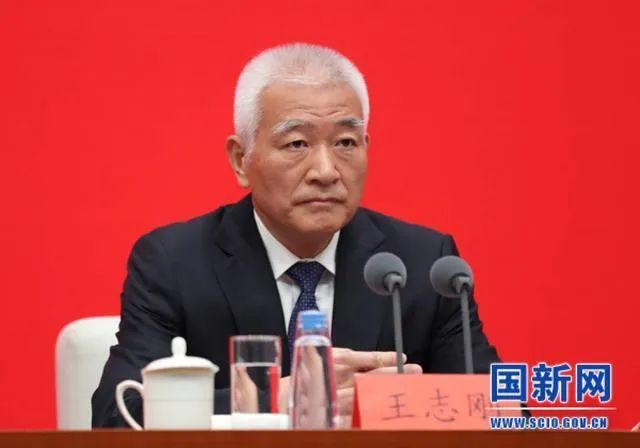
Wang Zhigang noted that over the past decade, China's science and technology sector has undergone historic, comprehensive, and transformative changes, successfully positioning the country among the ranks of innovative nations. This progress reflects a clear path of development—growing stronger first in talent and technology, then in industry, economy, and ultimately, national strength. Nationwide R&D investment surged from 1.03 trillion yuan in 2012 to 2.79 trillion yuan in 2021, while R&D intensity rose sharply from 1.91% to 2.44%. Meanwhile, according to the Global Innovation Index released by the World Intellectual Property Organization, China climbed steadily from 34th place in 2012 to 12th in 2021. As a result, China’s standing and influence on the global innovation landscape have undergone a remarkable shift. "China is not only a key participant in cutting-edge international innovation but also a vital contributor to addressing global challenges together," Wang emphasized.
Over the past decade, central and local governments have worked in seamless coordination, fostering collaborative innovation across eastern, central, and western regions. Meanwhile, science, technology, industry, and finance have converged to drive integrated growth, providing robust support for development, deepening reforms, and advancing open policies in a balanced and comprehensive manner. Together, these efforts have united the nation—both at the national level and across all regions—in a powerful collective drive toward bold innovation and progress.
Wang Zhigang stated that China adheres to the "Four Orientations," which have helped shape a new strategic framework for science and technology innovation—driving both development and security. By focusing on the global forefront of science and technology, China simultaneously pursues goal-oriented research and independent, curiosity-driven exploration, leading to a series of groundbreaking, internationally recognized achievements in fields such as quantum information, stem cells, and brain science. Focusing on the main economic front, high-quality technological advancements will drive industries toward the mid-to-high end, ensuring the security and stability of industrial and supply chains. Emerging technologies such as supercomputing, artificial intelligence, big data, and blockchain are accelerating their adoption, fueling the rapid growth of new industries and business models like the digital economy. Addressing critical national needs, we’re stepping up efforts to tackle key core technologies, filling gaps and strengthening capabilities in strategically vital areas—supporting the smooth implementation of major projects such as the Hong Kong-Zhuhai-Macau Bridge and the Sichuan-Tibet Railway. Meanwhile, innovations in deep-sea oil and gas exploration, clean and efficient coal utilization, and next-generation nuclear power technologies are providing robust safeguards for the nation’s energy security. On the frontlines of people’s health and well-being, we’ve mobilized top national talent to spearhead emergency research efforts in pandemic response, yielding significant scientific breakthroughs in vaccines, therapeutics, and diagnostic tools—crucial advancements that have powerfully supported COVID-19 prevention and control. Moreover, cutting-edge pharmaceuticals, domestically produced high-end medical devices, and advanced treatment technologies are enabling people across the country to benefit from more high-quality, innovative solutions tailored to their needs.
At the same time, we will continue to drive innovation through reform, maximizing the enthusiasm and creativity of all innovation actors and researchers. "People are the most critical factor in scientific and technological innovation," said Wang Zhigang. "Over the past decade, our reforms in the science and technology system have been squarely focused on empowering individuals—improving mechanisms for talent cultivation, utilization, evaluation, motivation, and recruitment." He added that reforms in science and technology programs and research funding management have helped ease burdens and streamline operations for researchers, while efforts to foster scientific integrity have created a healthier innovation ecosystem. Meanwhile, capacity-building among innovation entities has been strengthened, the development of China’s distinctive national laboratory system is accelerating, and high-level research universities and top-tier scientific institutions continue to enhance their research capabilities. As a result, a growing number of internationally competitive tech firms are emerging, further bolstering the efficiency and smooth functioning of the nation’s innovation ecosystem.
Additionally, by consistently pursuing greater openness, China has forged a new paradigm of international scientific and technological cooperation that is comprehensive, multi-layered, and broadly inclusive. Over the past decade, we have implemented an open, inclusive, and mutually beneficial international science and technology strategy, fostering continuously evolving partnerships with 161 countries and regions. Meanwhile, the "Belt and Road" initiative is accelerating its path toward innovation. In critical areas such as tackling climate change, ensuring food security, and advancing human health and well-being, collaborative research efforts with global partners have yielded remarkable achievements. Looking ahead, China’s commitment to opening up its scientific and technological sector will only deepen, with the door wide open for collaboration. We are eager to engage in exchanges and partnerships with even more nations, working together to drive global scientific progress and contribute meaningfully to sustainable development—both domestically and around the world," emphasized Wang Zhigang.
Reprint Notice: This article is reprinted from the "China in the Past Decade" press conference held by the Publicity Department of the CPC Central Committee. If there are any copyright issues, please contact us for removal.
Related News

Here is the title—h1 placeholder text


Copyright © Jiuzhitang Maker (Beijing) Cell Technology Co., Ltd.
Powered by: 300.cn SEO | Privacy Policy