

News
News Center
Stem cells deliver another breakthrough! The world’s first woman to achieve HIV remission has been born.
2022-02-18
On February 15, at the 29th Conference on Retroviruses and Opportunistic Infections (CROI) held in Denver, USA, a research team from Weill Cornell Medicine reported a groundbreaking case: a woman in New York City who was living with HIV and acute myeloid leukemia (AML) became the first woman—and only the third person worldwide—to achieve HIV remission after receiving a stem cell transplant from a donor naturally resistant to HIV.
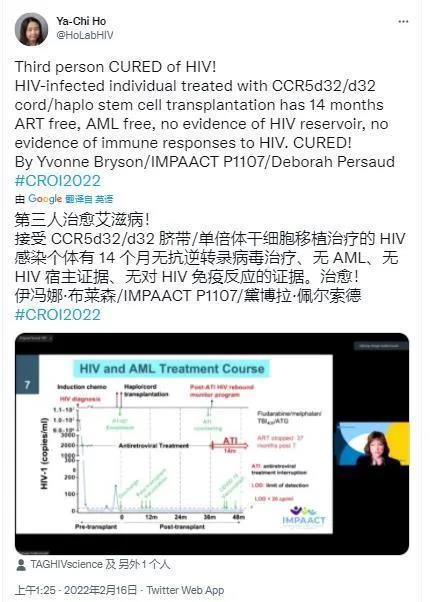
This study has significant clinical implications. Researchers say this is the world's first case involving umbilical cord blood stem cell transplantation, and it could pave the way for new treatments that help more patients fight AIDS.
According to reports, the female patient was diagnosed with HIV in 2013, and antiviral medications have helped keep her viral load at a low level.
She was subsequently diagnosed with leukemia in March 2017, and in August of the same year, she received umbilical cord blood stem cells from a donor for treatment, while also undergoing treatment with hematopoietic stem cells donated by a close relative.
After 37 months post-transplant, the patient chose to discontinue antiretroviral therapy.
Fourteen months later, blood tests showed no signs of HIV infection, and she appeared to have undetectable HIV antibodies.
Stem cell transplantation has previously been observed to lead to HIV remission in two patients. The first patient, known as the "Berlin Patient" (a white male), achieved 12 years of HIV remission and was considered cured—though he passed away in September 2020 from leukemia. The second patient, the "London Patient" (a Latino male), has now maintained HIV remission for more than 30 months.
The research team stated that the third case of HIV remission suggests that umbilical cord stem cell transplantation should be considered as a potential approach to achieving HIV remission—and potentially curing HIV-infected individuals who require such transplants due to other medical conditions.
Compiled from: https://i-base.info/htb/42182
Related News

Here is the title—h1 placeholder text


Copyright © Jiuzhitang Maker (Beijing) Cell Technology Co., Ltd.
Powered by: 300.cn SEO | Privacy Policy