

News
News Center
Hebei Provincial Health Commission responds: Implementing a green channel for project filings to provide policy support for the development of the cell industry.
来源:Hebei Provincial Health Commission Official Website
2021-07-13
Recently, the Hebei Provincial Health Commission responded to a proposal submitted by the Provincial Federation of Industry and Commerce titled "On Promoting Policy Measures for the Cell Industry in Our Province's Free Trade Zone," stating (a summary of the relevant text is provided below, intended solely for industry-related learning and reference):
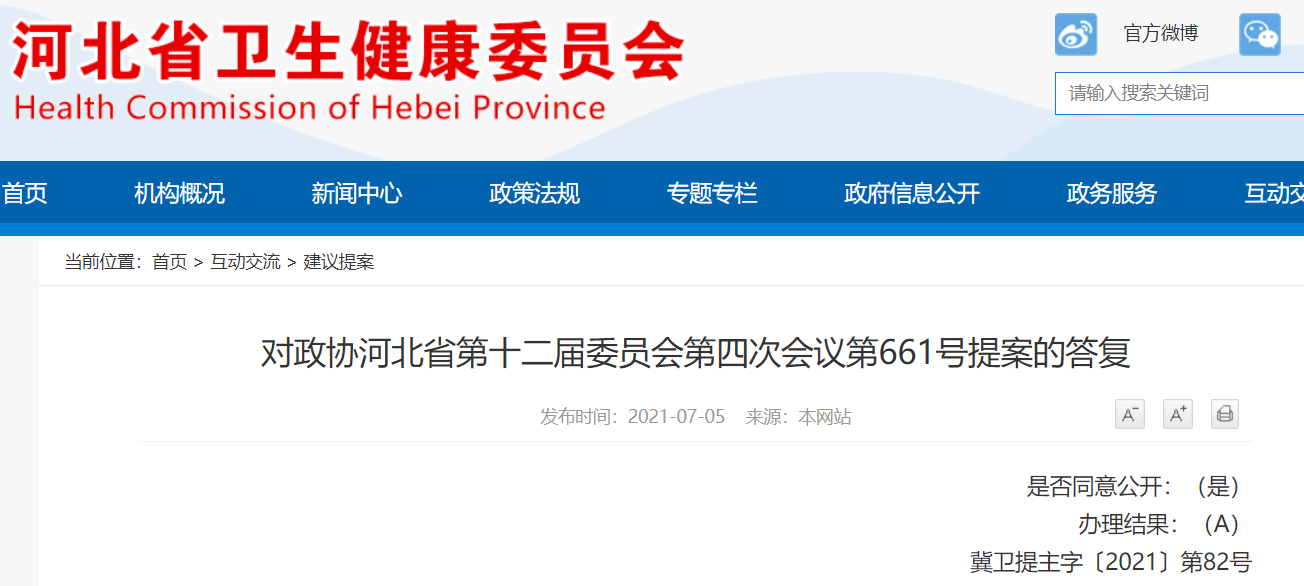
Establishing the Free Trade Pilot Zone is a strategic move by the Party Central Committee and the State Council to advance reform and opening-up in the new era, marking a milestone in China’s reform and opening-up process. Our province is seizing the development opportunities presented by the pilot zone, strategically aligning its industrial strengths across the four designated areas. With careful consideration of the current state of biopharmaceutical development, we are prioritizing support for the growth of the biopharmaceutical and life sciences sectors as a key task driving the advancement of the Free Trade Pilot Zone.
1. Implementing a Green Channel for Project Filing and Approval
Hebei Pilot Free Trade Zone's overall plan clearly states "Support qualified medical and healthcare institutions within the free trade pilot zone to carry out cutting-edge clinical research projects on stem cells in accordance with relevant regulations, and establish a streamlined green channel for project registration." To ensure the successful implementation of this pilot reform initiative, our province has primarily focused on the following key areas of work:
(1) Improve relevant policies and advance implementation measures. Actively promote the issuance of relevant policy documents and implementation measures.
First, the provincial government issued the "Administrative Measures for the China (Hebei) Pilot Free Trade Zone," mandating that the zone step up efforts to enhance biomedical R&D and innovation. It also supports eligible medical and healthcare institutions within the free trade zone to undertake cutting-edge clinical research projects involving stem cells, while establishing a streamlined green channel for project registration and approval.
Second, in alignment with the functional positioning and industrial characteristics of each region, we have issued the "List of Common Institutional Innovations and Customized Institutional Innovation Initiatives for Each Area" (Hebei Free Trade [2019] No. 3), clearly defining the primary responsibilities of Shijiazhuang City and the Xiong'an New Area Administration Committee in implementing this task. Meanwhile, relevant provincial departments are tasked with leveraging their respective functions, collaborating closely with Shijiazhuang City and Xiong'an New Area, and actively engaging in communication and coordination with relevant national ministries and commissions. They are also urged to swiftly develop and introduce complementary support policies and measures, ensuring the effective implementation of institutional innovation initiatives.
(II) Organize and convene a special coordination meeting. Focusing on accelerating the implementation of the Hebei Free Trade Zone's overall plan and institutional innovation roadmap, a series of specialized coordination meetings were held across multiple departments—including the Provincial Health Commission and the Provincial Drug Administration—as well as among the various zones. Specifically, the Zhengding Zone, centered on developing the biopharmaceutical industry, submitted requests for coordinated support and offered relevant suggestions to provincial authorities, which in turn provided detailed responses and guidance on each issue.
(III) Promote the issuance of policy support documents by relevant cities and development zones. Strengthen supervision and evaluation of the implementation of pilot tasks, encourage relevant cities and regions to introduce corresponding policy documents, and ensure that all innovative institutional measures are effectively put into practice and yield tangible results.
First, the Shijiazhuang Municipal Party Committee and Municipal Government issued the "Several Opinions (Trial)" on Supporting High-Level Opening-Up and High-Quality Development of the Zhengding Area of China (Hebei) Pilot Free Trade Zone, clearly stating their support for eligible medical institutions within the Zhengding Area to carry out stem-cell-related research. Additionally, clinical research projects involving cutting-edge stem-cell-based medical technologies that have completed registration will receive up to 5 million yuan in research funding support.
Second, the Shijiazhuang Municipal Health Commission issued the "Notice on Strengthening Institutional Innovation in Biomedicine within the Free Trade Zone, and on Effectively Carrying Out Clinical Research Registration Review and Supervisory Management of Stem Cells," which provides detailed guidelines on the scope of clinical stem cell research registration for relevant medical institutions, the registration process, and the required application documents. The notice also reduces the city-level preliminary review period to just 3 days, after which approved applications are directly submitted to the provincial health commission—shortening the overall registration timeline and ensuring that the streamlined approval channel is fully implemented.
II. Highly prioritize providing policy support for the development of the cell industry
Cells are a vital resource for the development of the human life and health industry. As research into cells continues to deepen, cell technologies have been widely applied across various fields—including biopharmaceuticals, immune health, antibody production, organ regeneration, and clinical treatments for major diseases—holding great promise as one of the most effective tools for extending life and enhancing quality of life. Our province places high priority on the growth of the cell industry. In 2019, the provincial government issued the "Several Policies to Support the High-Quality Development of the Biopharmaceutical Industry," which outlines initiatives to support pilot programs in stem cell application research, as well as clinical and therapeutic research in areas such as stem cell-based therapies, regenerative medicine, gene therapy, and tumor immunotherapy. These policies provide crucial support for advancing the cell industry in our province.
III. Multiple Measures to Provide Scientific and Technological Support for the Cell Industry Development
In recent years, our province has placed great emphasis on developing industries related to cellular life sciences, vigorously promoting both fundamental scientific research and technological innovation in this field—providing robust scientific and technological support for the growth of the cellular industry.
(1) Strengthen scientific research and development in the cell industry. In 2018, our province, together with the Beijing Municipal Science and Technology Commission and the Tianjin Municipal Bureau of Science and Technology, jointly established a Special Fund for Basic Research Cooperation (2018–2020). This initiative focused on conducting both fundamental and applied basic research in fields such as precision medicine and stem cells. Over the past three years, a total of 50 projects have been supported, with funding totaling 10 million yuan.
At the end of 2019, our province’s Department of Science and Technology, in collaboration with Hebei Medical University and its affiliated hospitals, jointly established the Hebei Provincial Natural Science Foundation Precision Medicine Joint Fund. This fund is dedicated to supporting application-oriented basic research driven by clinical challenges. After extensive statewide solicitation and refinement of guiding recommendations, the fund has prioritized mechanistic studies on cell therapy as a key area for clinical disease treatment. By attracting high-level talent from medical institutions and universities across the province to conduct cutting-edge application-based research, the initiative is effectively boosting the province’s R&D capabilities in the cell industry. Since 2018, our province has also provided targeted support through the Provincial Key R&D Program’s Biomedical Special Initiative, backing eight major projects in the field of cellular life sciences with total funding of 3.7 million yuan.
(II) Strengthen the development of innovation platforms in the cell science field. Our province is strongly supporting the development of innovative platforms in the field of cellular life sciences. Together, we have established six provincial-level key laboratories and technology innovation centers, including the Hebei Provincial Key Laboratory for Stem Cell Standardization, the Hebei Provincial Research Center for Stem Cell Application Engineering Technology, the Hebei Provincial Research Center for Stem Cell and Molecular Diagnostic Engineering Technology, the Hebei Provincial Research Center for Cellular Immunotherapy Engineering Technology, the Hebei Provincial Research Center for Cellular Immunotherapy Engineering Technology, and the Hebei Provincial Research Center for Cellular Tissue Cryopreservation Application Engineering Technology. These institutions are encouraged and supported to conduct cutting-edge basic research and industry-focused R&D in areas such as stem cell standardization, stem cell storage, and cellular immunotherapy, actively driving the growth of our province's cell-based industry.
(III) Strengthen the cultivation of science and technology enterprises in relevant fields. In the work of identifying and cultivating high-tech enterprises and technology-based SMEs, our province has strengthened guidance and support for technology firms specializing in the field of cellular life sciences, recognizing a group of high-tech enterprises and technology-based SMEs in this area. By implementing policy measures such as science and innovation vouchers, loan risk compensation, and subsidies for technology transfer, we are fully committed to fostering innovative development among high-tech enterprises and technology-based SMEs in the cellular life sciences sector, thereby boosting the overall level of industrial growth in the province.
IV. Next Steps for Work Arrangements
The Provincial Health Commission, together with relevant departments and regional authorities, will intensify efforts to further implement several policies supporting the high-quality development of the province’s biopharmaceutical industry. They will actively promote demonstration projects showcasing innovations in cell technologies such as immune cell therapy, focusing on achieving breakthroughs in a number of critical core technologies to comprehensively enhance public health security. Additionally, institutional innovation will be leveraged to drive the growth of the cell industry within Hebei’s Free Trade Pilot Zone.
First, urge relevant provincial departments to strengthen their guidance on the cellular industry in designated areas, promptly assisting and coordinating to resolve any challenges or issues encountered in implementing innovative institutional tasks.
Second, we will encourage relevant cities and regions to develop and implement supporting policies, measures, and detailed guidelines for the cell industry, ensuring that market entities in our province’s free trade pilot zone can fully benefit from the policy advantages offered by the zone.
Third, we will encourage relevant departments to intensify their support for the province’s cell industry, pooling together essential resources such as funding, technology, and talent. This will help create a favorable environment for both research and business operations, providing robust backing for the development of the cell industry within Hebei Pilot Free Trade Zone. Additionally, we will continue implementing policies that promote high-quality growth of the province’s biopharmaceutical sector, actively advancing demonstration projects in cell technology innovations like immune cell therapy. Our focus will be on achieving breakthroughs in several critical core technologies, ultimately enhancing public health security across the board.
Our province will leverage the free trade zone to significantly boost support for the cell industry. By focusing on initiatives such as provincial-level science and technology programs, fostering innovation-driven entities, building robust innovation platforms, and accelerating the commercialization of scientific and technological achievements, we aim to drive rapid growth in the cell industry within the free trade zone.
First, support the free trade zone in organizing and implementing provincial-level key R&D projects and the Provincial Natural Science Foundation’s Precision Medicine Joint Fund Project, focusing on developing cutting-edge technologies crucial to the cellular life sciences industry and enhancing the sector's core competitiveness.
Second, we will strengthen efforts to nurture high-tech enterprises and technology-driven SMEs in the free trade zone's cell industry, thereby elevating the industry's overall sophistication.
Third, support the free trade zone in strengthening the construction of innovation platforms such as key laboratories, technology innovation centers, and industry-specific research institutes in the field of cellular life sciences, providing a robust innovation platform to drive the development of the cell industry within the zone.
Fourth, Support the implementation of a special program within the free trade zone to facilitate the commercialization of major scientific and technological breakthroughs in the cell industry, thereby promoting the transfer and application of these innovative technologies.
Fifth, in conjunction with our province's science and technology special commissioner program, we will select and dispatch scientific and technical personnel specializing in cellular life sciences from provincial universities, research institutes, and other scientific organizations to provide support to relevant enterprises, thereby fostering their technological innovation.
Sixth, encourage leading enterprises in the free trade zone's cell industry to collaborate with universities and research institutions—both within and outside the province—to jointly establish industry-specific technology innovation strategic alliances focused on the cell sector. This initiative aims to accelerate the commercialization of scientific and technological breakthroughs and foster enhanced innovation capabilities within the industry.
Related News

Here is the title—h1 placeholder text


Copyright © Jiuzhitang Maker (Beijing) Cell Technology Co., Ltd.
Powered by: 300.cn SEO | Privacy Policy