

News
News Center
Beijing Health Commission: In 2021, we will carry out the initial review of clinical research institutions and projects involving stem cells and somatic cells, providing crucial evidence-based support to facilitate the transition of stem cell therapies into clinical practice.
来源:Beijing Municipal Health Commission Website
2021-04-20
Focusing on COVID-19 emergency testing, respiratory infectious disease surveillance and early warning systems, molecular tracing, protective and disinfectant products, intelligent bio-safety oversight for laboratories, a 5G-based emergency medical information platform, emergency blood supply strategies for public health crises, and integrated peacetime-wartime approaches to pandemic preparedness—this initiative brings together universities, research institutes, healthcare organizations, and businesses to collaboratively address these critical challenges.
The key points clearly state: Carry out the initial review of clinical research institution and project filings for stem cells and somatic cells, strengthen policy advisory services and pre-application guidance, support collaborative efforts between filing institutions and companies in conducting clinical research, and provide crucial evidence-based support to accelerate the transition of stem cell therapies into clinical practice.
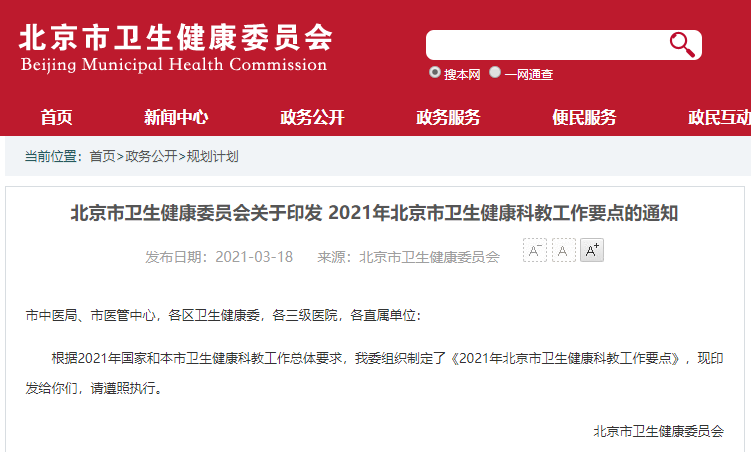
The full text is as follows
Notice from the Beijing Municipal Health Commission on Issuing the Key Priorities for Health and Science Education Work in Beijing for 2021
City Administration of Traditional Chinese Medicine, City Medical Management Center, Health Commissions of all districts, all Grade-III hospitals, and all directly affiliated units:
Based on the overall requirements for national and municipal health, wellness, and science & education work in 2021, our organization has formulated the "Key Priorities for Beijing's Health, Wellness, and Science & Education Work in 2021," which is now being distributed to you for your compliance and implementation.
Beijing Municipal Health Commission
Key Priorities for Beijing's Health, Health Education, and Science & Technology Work in 2021
In 2021, Beijing's health, science, and education efforts were thoroughly implemented in line with the strategic plans for building the Beijing International Science and Technology Innovation Center and the "Two Zones." Guided by national and municipal health, science, and education priorities, these initiatives focused on capacity-building as the main thread and quality enhancement at their core. Efforts were fully dedicated to advancing scientific and technological research for COVID-19 prevention and control, launching cross-disciplinary training programs that integrate medical and public health practices, promoting comprehensive innovation in health-related science and technology, accelerating the development of innovative medical education, and strengthening the biosecurity framework. Together, these measures provided robust scientific and talent support for high-quality growth in the capital's health sector.
1. Fully commit to science and education efforts in COVID-19 prevention and control
(1) Launch joint research initiatives on public health projects
Focusing on COVID-19 emergency testing, respiratory infectious disease surveillance and early warning systems, molecular溯源 (molecular tracing), protective and disinfectant products, intelligent bio-safety oversight for laboratories, a 5G-based emergency medical information platform, emergency blood supply strategies for public health crises, and integrated peacetime-wartime approaches to pandemic preparedness—this initiative brings together universities, research institutes, healthcare organizations, and businesses to collaboratively tackle these critical challenges.
(II) Launching and Implementing Integrated Medical and Preventive Care Cross-Training
Implementing the tasks outlined in Beijing's Three-Year Action Plan (2020–2022) for Building the Public Health Emergency Management System, the initiative is guided by the integration of medical and public health services. Focusing on cross-training needs, it aims to strengthen the public health emergency response, pre-hospital emergency care, and infectious disease diagnosis and treatment capabilities of internal medicine clinicians at secondary and tertiary hospitals. Meanwhile, clinical physicians from emergency centers and public health physicians from disease control and prevention centers will undergo enhanced training in clinical diagnosis and treatment, hospital infection control, and infectious disease management. Before advancing to associate senior-level positions, all participants will complete a total of 6 months of modular training—split evenly between CDC institutions, pre-hospital emergency facilities, designated infectious disease hospitals, and general hospitals. The first cohort of 300 trainees was launched in 2021.
II. Fully Promote Innovation in Health and Wellness Science and Technology
(1) Optimize the Environment for Scientific and Technological Innovation
In line with the requirements of the "Beijing Implementation Plan on Strengthening Research and Innovation Capabilities of Medical and Healthcare Institutions (2020–2022)," we will deepen the reform of categorized management for medical and healthcare institutions, accelerate efforts to empower researchers in these institutions with greater autonomy, refine talent evaluation mechanisms, enhance performance-based incentives, and encourage clinical experts to take up part-time research and translation roles at pharmaceutical companies within the city. Additionally, we will conduct rigorous scientific research performance assessments of municipal medical research institutes, provide support for medical and healthcare institutions to establish dedicated science and technology funding programs, explore diverse funding channels, and implement a range of measures aimed at boosting innovation vitality and fostering a more robust ecosystem for scientific and technological advancement.
(II) Demonstrating the Construction of Research-Oriented Clinical Units
In alignment with the spirit of the "Beijing Municipal Opinions on Strengthening the Development of Research-Driven Clinical Departments," and in accordance with the fundamental requirements for establishing such departments—while benchmarking against world-class institutions—we will continue upgrading and transforming the first batch of research-oriented wards, alongside implementing rigorous performance evaluations. Additionally, we will initiate the selection and pilot construction of a second group of 5 to 10 research-focused wards, enhancing their physical infrastructure and refining incentive and support mechanisms. Ultimately, our goal is to progressively establish these research-driven units as pioneering hubs for clinical trials of pharmaceuticals and medical devices, as well as cutting-edge medical technology studies, while also serving as a testing ground for innovative institutional reforms within healthcare facilities and among medical professionals.
(III) Pilot Construction of Research-Oriented Hospitals
We are developing fundamental requirements and an evaluation system for building research-oriented hospitals. We encourage and guide Grade-III public hospitals to strengthen their research and innovation capabilities, and will launch pilot projects at two hospitals to establish innovative, research-focused hospital models. Additionally, we support Capital Medical University in planning and constructing its own research-oriented hospital. Furthermore, we endorse the development of research hospitals within the "Three Cities and One Zone" initiative, actively encouraging private capital to participate in these projects. This effort aims to explore new approaches for the construction and operation of internationally competitive, research-driven hospitals.
(IV) Implement the Capital Health Development Research Special Program
Guided by clinical needs, we will organize a new round of key research initiatives focused on independent innovation and grassroots outreach programs. We will identify and nurture a group of outstanding young science and technology talents, while also initiating applications and approvals for transformative projects spanning innovative medical devices, pharmaceuticals, AI-driven products, and smart healthcare solutions. Additionally, we will strengthen the infrastructure of the Clinical Research Quality Promotion Center by conducting the first round of comprehensive evaluations and summaries, and launching the application process for the second batch of centers seeking recognition. Furthermore, we will maintain a robust three-tier quality control system—comprising self-assessments by project teams, institutional reviews, and city-level audits. Finally, we will evaluate completed projects through acceptance checks, performance assessments, outcome tracking, and analysis of their current translation and implementation status, ultimately producing a comprehensive 10-year development report on the Capital’s health research initiatives.
(5) Promote the commercialization and widespread adoption of scientific and technological achievements
Support hospitals in forming innovative partnerships with universities and enterprises to jointly establish platforms for innovation and technology transfer, and deeply implement the "Innovation & Translation Manager" service. Promote the open sharing of scientific research instruments from municipal medical research institutes with external users. Continue supporting the development of the Medical Device R&D Testing Innovation Center and the Vaccine R&D & Translation Center. Encourage and guide municipal healthcare institutions to participate in the Beijing Intellectual Property Trading Center, offering pre-entry guidance and training programs. Successfully carry out the selection, promotion, and widespread adoption of 2022’s top health science and technology achievements and appropriate clinical technologies. Host the third session of the Capital Translational Medicine Innovation Competition, regularly organize salon events connecting researchers, clinicians, and industry leaders with cutting-edge innovations, and collaborate with the management committees of the Three Cities and One District to co-host dialogue initiatives like "Hospitals Meet Enterprises" and "Enterprises Meet Hospitals," continuously fostering a vibrant environment for innovation and technology transfer.
(6) Strengthen the building of industry-specific science and technology governance capabilities.
Strengthen capacity-building in ethical review for human biomedical research, further promote mutual recognition of ethics review outcomes, launch pilot programs for delegated ethics reviews and regional ethics committee reviews, advance research on digitally enabled informed consent compliance, develop standardized operating procedures for ethics committees, and initiate an assessment of ethics committee capabilities. Carry out the initial review of clinical research institution and project filings for stem cells and somatic cells, strengthen policy advisory services and pre-application guidance, support collaborative efforts between filing institutions and companies in conducting clinical research, and provide crucial evidence-based support to accelerate the transition of stem cell therapies into clinical practice. Strengthen training in research management to enhance the scientific policy understanding and implementation capabilities of the research management team in the health and wellness sector, as well as their expertise in the standardized management and effective translation/promotion of research projects. Additionally, ensure compliance with national and Beijing municipal guidelines on strengthening research integrity, while promoting and upholding the spirit of scientists. Establish a robust supervision and management system to regulate research practices, safeguarding the rigor and credibility of scientific endeavors.
(7) Strengthen the Development of the Clinical Research Team
Conduct a survey on the current status of clinical research teams in medical and healthcare institutions, systematically analyzing the strengths and weaknesses of the city’s clinical research human resources. Based on this analysis, develop a comprehensive plan for building and nurturing clinical research teams, design tailored training programs, implement tiered and categorized staff development initiatives, and establish a dedicated clinical research talent pool—laying a robust foundation of expertise to enhance the quality of clinical research. Furthermore, deeply advance the reform initiative that allows researchers to take part-time positions in industry, collaborating closely with the management committees of the three cities and one district. Actively encourage medical and healthcare institutions to forge innovative technology partnerships with pharmaceutical and healthcare information companies, while supporting leading and mid-level clinical research talents in pursuing part-time roles at these enterprises. Together, they can jointly drive product development and accelerate the commercialization of research findings.
3. Accelerate Innovation and Development in Medical Education
(1) Accelerate efforts to enhance the quality and efficiency of standardized residency training.
Guided by the spirit of the General Office's Opinions on Strengthening Innovation and Development in Medical Education, we will implement the "two equal treatments" policy for standardized residency training programs, laying a solid foundation for fully embracing socialized recruitment practices. We will refine the supply-and-demand matching mechanism and ensure seamless coordination between postgraduate admissions and residency program recruitment. Additionally, we will promote innovative teaching initiatives such as teaching outpatient clinics, dedicated teaching beds, and tiered surgical procedures, while enhancing faculty training and supporting the establishment of collaborative training networks. To further strengthen training quality control, we will rigorously enforce national standards for managing training facilities, adopting a strict "one-vote veto" system and conducting ongoing assessments of general practice residency programs. We will also reform and improve the evaluation frameworks for process-based, annual, and exit assessments, piloting unified process assessments to gradually enhance consistency across evaluations. Building on the robust foundation of objective structured exit exams, we will introduce phased, competency-based assessment models tailored to specific stages of training. Finally, we will establish a comprehensive performance evaluation system that integrates training funding, recruitment targets, and accreditation status into key metrics for assessment and incentive programs. This system will include regular reviews of the development and implementation of national key specialty training centers.
(II) Steadily advance the standardized training program for specialist physicians
The study focuses on developing standardized training programs and supporting measures for specialist physicians. It will conduct final assessments for the first cohort of specialists who have completed training in disciplines such as Respiratory and Critical Care Medicine, Cardiovascular Medicine, Geriatrics, Neonatal and Perinatal Medicine, General Surgery, Pediatric Anesthesia, Internal Medicine Critical Care, Surgical Critical Care, and Oral and Maxillofacial Surgery. Additionally, the study will revise the integrated residency-specialization training program for Medical Oncology and Surgical Oncology, further refining clinical-focused assessment methods for specialist physicians. Based on the national specialty catalog, the initiative will advance the development of training programs in other specialties—including Endocrinology, Gastroenterology, Internal Medicine Critical Care, Orthopedics, Urologic Surgery, Obstetrics and Gynecology, Ultrasound Medicine, and Diagnostic Radiology—while also researching and establishing standards for training facilities.
(III) Strengthening Grassroots Health Workforce Development
In accordance with the spirit of the "Beijing Implementation Plan on Reforming and Improving the Training and Incentive Mechanisms for General Practitioners" (Beijing Government Office Document [2018] No. 39), we will vigorously promote grassroots health workforce development, with a strong focus on building a robust team of general practitioners. We are launching a "refresher training program" specifically designed for grassroots general practitioners. Additionally, we will deepen efforts in training assistant general practitioners and general practitioner instructors, offer specialized transition training for general practitioners, provide mandatory continuing education courses for community health technicians, conduct targeted training programs for village doctors, cultivate key physicians at district-level hospitals, implement order-based, tailored training initiatives for rural and township doctors, and organize diverse grassroots health worker training activities—such as hands-on practice sessions centered around general practitioners—to foster integrated medical and preventive care practices.
(IV) Standardize Continuing Medical Education Management
To implement the national requirements for continuing medical education management, we will strengthen local governance responsibilities, revise and refine management systems, and enhance the standardization of continuing medical education administration. We will also align with the National Health Commission’s initiative to reduce administrative burdens at the grassroots level by exploring tailored measures specific to Beijing—particularly in areas such as remote continuing education management, reforming the credit-awarding process, and promoting verifiable self-learning approaches. Furthermore, we will leverage "Internet + Continuing Medical Education" by upgrading and modernizing Beijing’s ICME (Information System for Continuing Medical Education), optimizing its functionalities for credit management, program administration, and personnel tracking. The system will integrate advanced learning tools, ultimately evolving into a comprehensive information platform that supports training, education, learning record management, and competency assessment for healthcare professionals across Beijing. Additionally, we will roll out city-wide online training and assessments focused on infectious disease prevention and control, ensuring that continuing medical education remains highly relevant, practical, and cutting-edge. Finally, we will adopt a balanced approach to managing continuing medical education—combining regulatory oversight with hands-on project supervision and rigorous credit verification—to consistently uphold the quality and integrity of educational programs. To bolster leadership capacity, we will invest in training for management staff, fostering knowledge-sharing and collaborative learning opportunities to continuously elevate the overall standards of continuing medical education administration across the city.
4. Ensuring Laboratory Biosafety
Enhance the biosafety management mechanism by establishing a municipal-level biosafety expert committee, refining transportation protocols for pathogenic microbial strains (or toxins) and samples, and clarifying standardized storage practices for these materials. Strengthen research and development of advanced scientific monitoring technologies and tools, while also setting up a robust system for assessing technological security risks and implementing electronic surveillance. Promote collaborative efforts between central and local authorities to build Level 3 biosafety laboratories. Ensure that administrative approvals for the transportation and experimental activities involving highly pathogenic microbial strains (or toxins) and samples are handled in strict accordance with the law. Additionally, bolster biosafety capacity-building initiatives, ramp up training programs and oversight measures, and rigorously maintain laboratory biosafety standards.
Related News

Here is the title—h1 placeholder text


Copyright © Jiuzhitang Maker (Beijing) Cell Technology Co., Ltd.
Powered by: 300.cn SEO | Privacy Policy