

News
News Center
Big news! Five Guangdong departments have jointly issued a document aiming to secure national approval for offering cutting-edge medical treatments—approved by regulatory authorities in developed countries or regions—within designated medical institutions across the nine mainland cities of the Greater Bay Area!
来源:Guangdong Provincial People's Government Official Website
2020-10-23
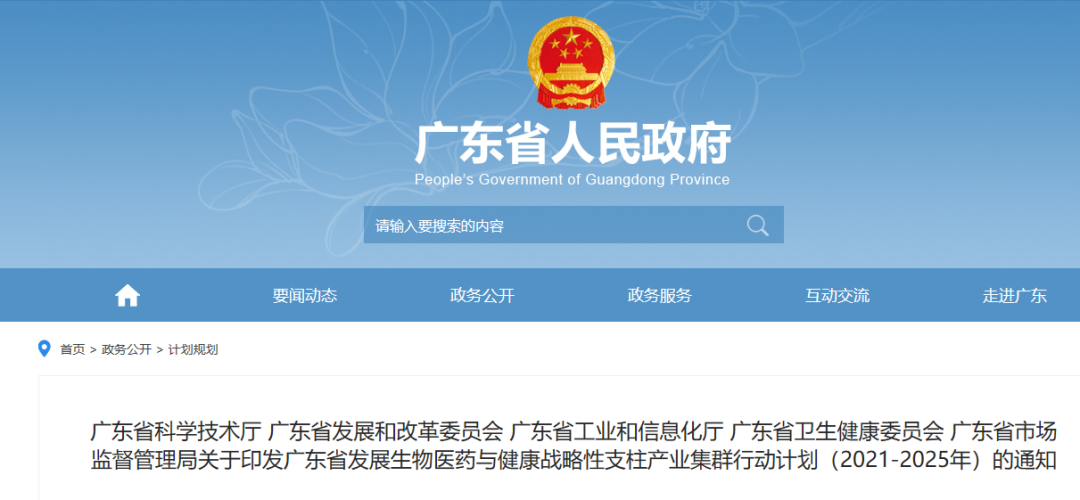
Recently, five departments—the Guangdong Provincial Department of Science and Technology, the Development and Reform Commission, the Department of Industry and Information Technology, the Health Commission, and the Market Supervision Administration—jointly released the "Guangdong Action Plan for Developing Strategic Pillar Industrial Clusters in Biomedicine and Health (2021-2025)."
Regarding the details of the first-to-try policy:
The Pilot Program for Exploring Innovative Policies in the Guangdong-Hong Kong-Macao Greater Bay Area. This initiative seeks to allow the use of clinically urgent medicines already approved and marketed in Hong Kong and Macao, as well as cutting-edge medical devices that have been procured and used in public hospitals in Hong Kong and Macao but demonstrate advanced clinical applications, at designated medical institutions authorized to operate in the nine mainland cities of the Greater Bay Area. Additionally, the program aims to enable these same institutions to offer state-of-the-art medical treatments—approved by regulatory authorities in developed countries or regions—within the region. The initiative also encourages healthcare professionals from Hong Kong and Macao to engage in academic exchanges in Guangdong, while exploring ways to facilitate the direct practice of qualified medical personnel from Hong Kong, Macao, and other foreign countries in the nine mainland cities of the Greater Bay Area. Furthermore, it promotes the mutual recognition of registration and testing standards for traditional Chinese medicines across the region, laying the groundwork for an integrated review mechanism for herbal remedies.
It was also mentioned: Support Shenzhen in becoming a global hub for biomedical innovation and development, with a focus on advancing high-performance medical devices, bioinformatics, and cell & gene therapies. Organize and implement specialized initiatives in areas such as precision medicine, stem cells, innovative drug discovery, cutting-edge medical equipment, and critical technologies and equipment for traditional Chinese medicine—strengthening the capabilities of pharmaceutical manufacturing, as well as medical instruments and device production.
Note: The nine mainland cities in the Guangdong-Hong Kong-Macao Greater Bay Area refer to Guangzhou, Shenzhen, Zhuhai, Foshan, Huizhou, Dongguan, Zhongshan, Jiangmen, and Zhaoqing—nine Pearl River Delta cities in Guangdong Province.
The full text is as follows
Guangdong Province's Action Plan for Developing Strategic Pillar Industry Clusters in Biomedicine and Health (2021–2025)
To implement the work arrangements of the Provincial Party Committee and the Provincial Government on advancing the construction of a manufacturing powerhouse province, accelerate the development of the biopharmaceuticals and health strategic pillar industry cluster, and drive the industry toward the high end of the global value chain, this Action Plan has been formulated based on the guiding principles outlined in documents such as the "Opinions of the Guangdong Provincial People's Government on Cultivating and Developing Strategic Pillar Industry Clusters and Strategic Emerging Industry Clusters" (Guangdong Government Document No. 82 [2020]).
I. Overall Situation
(1) Current Development Status. The biopharmaceutical and healthcare industry primarily encompasses areas such as biologics, chemical drugs, modern traditional Chinese medicine, medical devices, healthcare services, and health-focused elderly care. It is characterized by "four highs and one long"—high technology, high investment, high risk, high returns, and a lengthy development cycle. In recent years, our province has witnessed steady growth in the scale of its biopharmaceutical and healthcare sector, with continuous optimization of its industrial structure and steadily enhanced innovation capabilities. As a result, the region now ranks among the nation's leaders in terms of development level. By 2019, the industry’s total operating revenue had surpassed 500 billion yuan, with the biopharmaceutical segment contributing over 250 billion yuan. The province also boasted 9,702 valid invention patents. Moreover, the industry has increasingly benefited from strong clustering effects, hosting key industrial hubs such as Guangzhou International Bio Island, Shenzhen Pingshan National Biotechnology Industry Base, Zhuhai Jinwan Biopharmaceutical Industrial Park, and Zhongshan National Health Technology Industry Base. Additionally, the region is home to three national clinical research centers, two provincial laboratories, and major scientific infrastructure projects like the China National GeneBank. Complementing these advancements are renowned medical universities such as Sun Yat-sen University and Southern Medical University, along with a thriving ecosystem of globally competitive leading enterprises and innovative startups.
(II) Existing Issues and Challenges Faced. Our province's biopharmaceutical and health industries still face several significant challenges, including the need to scale up operations, low levels of industrial clustering, an incomplete supply chain, a shortage of critical technologies and advanced equipment, a limited number of leading enterprises and large multinational corporations, a scarcity of high-end talent and top-tier biosafety laboratories, and room for improvement in institutional frameworks and mechanisms. Meanwhile, as the global biopharmaceutical and health sectors emerge as strategic priorities in the latest wave of technological and industrial transformation, developed countries and neighboring provinces have ramped up their support, intensifying competition both domestically and internationally.
(III) Strengths and Development Opportunities. With the widespread application of technologies such as genetic engineering, cell engineering, biochips, gene sequencing, and bioinformatics, the biopharmaceutical and health industries are undergoing rapid transformation, opening up vast prospects for future growth. Our province boasts a strong foundation for developing the biopharmaceutical and health sectors. We must seize the significant opportunities presented by the nation’s efforts to build the Guangdong-Hong Kong-Macao Greater Bay Area and support Shenzhen in establishing itself as a pilot demonstration zone for socialism with Chinese characteristics. By pooling resources, prioritizing key areas, leveraging our competitive advantages, and addressing existing weaknesses, we can drive high-quality development in the biopharmaceutical and health industries.
II. Work Objectives
By 2025, the biopharmaceutical and healthcare industries will achieve world-class scale, cluster effects, and innovation capabilities domestically, while securing internationally leading positions in institutional mechanisms, service systems, and market competitiveness. The goal is to build a trillion-dollar-level industrial cluster, accelerate progress and catch up with global leaders, ultimately establishing an industry hub with international influence.
(1) The industry continues to grow in scale, with the clustering effect significantly strengthening. The biopharmaceutical and healthcare industries have become a key engine driving high-quality economic development in our province, with an ambitious goal of achieving 1 trillion yuan in industrial revenue. Meanwhile, the level of industrial cluster development has significantly improved, resulting in the establishment of 10 comprehensive industrial parks that are distinctly specialized, economically efficient, and boast strong regional influence and growth momentum—two of these parks are already on track to reach the 100-billion-yuan mark in annual output value.
(II) Optimize and refine the industrial structure, fostering a group of leading enterprises. Promote the robust growth of emerging sectors such as precision medicine, smart healthcare, marine-based pharmaceuticals, and integrated medical-care-and-wellness initiatives, fostering the development of several flagship industries in areas like biopharmaceuticals, chemical drugs, modern traditional Chinese medicine, high-end medical devices, healthcare services, and health-focused elderly care. Additionally, cultivate one industry leader with sales revenue exceeding 100 billion yuan, two companies generating over 50 billion yuan, and 20 enterprises boasting revenues surpassing 10 billion yuan. Meanwhile, R&D investment intensity among large-scale biopharmaceutical firms will reach 6%.
(III) Industrial innovation capabilities have been significantly enhanced, and the supporting service system has become even more robust. Strive to establish one national laboratory or its branch, along with five National Clinical Medical Research Centers. Secure 20 new drug marketing authorization approvals and 40 innovative medical device registration approvals, while ensuring that the number of valid invention patents exceeds 15,000. Additionally, build a series of public service platforms supporting contract research and development, industrial pilot-scale production, non-clinical drug evaluation, and clinical research. As a result, significantly reduce the incidence of major chronic diseases, markedly enhance capabilities in preventing and controlling emerging infectious diseases, and create an integrated service system encompassing prevention, treatment, rehabilitation, and overall health management.
(Four) The industrial development ecosystem continues to improve, and the level of international cooperation has significantly increased. The mechanisms for reviewing and approving pharmaceuticals and medical devices, clinical trial incentives, and application-promotion strategies are continuously being refined. The region is taking the lead by piloting the targeted use of innovative therapies in the Guangdong-Hong Kong-Macao Greater Bay Area. Additionally, around five world-renowned pharmaceutical companies and healthcare institutions have been attracted to establish production facilities, regional headquarters, or R&D centers in Guangdong. This initiative is helping key enterprises accelerate their expansion into emerging international pharmaceutical markets, while fostering increasingly robust levels of international collaboration.
III. Key Tasks
Focusing on aligning the innovation chain with industrial chains, this initiative zeroes in on cutting-edge technologies and emerging industry needs in the biopharmaceuticals and healthcare sectors. It emphasizes pioneering innovations and tackling fundamental, foundational technologies to create a comprehensive innovation ecosystem spanning basic research, applied research, advanced technology development,成果 transfer (technology commercialization), and industrialization. To meet the demands of industrial clusters, the plan calls for building a series of new infrastructure facilities and major innovation platforms, thereby enhancing the region’s capacity for industrial technological innovation. Additionally, the strategy aims to refine the industry’s innovation service system by accelerating the establishment of specialized incubators for biopharmaceuticals, as well as expanding R&D outsourcing and testing/inspection services. Stronger collaboration among academia, industry, government, and medical institutions will be fostered through joint efforts to establish collaborative innovation hubs such as research centers, laboratories, and clinical medicine research platforms. This will help seamlessly bridge the gap between lab discoveries and market applications, speeding up the commercialization of groundbreaking technologies and products. Finally, the initiative seeks to connect with top-tier domestic and international biopharmaceutical innovation resources, paving the way for pilot projects and full-scale implementation of major national science and technology initiatives and breakthroughs in Guangdong’s biopharmaceutical and healthcare sectors. Establish industrial innovation clusters centered on Guangzhou and Shenzhen, with key areas including Zhuhai, Foshan, Huizhou, Dongguan, and Zhongshan. Support Guangzhou in developing the Greater Bay Area Life Sciences Cooperation Zone and R&D Center, focusing on sectors such as life sciences, biosecurity, R&D outsourcing, high-end medical care, and health-focused elderly care. Back Shenzhen’s ambition to become a global hub for biopharmaceutical innovation, strengthening its expertise in high-performance medical devices, bioinformatics, and cell & gene therapies. Assist Zhuhai in becoming a new center for the innovative allocation of biomedical resources, with a particular emphasis on standardizing modern Chinese medicine, advanced pharmaceutical formulations, and integrated healthcare solutions. Encourage Foshan and Zhongshan to serve as bases for translating biomedical research into practical applications, as well as international innovation hubs for biopharmaceutical technology collaboration. Bolster Huizhou and Dongguan as critical national centers for nuclear medicine R&D and biopharmaceutical manufacturing. Aid Jiangmen and Zhaoqing in establishing large-animal experimental facilities for regenerative medicine and building regional health industry bases focused on traditional Southern Chinese medicines. Additionally, deploy chemical API production facilities and specialized cultivation zones for authentic medicinal herbs and regionally distinctive herbal ingredients across eastern, western, and northern Guangdong, fostering growth in rehabilitation, wellness, and eldercare industries. (Led by the Provincial Development and Reform Commission and the Department of Science and Technology, with responsibilities shared among the Provincial Departments of Industry and Information Technology, Agriculture and Rural Affairs, Health Commission, and the People's Governments of all prefecture-level or above cities.)
(II) Foster collaborative development among upstream and downstream enterprises, enhancing the value chain of the biopharmaceutical and healthcare industry cluster. Focusing on aligning the innovation chain with the industrial chain, we will support biopharmaceutical and healthcare enterprises in increasing their R&D investments, strengthening the development of corporate R&D institutions, and accelerating the rapid transfer and commercialization of innovative pharmaceutical and health solutions—thereby driving industry transformation and upgrading. We will also work to scale up and strengthen leading, backbone, and innovative enterprises in the biopharmaceutical and healthcare sectors, continuously expanding the cluster of companies and fostering a new type of industrial ecosystem that seamlessly integrates online and offline operations. This ecosystem will enable large, medium, and small enterprises to collaborate effectively on innovation, share production capacities, and ensure smooth connectivity across the entire industry chain and supply chain. Additionally, we will encourage key biopharmaceutical and healthcare companies to target critical links and core technologies within the industry chain, facilitating mergers and acquisitions to expedite the integration of vital industry resources and cultivate a group of "chain leader" enterprises as well as ecosystem-dominant firms. Finally, we will promote the integrated development of cluster enterprises with service sectors such as information services, R&D outsourcing, smart logistics, and modern supply chains, enhancing the overall competitiveness of the biopharmaceutical and healthcare industry cluster.
(III) Strengthen support for scientific and technological innovation to boost the growth momentum of the biopharmaceutical and health industries. Focusing on aligning the innovation chain with industrial chains, this initiative zeroes in on cutting-edge technologies and emerging industry needs in the biopharmaceuticals and healthcare sectors. It emphasizes pioneering innovations and tackling fundamental, foundational technologies to create a comprehensive innovation ecosystem spanning basic research, applied research, advanced technology development,成果转化 (成果 transfer), and industrialization. To meet the demands of industrial clusters, the plan calls for building a series of new infrastructure facilities and major innovation platforms, thereby enhancing the region’s capacity for industrial technological innovation. Additionally, the strategy aims to refine the industry’s innovation service system by accelerating the establishment of specialized incubators for biopharmaceuticals, as well as expanding R&D outsourcing and testing/inspection services. Stronger collaboration among academia, industry, government, and medical institutions will be fostered through joint efforts to establish collaborative innovation hubs such as research centers, laboratories, and clinical medicine research platforms. This will help seamlessly bridge the gap between lab discoveries and market applications, speeding up the commercialization of groundbreaking technologies and products. Finally, the initiative seeks to connect with top-tier domestic and international biopharmaceutical innovation resources, paving the way for pilot projects and full-scale implementation of major national science and technology initiatives and breakthroughs in Guangdong’s biopharmaceutical and healthcare sectors.
(4) Strengthen the construction of the public health emergency management system and enhance the governance of biosafety. Enhance the collaborative mechanisms for assessing, evaluating, decision-making, and controlling major public health risks, and establish a comprehensive monitoring and early-warning platform. Strengthen the construction of systems for infectious disease prevention and control, as well as public health science and technology research, fostering collaborative innovation in public health emergency preparedness. Simultaneously, bolster the capacity for developing, manufacturing, and stockpiling essential medicines, vaccines, diagnostic reagents, and medical protective supplies, while establishing a robust clinical evaluation system for strategic preventive drugs. Additionally, advance the development of a biosecurity governance framework, strategically plan and build a network of high-level biosafety laboratories, promote the effective protection and rational utilization of human genetic resources, and reinforce safety management practices for biotechnology R&D activities across different risk levels—ultimately enhancing overall biosecurity preparedness and response capabilities.
(5) Deepen institutional and systemic reforms to build a world-class industry innovation ecosystem in the Guangdong-Hong Kong-Macao Greater Bay Area. Accelerate reforms of the drug and medical device review and approval mechanisms, and advance the establishment of the Guangdong-Hong Kong-Macao Greater Bay Area Drug and Medical Device Review and Inspection Center under the National Medical Products Administration. Fully implement innovative review and approval system reforms, including the notification-commitment system, implicit licensing, conditional approvals, and rolling reviews, to expedite the registration and market launch of cutting-edge products. Strengthen systems for promoting and scaling up innovative products, ensuring that new healthcare innovations benefit the public. Leverage the roles of industry investment funds, venture capital, and startup investments to enhance financial services supporting the development of industrial clusters. Optimize customs clearance procedures for bioproducts, biomaterials, and laboratory animals across Guangdong, Hong Kong, and Macao. Improve mechanisms for attracting, cultivating, and evaluating high-level talent, fostering a pool of top-tier professionals and expert teams for the industry. Actively promote international collaboration along the industrial value chain, encouraging enterprises to deeply engage in global value chains and strengthening exchanges in the biopharmaceutical and health industries with innovative nations and countries along the Belt and Road Initiative. (Led by the Provincial Department of Science and Technology and the National Medical Products Administration, with responsibilities shared among the Provincial Departments of Human Resources and Social Security, Healthcare Security, and Local Financial Regulation, as well as the Guangdong Branch of the General Administration of Customs.)
IV. Key Projects
(1) Construction Project for Ten Signature Industrial Parks. Leveraging the cluster-driven roles of Guangzhou International Bio Island, the Bio-Industry Base in Guangzhou Science City, the China-Singapore (Guangzhou) Knowledge City Life & Health Industry Base, Shenzhen Pingshan National Bio-Industry Base, Shenzhen Bahuang International Biovalley, Zhuhai Jinwan Biopharmaceutical Industrial Park, the Guangdong-Macao Cooperation Traditional Chinese Medicine Science and Technology Industrial Park in Hengqin, the Zhongshan National Health Technology Industry Base, the Foshan High-Tech Zone Pharmaceutical & Health Industry Park, and the Dongguan Songshan Lake Bio-Base, we will build 10 comprehensive industrial parks. We will also support Huizhou, Jiangmen, Zhaoqing, as well as regions in eastern, western, and northern Guangdong, in establishing a number of specialized industrial parks. Additionally, we’ll promote the construction of the Shaoguan National Health and Medical Big Data Application Demonstration (Guangdong-Hong Kong-Macao) Center and its associated industrial park. Furthermore, we will encourage the development of public service platforms within these parks, covering areas such as drug screening, pilot-scale production and scale-up, preclinical evaluation, and regulatory submissions. At the same time, we’ll enhance supporting infrastructure like hazardous waste management and wastewater treatment systems, fostering a green and low-carbon development model. (Leading agencies: Provincial Department of Science and Technology and Department of Industry and Information Technology; responsibilities shared by the Provincial Development and Reform Commission, the Provincial Health Commission, the Provincial Administration of Traditional Chinese Medicine, and the People’s Governments of all prefecture-level or above cities.)
(II) Initiative to Foster Industry Clusters in Strategic Sectors. Focusing on key areas such as biopharmaceuticals, chemical drugs, modern Chinese medicine, high-end medical devices, healthcare services, and health-focused elderly care, we will cultivate a group of specialized industrial clusters that leverage their unique competitive advantages. We will accelerate the strategic deployment of innovative drug development, vigorously promoting cutting-edge biotechnology-based medicines—including antibodies, proteins & peptides, and nucleic acid therapies. At the same time, we’ll drive comprehensive quality improvements in chemical drugs, speeding up the commercialization of small-molecule chemical innovations and advancing next-generation formulation technologies and products. Additionally, we’ll expedite the standardization and internationalization of traditional Chinese medicine, fostering the development of major, modern Chinese medicine brands. This includes enhancing the breeding and cultivation of high-quality, authentic medicinal materials to establish robust, standardized supply chains—from raw herbs and medicinal ingredients all the way to finished pharmaceutical products. Finally, we’ll accelerate the research, development, and industrialization of high-end medical devices, focusing on breakthroughs in high-performance implantable devices, rehabilitation solutions, and cost-effective in-vitro diagnostic tools. To further support these efforts, we encourage the growth of emerging sectors like precision medicine, intelligent medical equipment, and healthcare cloud computing, ultimately helping to build a thriving, innovation-driven smart healthcare industry. (Led by the Provincial Department of Science and Technology, with responsibilities shared among the Provincial Departments of Industry and Information Technology, Health Commission, Administration of Traditional Chinese Medicine, and Drug Administration according to their respective roles.)
(III) Multi-tiered Enterprise Cluster Development Project. Support leading and key enterprises in the pharmaceutical and healthcare industry to acquire, merge, and restructure upstream and downstream companies, fostering integrated corporate groups. Implement a benchmarking and quality-improvement program for high-tech enterprises, selecting a group of innovative, robust biopharmaceutical and healthcare firms to establish a dedicated innovation pipeline, with the aim of nurturing a cohort of "unicorn" and "gazelle" companies. Additionally, create a specialized database for "small-to-medium-sized enterprise upgrading," helping micro and small industrial enterprises—those generating 10 million to 20 million yuan in annual revenue from core operations—to scale up. Deploy a network of pharmaceutical and healthcare-focused incubators in areas concentrated with universities, research institutions, and medical facilities, fostering a new wave of "specialized, refined, distinctive, and innovative" SMEs. Leveraging the provincial leadership's direct communication channel with multinational corporations and international exchange platforms, actively attract renowned domestic and global biopharmaceutical and healthcare organizations, as well as Fortune 500 pharmaceutical giants and top 100 national pharmaceutical companies, to set up production bases, regional headquarters, or R&D centers in Guangdong. Simultaneously, strengthen efforts in product branding and develop a portfolio of well-known biopharmaceutical and healthcare brands that deliver significant clinical value and demonstrate strong market competitiveness and economic returns. (Led by the Provincial Department of Science and Technology and the Department of Industry and Information Technology, with responsibilities shared among the Provincial Department of Commerce, the Health Commission, the Market Supervision Administration, the Drug Administration Bureau, and the People’s Governments of all prefecture-level and above cities.)
(4) The Core Key Technology Foundation Project for Industrial Clusters. Leverage the roles of the Provincial Basic and Applied Research Fund, as well as the joint provincial-municipal-provincial-enterprise funds, to implement major projects in both basic and applied research, with a particular focus on supporting foundational studies in areas such as brain science, life omics, and regenerative medicine. Additionally, launch specialized initiatives in biotechnology safety, synthetic biology, green biomanufacturing, and biomedical materials, aimed at enhancing biomanufacturing capabilities and strengthening biosecurity governance frameworks. Focus on addressing critical health challenges by organizing targeted programs in precision medicine and stem cell research, alongside initiatives centered on new drug development, cutting-edge medical devices, and key technological innovations in traditional Chinese medicine. These efforts will help elevate the quality and competitiveness of pharmaceutical manufacturing, medical equipment production, and healthcare device industries. To meet the urgent needs arising from major public health emergencies, provide robust support for research and development in areas such as innovative biological vaccines, antiviral therapeutics, and advanced in vitro diagnostic tools. Furthermore, prioritize breakthroughs in controlling and preventing significant zoonotic diseases like highly pathogenic avian influenza and brucellosis—diseases that pose serious risks to both human and animal health. Support the development of innovative drugs derived from unique marine organisms found in the South China Sea, fostering the creation of a high-value-added, mid-to-high-end marine biopharmaceutical industry chain. Finally, promote the integrated convergence of biotechnology and information technology, accelerating the research, translation, and application of smart healthcare solutions. A dedicated clinical medicine research program will also be established to drive large-scale, multi-center, and high-quality studies focused on clinical diagnosis and treatment guidelines.
(5) Major infrastructure and platform construction projects. Focusing on the nation's major strategic needs, we will build a world-class innovation hub for biomedicine and health technologies—a triad of breakthrough, leading-edge, and platform-based initiatives. We will accelerate the development of Bio-Island Laboratory and Shenzhen Bay Laboratory, while supporting provincial laboratories in establishing comprehensive, large-scale scientific facilities tailored to the biomedical and health industries. In the core areas of key industrial clusters, we will expedite the construction of the National Gene Bank, brain analysis and simulation facilities, the Human Cell Atlas Project, advanced precision medicine imaging platforms, and synthetic biology research infrastructure. Additionally, we will strategically deploy critical scientific infrastructure such as bio-sample banks and health-care big-data centers. We will also establish several joint Guangdong-Hong Kong-Macao laboratories to foster deepened collaboration among the three regions in biomedicine and health industries. Furthermore, we will advance the establishment of national-level Biosafety Level 4 (P4) laboratories and a network of Biosafety Level 3 (P3) labs across the province. To bolster innovation, we will attract and co-establish high-caliber research institutes, encouraging top-tier national institutions to set up regional branches in Guangdong. This includes strengthening the development of institutions like the Guangdong Branch of the China Academy of Chinese Medical Sciences and the South China Branch of the Chinese Academy of Sciences’ Institute of Drug Innovation. Finally, we will create nationally recognized Clinical Research Centers of Medicine in priority areas and establish 30 provincial-level clinical research centers. Together, these efforts will help build influential national medical centers and regional healthcare hubs that drive transformative advances in health care and biomedical innovation.
(6) R&D Outsourcing Service Enhancement Project. Implement the systems for drug marketing authorization holders and medical device registration holders, foster the development of biopharmaceutical R&D and manufacturing outsourcing service providers, and establish a comprehensive R&D service ecosystem that includes pharmaceutical research, preclinical safety evaluations, clinical studies, technology transfer services, and consulting services. Additionally, build an end-to-end R&D outsourcing service center to support these initiatives. Support companies engaged in outsourced services such as pharmaceutical and biotechnology R&D, testing, and other related activities to apply for recognition as technologically advanced service enterprises. Enact incentive policies targeting non-clinical drug testing facilities, clinical trial organizations, Contract Research Organizations (CROs), Contract Manufacturing Organizations (CMOs), and Contract Development and Manufacturing Organizations (CDMOs). Establish a province-wide biopharmaceutical industry service platform to deliver integrated services aimed at driving industrial innovation, supporting park infrastructure development, and facilitating the alignment of research outcomes with market demands. Leverage the patent fast-track pre-examination platform provided by the China (Guangdong) Intellectual Property Protection Center to accelerate the authorization and strategic deployment of high-value patents.
(7) The Medical and Healthcare Industry Optimization and Upgrade Project. Develop high-end medical services by establishing a group of specialized diagnostic and treatment centers, fostering advancements in areas such as cancer immunotherapy, personalized medicine, and third-party medical testing. Vigorously promote the health and elderly care industry, pioneering innovative collaboration models between healthcare and elderly care facilities, and driving the creation of integrated elderly care service complexes. Additionally, advance new healthcare delivery models like medical-elderly care integration, smart therapies, internet-based diagnosis and treatment, and telemedicine, while also encouraging the development of cutting-edge smart health products. Accelerate the growth of the health management industry by focusing on comprehensive lifecycle health management for residents, with a strong emphasis on leveraging big health data for innovation, expanding health screening, consultation, and insurance services. Furthermore, drive the development of cross-sector health industries by fostering deep integration between health and elderly care services and complementary sectors such as culture, tourism, and sports, ultimately nurturing a thriving wellness tourism industry that combines health retreats, cultural entertainment, and leisure-focused wellness experiences.
(8) Pilot Project for Exploring Innovative Policies in the Guangdong-Hong Kong-Macao Greater Bay Area. For clinically urgent medicines already approved and available in Hong Kong and Macao, as well as cutting-edge medical devices that have been procured and used in public hospitals in Hong Kong and Macao and demonstrate advanced clinical applications, we will strive for national approval allowing their use in designated medical institutions operating in the nine mainland cities of the Guangdong-Hong Kong-Macao Greater Bay Area. We will also advocate for national authorization enabling these designated medical facilities within the nine mainland cities of the Greater Bay Area to offer pioneering medical treatments that have already received approval from regulatory authorities in developed countries or regions. Furthermore, we encourage healthcare professionals from Hong Kong and Macao to come to Guangdong for academic exchanges, exploring opportunities to facilitate the direct practice of qualified Hong Kong, Macao, and foreign medical personnel in the nine mainland cities of the Greater Bay Area. Finally, we will promote the mutual recognition of registration and testing standards for traditional Chinese medicines across the Guangdong-Hong Kong-Macao Greater Bay Area, fostering an integrated mechanism for reviewing and approving Chinese medicinal products.
V. Assurance Measures
(1) Strengthen organizational leadership. Leveraging the Provincial Leading Group for Building a Manufacturing Powerhouse, we will integrate resources from departments including Science and Technology, Industry and Information Technology, Development and Reform, Health Commission, Medical Insurance, and Drug Administration, working collaboratively to drive the development of the biopharmaceutical and health industries. Regions are encouraged to cultivate region-specific industrial clusters and strive to establish national-level industry clusters. Additionally, platforms will be set up to facilitate the commercialization of biomedical innovation, foster technology exchange, provide strategic consulting, and deliver public services. We will strengthen monitoring, evaluation, and statistical tracking, while closely following the progress of biopharmaceutical and health industry initiatives across regions and departments. (The Provincial Department of Science and Technology and the Department of Industry and Information Technology will take the lead, with all member units of the Provincial Leading Group for Building a Manufacturing Powerhouse responsible according to their respective duties.)
(II) Increase financial support. Increase fiscal investment, strengthen support for venture capital and private equity investments, and guide social capital toward biomedical R&D innovation, the commercialization of major scientific and technological achievements, and business incubation. Support key enterprises in listing or being listed both domestically and internationally, expanding direct financing through multiple channels. Additionally, incentivize the effective implementation of policies such as income tax exemptions for high-tech enterprises, enhanced deductions for corporate R&D expenses, personal income tax benefits for top-tier overseas talent, and subsidies for technological upgrades. (Led by the Provincial Department of Finance, with the Provincial Departments of Science and Technology, Industry and Information Technology, and the Local Financial Regulatory Bureau, along with the Provincial Tax Bureau, each responsible according to their respective duties.)
(III) Strengthen talent assurance. Increase support for high-level biomedical and health talent through major talent initiatives such as the "Pearl River Talent Plan" and the "Guangdong Special Support Plan." Strengthen the development of biomedical and health-related disciplines and optimize curriculum offerings at universities, while encouraging collaboration between academic institutions and industry to cultivate a new generation of pharmaceutical and healthcare professionals. Additionally, refine the talent evaluation system by recognizing investigator-initiated clinical trials as equivalent to research projects in performance assessments for researchers. (Led by the Provincial Party Committee Organization Department, with responsibilities divided among the Provincial Departments of Education, Science and Technology, Human Resources and Social Security, and Health Commission.)
(4) Strengthen intellectual property creation. Initiate the cultivation of high-value patents in the biopharmaceutical and health sectors, strengthening both intellectual property reserves and operational capabilities. Deeply engage in patent navigation for key technological areas within industry clusters, and establish specialized patent databases tailored to specific sub-sectors. Additionally, prioritize review and expedited pre-examination, validation, rights protection, and collaborative safeguarding of invention patents in critical technology fields of the biopharmaceutical and health industries. Meanwhile, a dedicated trading platform for biopharmaceutical intellectual property rights will be launched at the Guangdong Equity Exchange Center, offering innovative financial services tied to intellectual property assets. (Led by the Provincial Market Supervision Administration, with the Provincial Departments of Science and Technology, Industry and Information Technology, and Local Financial Regulatory Bureau jointly responsible according to their respective duties.)
(5) Strengthen land-use guarantees. Regions with the necessary conditions are encouraged to integrate industrial cluster development into their local land and spatial planning, ensuring stronger support for land availability. Counties (or districts) that repurpose "three-old" redevelopment sites for biomedical and healthcare industry projects focused on scientific and technological innovation will receive additional new construction land allocation targets from the province, as per relevant regulations. Additionally, annual forestland quotas allocated by the national government will be prioritized for science-and-technology innovation projects in the biomedical and healthcare sectors, with applications for these projects receiving expedited review and approval. The Provincial Department of Natural Resources will lead this initiative, while the Provincial Departments of Science and Technology and Forestry will collaborate according to their respective responsibilities.
(6) Strengthen application promotion. We will promote the inclusion of high-quality, locally produced pharmaceuticals in our province into the National Basic Medical Insurance Drug List, while also supporting their integration into the National Essential Medicines List. For medical devices listed in the "Guangdong Province First-of-Its-Kind (Set) Major Technical Equipment Promotion and Application Guidance Catalog," we will adopt procurement methods such as first-time purchases and customized orders to boost the research, development, and demonstration applications of cutting-edge biopharmaceutical products. Additionally, medical institutions in Guangdong are encouraged to increase their procurement of innovative drugs and medical devices that have proven efficacy, consistent quality, and reliable supply. Furthermore, evaluations of domestically produced pharmaceuticals and medical devices will be conducted, alongside assessments of their integration into clinical practice within healthcare facilities. The Provincial Healthcare Security Bureau will take the lead, with the Provincial Departments of Industry and Information Technology, Health Commission, Administration of Traditional Chinese Medicine, and Drug Administration jointly responsible according to their respective duties.
Related News

Here is the title—h1 placeholder text


Copyright © Jiuzhitang Maker (Beijing) Cell Technology Co., Ltd.
Powered by: 300.cn SEO | Privacy Policy