

News
News Center
Video included | Filmed over 3 years: Japanese director documents mother's entire journey into dementia
来源:This article is partially excerpted from "Miss Miao Loves Life" (WeChat ID: shelife01), and the video is sourced from Tencent Video.
2020-09-21
September 21 marks "World Alzheimer's Day," a day dedicated to raising awareness about Alzheimer's disease, a progressive disorder of the central nervous system. As the disease advances, patients experience ongoing damage to brain neurons, leading to a decline in cognitive functions such as thinking, learning, and memory—eventually progressing to dementia and, in severe cases, even resulting in an inability to care for oneself.
Alzheimer's disease—when this incurable illness reaches out to any family, all happiness begins to crumble.
At the end of last year, the low-budget documentary *I’m Dementia-Stricken—Please Take Care of Me* won the "Cultural Documentary Film Award" from Japan’s Agency for Cultural Affairs. With its shaky, grainy footage and unfiltered glimpses into everyday life, the film captures the most authentic moments of the director, Naoko’s, parents—and frankly confronts the raw, heartbreaking reality of what it means for seniors to live with dementia.
I’m losing it—please take care of me.
"What am I even living for—just let me die."
In Kure City, Hiroshima Prefecture, Japan, an 85-year-old mother sits huddled under the covers in an old seaside house, weeping hysterically.
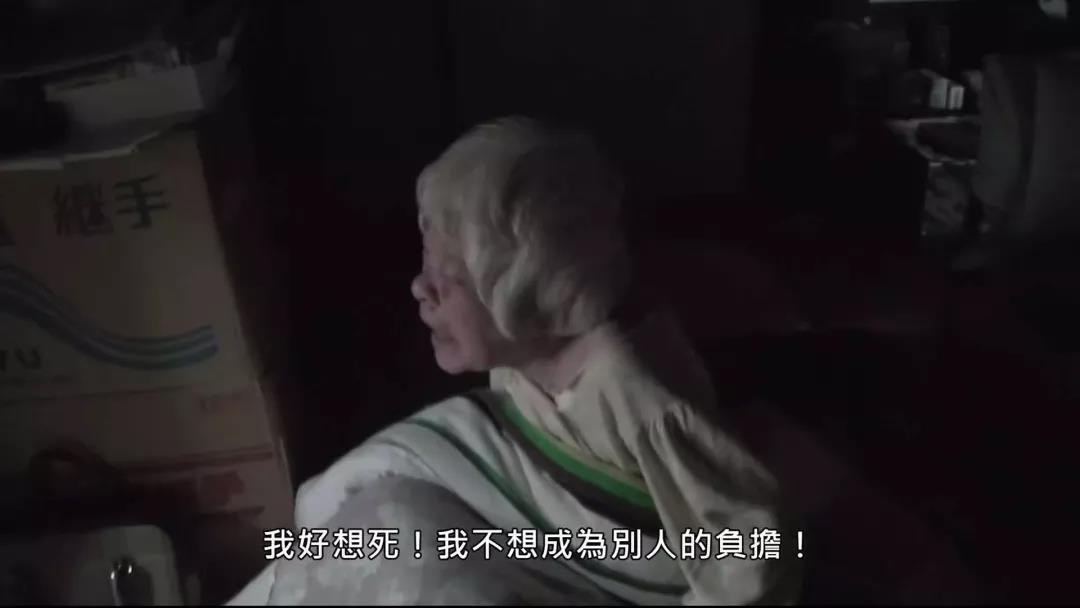
Daughter Naoko glanced outside to see her father, who had shared over 60 years of loving companionship with her mother, sitting silently in his chair—utterly still and saying not a word.
The mother inside the room was clearly falling apart emotionally—she was frantically pounding the quilt, crying out loudly like a child.
“Give me a knife—I want to die. Just let me die!”
Naoko stood by, feeling helpless—this wasn’t the first time her mother had lost control.

"I've turned into a big idiot."
Naoko noticed that her mother had completely transformed into a different person since being diagnosed with Alzheimer's disease.
Under the torment of dementia, she would suddenly break down—smashing objects or bursting into loud, angry outbursts. But once the episode passed, she’d quietly weep, sinking into relentless depression and self-blame.
A relentless cycle, utterly tormenting.
It seems the gentle, smiley mother we once knew can never be found again.
Because she works at a television station, Naoko has developed the habit of filming her parents' daily lives and family moments—so naturally, these heartwarming scenes have been captured by her camera.
From the moment she began forgetting things after discovering her mother’s condition, to the point where her mother gradually lost the ability to move, Naoko filmed it all over three years.
It has to be said that this family documentary, titled "I'm Demented—Please Take Care of Me," moved countless viewers to tears precisely because of its raw, unfiltered authenticity.
The original video is as follows
In recent years, the number of Alzheimer's patients has been rapidly increasing. According to the "2019 World Alzheimer's Report," a new dementia patient emerges every 3 seconds worldwide, bringing the global total to 50 million individuals. By 2050, this figure is projected to soar to 152 million—overwhelmingly dominated by Alzheimer's cases. The medical community generally categorizes Alzheimer's disease into three stages: the preclinical phase, the mild cognitive impairment stage, and the dementia stage. Once Alzheimer's patients enter the "dementia" stage, they often lose their ability to care for themselves, placing a significant burden on families and society as a whole.
Stem cell therapy offers new hope for Alzheimer's patients.
Currently, the disease remains incurable, but its progression can be improved and slowed down through appropriate interventions. Fortunately, a growing body of research suggests that stem cells show promising potential in treating Alzheimer's disease.
Stemedica studied the effects of human adult ischemia-tolerant mesenchymal stem cells and stem cell-secreted factors on brain amyloid-beta (Aβ) pathology in an Alzheimer's disease mouse model.
To achieve this, hMSCs were administered via intravenous injection into APPPS1 transgenic mice. Results showed that the intravenously delivered hMSCs were readily detectable in the brains of APPPS1 mice as early as 1 hour post-treatment, though their levels had dropped to negligible amounts by one week later. Notably, the hMSCs that migrated to brain regions after intravenous injection primarily localized within the cerebral vasculature—but they were also observed within the brain parenchyma, particularly in the hippocampus. Importantly, a single injection of hMSCs significantly reduced soluble brain Aβ levels in APPPS1 transgenic mice by one week, while simultaneously boosting the activity of several Aβ-degrading enzymes and modulating a specific set of brain cytokines. These findings highlight the potent amyloid-clearing and anti-inflammatory effects of hMSCs.
Additionally, 10 weeks of hMSC treatment significantly reduced Aβ plaques and neuroinflammation in the brains of APPPS1 transgenic mice, without exacerbating cerebral amyloid angiopathy or microhemorrhages. Notably, repeated intranasal delivery of soluble factors secreted by hMSC cultures was also sufficient to diminish cerebral amyloidosis in these mice. In summary, this preclinical study strongly underscores that brain amyloidosis is an ideal candidate for therapeutic interventions leveraging either hMSCs or hMSC-derived factors delivered peripherally, laying the groundwork for novel treatments targeting Aβ amyloidosis. Furthermore, the preclinical findings demonstrate that intravenous administration of adult ischemia-tolerant mesenchymal stem cells (hMSCs) effectively reduces both Aβ pathology and neuroinflammation—with no observable adverse effects—while proving beneficial for both young and aged Alzheimer’s model animals harboring amyloid deposits. Importantly, the positive impact of hMSC-secreted soluble factors on brain Aβ levels highlights this approach as a promising avenue for future research.
Building on the preclinical research foundation of the above system, Stemedica has successfully obtained FDA approval to initiate the first clinical trial in the U.S. evaluating bone marrow mesenchymal stem cells for Alzheimer’s disease treatment (NCT number: 02833792). For more details about this clinical trial, please visit https://clinicaltrials.gov/ct2/show/NCT02833792?term=stemedica&rank=1. Notably, Stemedica’s proprietary stem cell product, it-hMSC, has already been used in 17 clinical trials across multiple countries worldwide, with the it-hMSC therapy for acute myocardial infarction recently approved for commercialization in Kazakhstan.
Case:
Maria, a 75-year-old woman with Alzheimer's disease, was exhibiting aggressive behavior, failing to recognize family members, requiring round-the-clock care, and completely lacking memory or awareness of hygiene and personal appearance—despite other treatments proving ineffective. She was then enrolled in an experimental treatment using Stemedica stem cell therapy from the U.S. Six months after the injection, a CT scan revealed significant improvement in blood flow perfusion. Notably, Maria no longer displayed aggression, had reconnected with her family and friends, no longer needed full-time supervision, began regaining her memory, and even started paying attention to her personal grooming and appearance again.
Related News

Here is the title—h1 placeholder text


Copyright © Jiuzhitang Maker (Beijing) Cell Technology Co., Ltd.
Powered by: 300.cn SEO | Privacy Policy