

News
News Center
These renowned athletes saved their careers with stem cells.
来源:The Cellular Kingdom
2020-07-06
In today's highly advanced technological era, the World Cup is no longer just about football skills and physical competition—it’s also a battle of innovation and cutting-edge technology.
Right at the start of this World Cup, headlines worldwide—and even social media—were dominated by the standout superstar Cristiano Ronaldo.

In 2016, Real Madrid star Cristiano Ronaldo suffered multiple fouls during the match and was later diagnosed with a muscle fiber tear, raising concerns that he may be sidelined for some time.
Although the injury turned out to be less severe than initially expected, these types of tears typically require about 7 days of recovery. To ensure he’s ready for upcoming matches and minimize downtime, a team of medical experts has developed a stem-cell therapy plan specifically tailored for Cristiano Ronaldo. Stem cells are essentially the secret weapon that’s helping extend CR7’s athletic career—and even propelling him back to footballing greatness! That’s also why many players, despite suffering painful injuries, can often return to the field surprisingly quickly and effortlessly.
According to medical statistics, soccer is one of the sports with the highest injury rates, with muscle strains and tendon injuries being particularly common types of trauma. Currently, clinical treatment options—such as medication, direct suturing, acupuncture therapy, and extracorporeal shock wave therapy—have yet to deliver optimal results.
Minor injuries are easy to manage, but severe tendon damage—especially when direct suturing proves challenging—often leads to issues like re-tearing and fails to deliver long-term healing outcomes. Even after recovery, the repaired tendon can’t fully regain its original strength or functionality. That’s why a short-term yet highly effective repair solution has become an essential standard for every club.
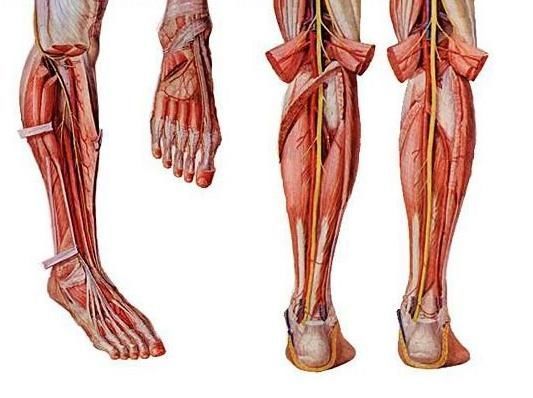
Tendons and ligaments are strong, fibrous bands primarily made of collagen, which connect muscle networks to bones—or link bones directly to the cartilage surrounding vital joints. Whether you’re throwing a baseball across home plate or hoisting your luggage onto the overhead rack, it’s your tendons and ligaments that give the twisting, pivoting, and rotating parts of your body the strength, flexibility, and stability you rely on every day. But once they’re worn down or torn, recovery can take months—or even longer, even if surgery is involved.
One reason for slow recovery is that tendons, ligaments, and cartilage lack the intricate network of blood vessels found in other organs. These other organs rely on such vascular networks to swiftly deliver cells capable of secreting repair and growth factors—factors that stimulate cell proliferation and division. With this understanding, the principle behind stem cell therapy becomes clear: by supplying the injured area with a concentrated pool of highly organized, repair-capable cells, the body can initiate healing much more rapidly on its own.
Today, let’s share with you which other famous athletes have had their careers saved—thanks to stem cells—apart from Cristiano Ronaldo!
Restored seeds Stem cell therapy becomes athletes' go-to "magic tool" for recovery
Spain's leading basketball player, Pau Gasol
Stem cells aren’t just shining brightly on the soccer field—they’re equally dazzling on the basketball court, too.
Los Angeles Lakers star, Olympic gold medalist, two-time NBA champion, and one of Europe's greatest basketball players—Spain's leading figure in men's basketball, Pau Gasol—is also a beneficiary of stem cell therapy.
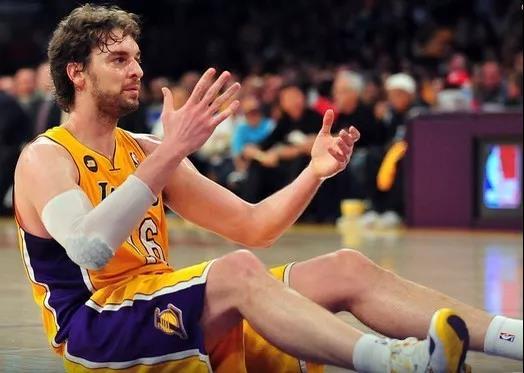
For star athletes, a knee injury is the last thing they want to deal with. Pau Gasol, a six-time NBA All-Star, struggled with knee pain during the 2013 season and was even seen walking with crutches afterward. According to sources close to the Lakers, Gasol underwent a rapid treatment method that uses ultrasound technology to break down scar tissue. The procedure begins by inserting a probe directly into the patient’s knee, then employing ultrasound waves to target and eliminate problematic tissue inside the joint.
Within three weeks, Gasol quickly recovered and was able to walk again without crutches.
Spanish tennis player Nadal
Not only that, but on the tennis court, seventeen-time Grand Slam champion Nadal is also a beneficiary of stem cells!

Spanish tennis player Nadal is currently one of the world's top-ranked players, and many consider him to be among the greatest tennis players in history. In 2013, Nadal underwent stem cell treatment on his knee, and the following year, his injured back also received stem cell therapy in Barcelona.
"Nadal's back injury is a typical issue for tennis players—something he experienced at the Australian Open—and that’s why we decided to pursue stem-cell therapy. We’ll be injecting the cells directly into the joints of his spine," said Ruiz-Cotorro, Nadal’s treating physician. With 14 years of experience as Nadal’s doctor, Ruiz-Cotorro explained that this treatment primarily aims to repair damaged cartilage, much like the stem-cell therapy Nadal underwent in his knee last year. The procedure was performed in Barcelona, and once it’s completed, Nadal is expected to return to training very soon.
Since undergoing treatment, Nadal achieved historic success in 2016, becoming the eighth male player in tennis history to reach 200 Grand Slam match wins after defeating Facundo Bagnis in straight sets during the second round of a major tournament.
Arizona Cardinals running back Chris Johnson
Chris Johnson had already played multiple seasons by the time he was 28, but during Week 3 of the 2013 season, the veteran suffered a torn meniscus in his left knee. Despite the injury, Johnson managed to stay on the field for every game that season, which ultimately led to further damage to his knee joint.

To repair his damaged knee, Johnson traveled to Florida for arthroscopic surgery to address his torn meniscus—and afterward, he underwent a procedure to inject stem cells directly into his knee joint. Unlike the typical recovery period of four to six weeks, Johnson opted not to participate in any training during the remainder of the offseason, allowing the stem cell treatment ample time to take full effect. In 2014, Johnson agreed to a three-year contract with the New York Jets, worth $9 million per year. That season, he finished strong with an impressive 153 rushing attempts for 663 yards and one touchdown.
New York Mets pitcher Bartolo Colón
In 2005, Bartolo Colón, the 32-year-old pitcher for the Los Angeles Angels baseball team, won the Cy Young Award—the American League's premier honor, awarded to the best pitcher in Major League Baseball.

However, in the following seasons, he suffered a series of tears and strains in the tendons and ligaments of his throwing arm, shoulder, and back, making his career extremely challenging—and nearly forcing him to retire in 2009. The very next year, eager to salvage his professional future, Colón returned to his native Dominican Republic to participate in an experimental treatment. There, doctors centrifuged samples of Colón’s bone marrow and fat, isolating a suspension rich in a specific type of stem cell, which was then injected directly into his injured shoulder and elbow.
After stem-cell therapy, Colon had a remarkable second year, winning 55 games. That same year, he made history by pitching two innings in his first-ever career home run, helping the Mets extend their 4-0 lead over the Yankees. Following Colon’s example, several aging, injury-plagued athletes soon followed suit. Left-handed pitcher C. J. Nitkowski underwent the same treatment in 2011.
Argentine star Di María
In the previous World Cup in 2014, Argentina star Di María was diagnosed with a "Grade I muscle strain" after suffering a right-leg muscle tear, forcing him to withdraw from the tournament ahead of schedule. Ultimately, without their "angel," Argentina was defeated by Germany in the final, narrowly missing out on the championship trophy.

After the match, the Argentine Football Association administered stem-cell therapy to Di María. This treatment not only helped alleviate the pain in his leg but also accelerated the regeneration of damaged cells. The results after the stem-cell therapy were remarkably effective.
After four years of regrouping and rebuilding, Di Maria wiped away the regrets of the previous tournament—and made a triumphant return as a true champion!
Dr. Rogers, a renowned British sports medicine expert, explains that when a player suffers a tendon injury, scar tissue forms at the site of the damage. Unlike normal muscle tissue, this type of tissue is highly susceptible to re-injury—often accompanying the athlete for life.
Given the limited number of tendon-resident progenitor cells and their restricted self-renewal capacity, identifying new approaches for tendon tissue repair and regeneration has become critically important.
With the widespread application of stem cell technology—and its advantages such as repeatable accessibility and ease of differentiation into multi-tissue cells—their use in tendon injury repair has brought hope to these top athletes.
Research shows that injecting autologous or allogeneic stem cells can enhance tendon mechanical strength, improve healing outcomes and functional recovery, and promote the reorganization of collagen fibers—while also preventing the progression of lesions and inflammatory infiltration within the body. In other words, the numerous challenges traditionally faced after conventional medical treatments have now been overcome.
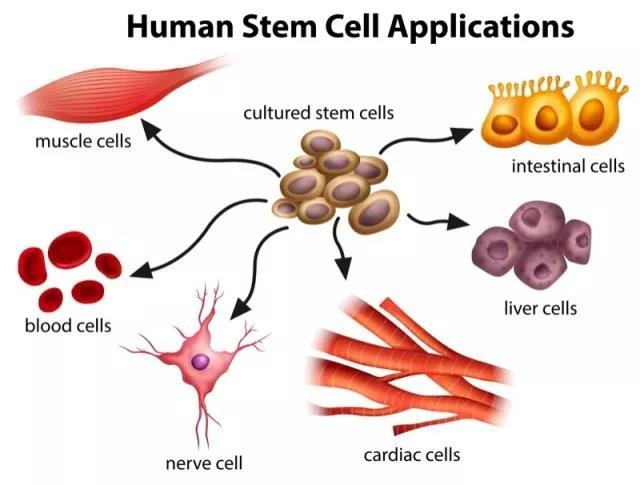
Stem cells are a type of multipotent cell with the remarkable ability to self-replicate. Under specific induction conditions—whether in vivo or in vitro—they can differentiate into various tissue cells, including bone, cartilage, muscle, tendons, ligaments, and nerves. Even after continuous passaging and cryopreservation, these cells retain their multi-directional differentiation potential, earning them the title "universal cells" in the medical community.
These characteristics make it exceptionally intelligent—when certain tissues or organs are damaged, it can differentiate into the specific cells of those tissues and organs, repairing them and restoring their normal functions.
Archimedes once said: "Give me a lever long enough, and a fulcrum on which to place it, and I shall move the world." For humanity, knee joint cartilage is precisely that kind of fulcrum—only with healthy knees can we truly walk through life.
However, currently, about 300 million people worldwide suffer from cartilage damage caused by osteoarthritis. Among those aged 60 and older, at least 50% are affected by this highly debilitating condition, for which conventional medical approaches offer no means of regenerative repair.
Stem cell technology is a hot topic and the future direction of medical research today and in the years to come—it has been ranked first among "Top Ten Scientific and Technological Advances for Humanity" and designated as a key national science and technology project.
China has already begun using mesenchymal stem cells to treat several clinically challenging diseases, including spinal cord injuries, cerebral palsy, amyotrophic lateral sclerosis, systemic lupus erythematosus, systemic sclerosis, Crohn’s disease, stroke, diabetes, diabetic foot, and liver cirrhosis, among others.
Clinical research data show that mesenchymal stem cells have demonstrated significant therapeutic efficacy in treating these diseases, and further in-depth research and clinical applications of stem cells will undoubtedly pave the way for a brighter future of healthier, better lives for humanity.
Related News

Here is the title—h1 placeholder text


Copyright © Jiuzhitang Maker (Beijing) Cell Technology Co., Ltd.
Powered by: 300.cn SEO | Privacy Policy