

News
News Center
National Eye Care Day: Spotlight on Stem Cell Therapy for Retinal Macular Degeneration
2020-06-08
Bright, sparkling eyes—full of vitality and intensity—glancing with charm, radiating energy, and piercing like a torch—all are words used to describe the beauty of the eyes. Yet, most eye injuries and degenerative conditions remain nearly untreatable. Among these, retinal degenerative diseases have become a leading cause of vision impairment in modern society, significantly diminishing patients' quality of life.
Population Aging and Macular Degeneration
Age-related macular degeneration (AMD) is one of the retinal degenerative diseases, characterized by the progressive loss of retinal cells—primarily irreversible damage to retinal pigment epithelial cells and photoreceptor cells—which ultimately leads to impaired vision and significantly contributes to visual disability. Over 90% of the information humans receive from the external world comes through the visual system; thus, losing sight can evoke the same profound fear and emotional devastation as being diagnosed with cancer.
AMD most commonly affects people over the age of 50, with symptoms appearing in one or both eyes—either sequentially or simultaneously. Among those who develop the condition in one eye, there’s a 40% chance that the other eye will be affected within five years. In the United States, macular degeneration is actually a leading cause of blindness, surpassing the combined number of cases caused by glaucoma, cataracts, and diabetic retinopathy. Meanwhile, in Japan, the incidence of macular degeneration among individuals aged 50 and older has surged dramatically in recent years, reaching 1%, with the total number of affected individuals now estimated at around 700,000—a figure that classifies it as one of the more challenging and complex diseases to treat. In China, the prevalence of macular degeneration is even higher, with rates ranging from 6.04% to 11.19% among people aged 60 to 69. As China continues to grapple with an aging population, the disease is showing a clear upward trend.
Age-related macular degeneration (AMD) affects the lives of more than 30 million people worldwide.
Stem cell therapy shows promising potential for treating macular degeneration.
Currently, the clinical options for treating macular degeneration are quite limited, with treatments primarily focusing on anti-inflammatory therapies and neuroprotective agents to slow disease progression. In some cases, drugs that inhibit abnormal blood vessel growth are also used. However, existing medications are unable to restore damaged retinal pigment epithelium (RPE) cells or recover the function of already impaired visual nerve cells.
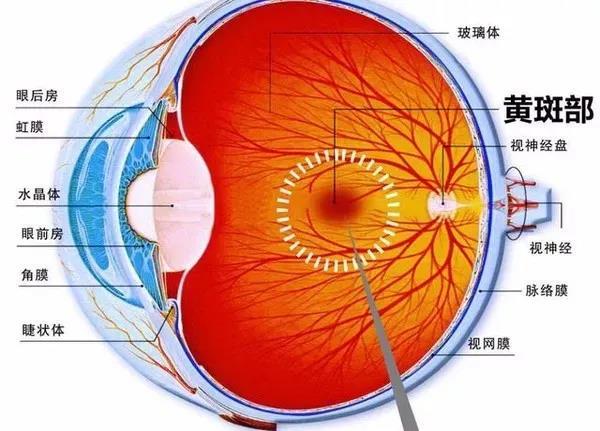
Using stem cells holds tremendous promise for replacing or repairing damaged retinal nerve cells and RPE cells. Research has shown that transplanting stem cell-derived retinal pigment epithelium (RPE) beneath the retina not only allows the cells to survive and restore visual function but also provides long-term protection for both cone and rod photoreceptor cells.
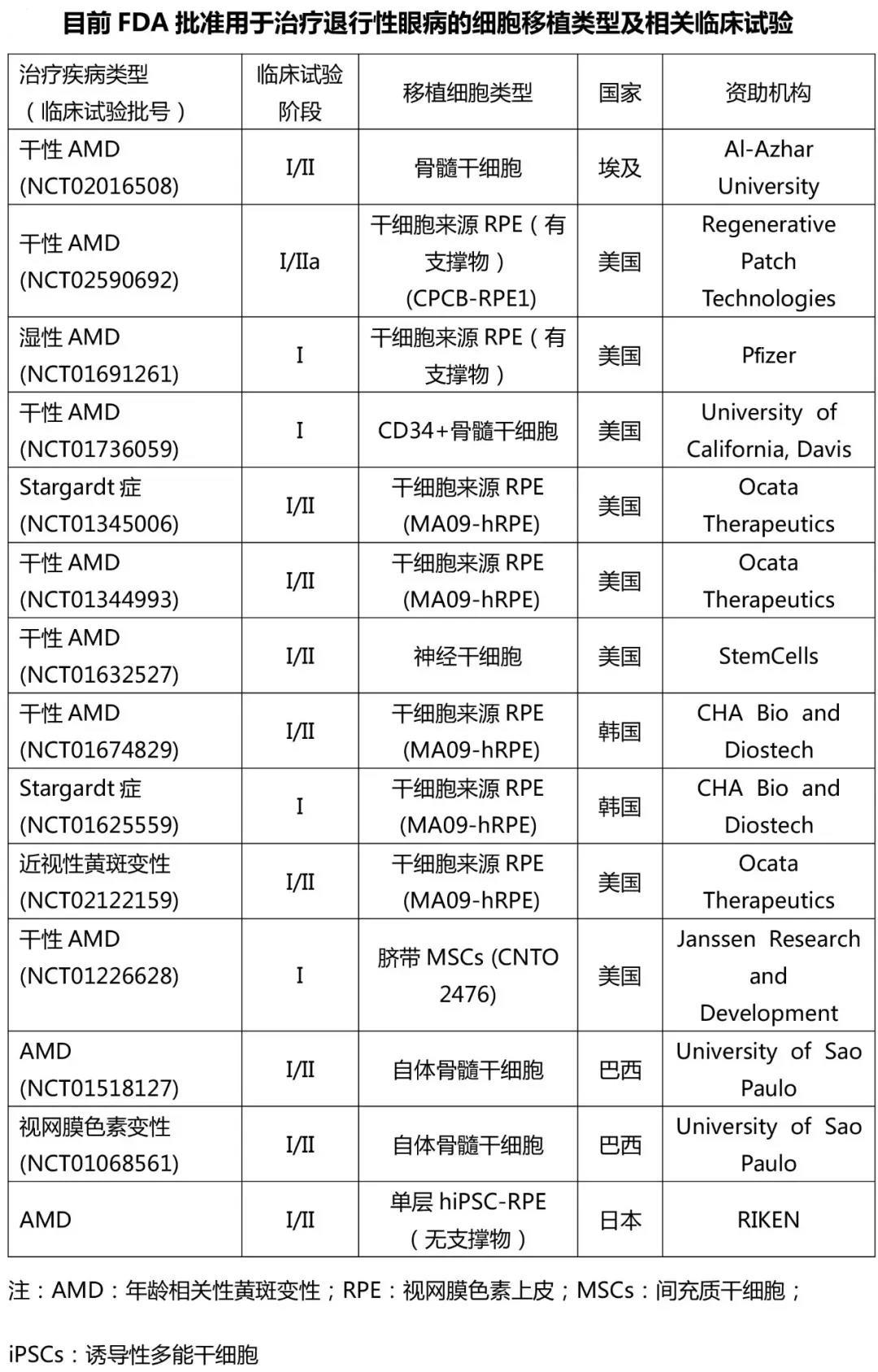
The U.S. FDA has approved several cell types for Phase I/II clinical trials targeting degenerative eye diseases, as shown in the figure below:
The prerequisite for stem cell therapy to be both safe and highly effective is the preparation of high-quality, qualified stem cells. Using substandard or improperly prepared cells, on the other hand, could actually lead to the development of new diseases. This is an issue that requires meticulous attention and utmost seriousness.
The new drug law clearly defines stem cell therapy products. Managed according to pharmaceutical regulations
In 2019, the new Drug Law clearly categorized pharmaceuticals into three types: traditional Chinese medicine, chemical drugs, and biological products. Stem cells, classified as cell therapy products under the biological products category, will be regulated as drugs. Additionally, in 2020, a GMP Annex specifically for cell therapy products was issued.
According to national regulatory requirements, stem cells currently used for disease treatment must be approved products authorized by local drug regulatory or health authorities. In principle, they should be produced under GMP-compliant conditions and undergo rigorous quality control in strict accordance with pharmaceutical regulations.
GMP is a set of mandatory standards applicable to industries such as pharmaceuticals and food, requiring companies to meet national regulatory requirements for hygiene and quality—covering aspects like raw materials, personnel, facilities and equipment, production processes, packaging and transportation, as well as quality control. This ensures the establishment of practical operational guidelines that help companies improve their hygiene conditions, promptly identify issues arising during production, and effectively manage associated risks.
More than 30 years of practice have proven that GMP is indeed a highly effective and advanced scientific management system, playing a critical role in eliminating risks of contamination, cross-contamination, and errors in the pharmaceutical production process—and thereby ensuring the quality of medicines.
Jiuzhitang Maker—China's Stem Cell Pharmaceutical Pioneer Pioneer
In 2018, Jiuzhitang participated in initiating and establishing the Zhuhai Hengqin Jiuzhitang Yonghe Qihang Fund (hereinafter referred to as the Yonghe Qihang Fund), which invested in the U.S.-based Stemedica Cell Technologies Inc. Simultaneously, Jiuzhitang also invested in and founded Jiuzhitang Maker (Beijing) Cell Technologies Co., Ltd., serving as the sole Chinese partner entrusted with Stemedica’s stem cell technology.
Stemedica Company boasts 15 years of experience in stem cell research and manufacturing, having received a production license from the California state government in 2010. To date, it has been operating under GMP-compliant conditions for nearly 10 years.
Stemedica's ischemia-tolerant human bone marrow mesenchymal stem cell (ithMSC) product, produced under fully controlled hypoxic conditions, meets the U.S. FDA cGMP requirements for both its manufacturing process and quality system.
Currently, Jiuzhitang Maker has completed the technology transfer and has established a production platform at the China Pharmaceutical Valley—Beijing Daxing Biomedical Base—that adheres to both Chinese and U.S. cGMP-standard quality systems. This platform is capable of producing clinical-grade stem cells meeting the regulatory requirements for drug submissions in both China and the United States.
Related News

Here is the title—h1 placeholder text


Copyright © Jiuzhitang Maker (Beijing) Cell Technology Co., Ltd.
Powered by: 300.cn SEO | Privacy Policy