

News
News Center
Stem Cell "Dual Track": The Differences and Synergies Between IIT and IND
2025-05-08
In China, stem cell research and applications are governed under a "dual-track" regulatory model that combines pharmaceutical and technological oversight. This approach not only encourages companies to innovate according to the stringent standards of drug development but also provides flexibility for medical institutions to conduct clinical research. By ensuring the safe and orderly growth of the stem cell industry, it simultaneously offers robust support for advancing stem cell technology innovation.
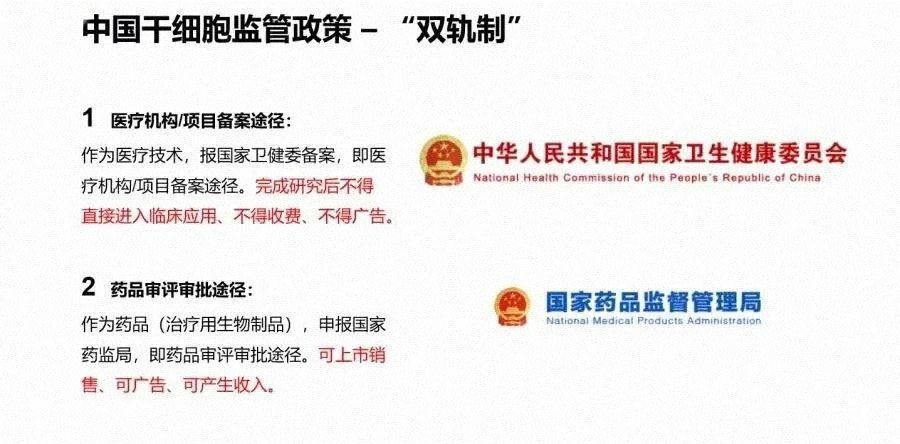
In 2015, the National Health and Family Planning Commission, together with the State Food and Drug Administration, jointly issued the "Administrative Measures for Clinical Research on Stem Cells (Trial)," aiming to standardize and promote stem cell clinical research. According to these measures, stem cell clinical research will be governed by a filing system, allowing investigator-initiated clinical trials (IIT) to proceed.

IIT's key features are as follows:
Research objective: IIT is not aimed at product commercialization but rather builds on existing research to conduct early-stage clinical exploration, designed to answer scientific questions or test scientific hypotheses.
Responsible entity: Medical institutions are responsible entities for stem cell products and clinical research, with the principal investigator bearing primary responsibility for the scientific integrity and ethical compliance of the studies. Institutions must establish academic and ethics committees to review research proposals, oversee the study process, and ensure comprehensive quality management and risk control throughout the entire lifecycle of stem cell product preparation and clinical research.
Regulatory authorities: IIT is regulated by the National Health Commission (NHC) and requires dual approval—first from the institution’s internal Scientific Committee, followed by the Ethics Committee. For IIT studies involving stem cells, an additional review by the Biomedical Technology Association is also necessary.
Funding sources: Funding for IIT research comes either from collaborating pharmaceutical companies or from researchers' own project grants.
The 2017 draft revision of the "Drug Registration Management Measures" explicitly stated that cell therapy products could be registered and marketed as pharmaceuticals. Subsequently, the issuance of the "Technical Guidance Principles for Research and Evaluation of Cell Therapy Products (Trial)" further clarified the standards for cell therapies seeking drug approval. This means that stem cell products must now adhere to stringent pharmaceutical regulatory requirements and undergo comprehensive Investigational New Drug (IND) clinical trials.

IND's main features are as follows:
Research objective: IND aims to obtain drug marketing authorization by conducting systematic clinical trials to establish the safety and efficacy of the drug in humans.
Responsible entity: The sponsor (typically a company) is ultimately responsible for the quality and reliability of clinical trial data, tasked with developing, implementing, and updating standard operating procedures for both quality assurance and quality control systems. Researchers, on the other hand, are responsible for the specific division of labor and oversight of the clinical trial itself.
Regulatory authorities: IND is regulated by the National Medical Products Administration (NMPA) and requires rigorous review and approval from the agency.
Funding sources: Funding for IND research is provided by industry.
IIT and IND differ significantly in terms of research objectives, responsible entities, regulatory bodies, and funding sources. However, the two are not entirely independent—they complement each other instead:
The value of IIT: While IIT studies cannot be directly used for drug approval, their data can serve as a crucial complement to IND studies. For instance, sponsors can refer to the safety and efficacy data from IIT studies when submitting an IND application, helping to support the smooth approval of clinical trials (typically during the pre-IND stage, when a complete IIT clinical study report is submitted).
Development Trend: As China continues to refine its regulatory framework for stem cells, IIT research designs are increasingly aligning with the requirements of registered clinical trials—yet their inherent advantages of flexibility and cost-effectiveness remain intact.
The "dual-track" regulatory model for stem cells provides a diversified pathway for stem cell research and application in China. IIT studies offer flexibility for early-stage exploration, while IND studies ensure rigorous safeguards for bringing drugs to market. Together, these approaches drive forward innovation and expand the potential for practical applications of stem cell technology. Looking ahead, as more stem-cell-based therapies gain approval and enter the market, this regulatory framework will continue to support the healthy growth of China's stem cell industry.
Related News

Here is the title—h1 placeholder text


Copyright © Jiuzhitang Maker (Beijing) Cell Technology Co., Ltd.
Powered by: 300.cn SEO | Privacy Policy