

News
News Center
Sichuan Free Trade Zone: Striving to convert cell and gene therapies that meet medical technology access standards into approved healthcare service pricing items as per regulations.
2024-11-19
Recently, the "Implementation Plan for Benchmarking and Leading Actions in China's (Sichuan) Pilot Free Trade Zone" was officially released.
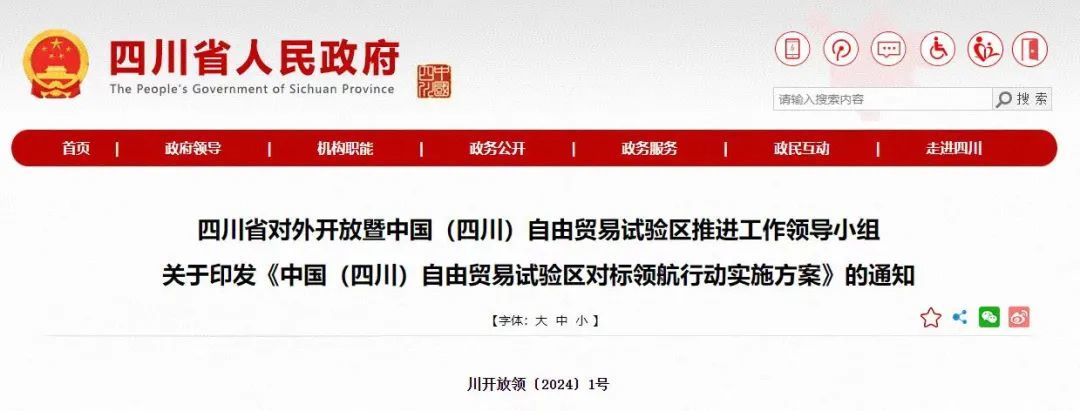
The plan explicitly states:
(7) Strengthen Research and Application of Cutting-Edge Medical Technologies
39. Support qualified medical and healthcare institutions in strengthening innovation at the forefront of science and technology, and in conducting clinical research on stem cells, somatic cells, and more. Strive to pilot the use of internationally approved drugs and medical devices—available abroad but not yet in China—at the cutting-edge Medical Centers. Efforts are being made to convert cell and gene therapies that meet medical technology access requirements into standardized healthcare service price items as per regulations.
The full text is as follows
Implementation Plan for the Benchmarking and Leading Action Initiative of the China (Sichuan) Pilot Free Trade Zone
To fully implement the important instructions and directives of General Secretary Xi Jinping on the construction of the pilot free trade zones, and to carry out the requirements outlined in the "Opinions on Aligning with High Standards and Promoting Institutional Openness in the China (Sichuan) Pilot Free Trade Zone" (Sichuan Government Document No. 16 [2023]), this Implementation Plan has been specially formulated to advance the strategic upgrading of the pilot free trade zone. It aims to steadily expand institutional openness in areas such as rules, regulations, governance, and standards, fostering a more comprehensive and robust framework for international engagement.
I. General Requirements
Guided by Xi Jinping Thought on Socialism with Chinese Characteristics for a New Era, we will comprehensively implement the spirit of the 20th National Congress of the Communist Party of China, fully, accurately, and thoroughly embracing the new development philosophy. We will foster a new development paradigm, striking a balanced approach between growth and security. Focusing on five key areas—trade facilitation, industrial cluster development, financial innovation, government governance, and rule-of-law services—we will undertake pioneering, integrated, and differentiated explorations. Our goal is to transform the Sichuan Pilot Free Trade Zone into a leading demonstration zone that spearheads Sichuan’s high-level opening-up and high-quality development. By 2027, we aim to see more than 160,000 newly established enterprises, with goods imports and exports surpassing 450 billion yuan. Moreover, foreign direct investment will continue to account for over 30% of the province’s total, while more than 80 innovative institutional outcomes will be replicated and scaled up across the region. Crucially, systemic and institutional barriers in these priority areas will be further dismantled, enabling the effective establishment of several internationally recognized, open, and industry-leading clusters. Ultimately, an open institutional framework aligned with high-standard international economic and trade rules will be firmly in place.
II. Implement the Trade Facilitation Leading Initiative
(1) Enhancing Customs Clearance and Regulatory Efficiency
1. Promote the expansion and renovation of the customs supervision area at Chengdu International Railway Port, and support the inclusion of the railway hub station within this supervised zone. Additionally, facilitate the integrated bonded zone at Chengdu International Railway Port to achieve "zone-port collaboration" with the railway port's customs clearance facilities, piloting a direct "through-transport" model for import and export goods between the port and the bonded zone.
2. Deepen reforms to the fast customs clearance model for import and export goods at railway ports, supporting all stakeholders across the entire logistics chain—including terminal operators, railway hubs, and freight train companies—to enhance collaborative logistics coordination and information integration, thereby expanding the application of rapid railway customs clearance for both imports and exports.
3. Promote reforms in multimodal transport and customs clearance regulations, enhancing the integration of functions and fostering business collaboration among different types of customs supervision facilities.
4. Promote the integrated customs clearance for international road transport, enabling optimized customs declaration, streamlined regulatory and logistics route planning, and real-time tracking of customs clearance progress along the way for both full-container and less-than-container-load (LCL) shipments using TIR Convention vehicles.
(II) Promoting Smart Port Development
5. Pilot the innovative "Smart Connected" clearance model, explore and implement new logistics approaches such as "multi-point cargo delivery" and "airside internal transfer," to enhance the efficiency of cargo handling at the airport.
6. Deepen the development of the "Smart Land Port" initiative. Gradually break down data silos across customs, rail freight services, and terminal operations—specifically in areas like train planning, shipment coordination, container entry, inspection, and clearance—to enable seamless data integration and interaction. Upgrade the international rail freight booking system and introduce new functional modules, such as an advanced smart customs management system. Additionally, promote and expand paperless, end-to-end operational models like "Intelligent Cloud Diversion."
7. Fully promote paperless, end-to-end operational management across all processes in waterway ports, and support the development of 5G-powered smart port facilities.
(III) Deepening "Customs-Port Collaboration" in Regulatory Innovation
8. Upgrade the biopharmaceutical R&D supply chain service platform. Deepen the application of the integrated collaborative regulatory system and enhance the quality of regulatory information sharing.
9. Introduce an academician-level expert team to jointly establish a high-caliber risk assessment expert database for special import and export items, developed specifically for local needs.
10. Revise the Management Procedures for Enterprises (Institutions) on the Biomedical Special Goods "White List" for Import and Export. Support efforts to strengthen the development of "White List" enterprises.
(IV) Facilitating the Entry and Exit of International Exhibits
11. Develop tailored regulatory and service plans—“one plan for each major international exhibition”—to provide customs clearance guidance, establish green channels, and facilitate on-site verification and inspection services at nearby locations.
12. Support organizers in providing exhibitors with diversified guarantee options; unless otherwise specified, exhibitors will be exempt from submitting license documents.
13. For medical devices intended solely for exhibition purposes—those not involved in research, development, production, distribution, marketing, or use—registration or filing certificates are exempted. Instead, companies are advised to utilize the import medical device filing/registration certificate verification function within the Regulatory Document Network Check V2.0 system.
(5) Enhance the Development of Sichuan's International Trade "Single Window"
14. Enhance the business synergy of Sichuan's International Trade "Single Window" in areas such as logistics and finance, and promote seamless connectivity and data integration between the platform and open hubs within the free trade pilot zones, including comprehensive bonded zones and bonded logistics centers. Additionally, advance the interconnection of the Green Trade Public Service Platform with the "Single Window."
15. Upgrade the "Single Window" with locally tailored services, and develop features such as intelligent verification and analysis for processing trade, as well as a mobile app providing data services for foreign trade enterprises. Additionally, launch the "Dual-Channel Enterprise Support Journey Across Ten Thousand Miles" campaign to expand the reach and adoption of the "Single Window" platform.
16. Deepen cooperation on the Sichuan-Chongqing International Trade "Single Window," and explore establishing cross-regional data-sharing and collaborative operations with provinces such as Guangxi and Yunnan.
(6) Expanding the International Logistics System
17. Enhance the multi-channel support capabilities and diversified service quality of international freight trains, ensuring that the expansion of open trade routes effectively aligns with outward-oriented enterprises seeking to broaden their markets and optimize resource allocation. Strengthen foundational functions of international land ports, such as container sharing and integrated intermodal transport combining rail, road, and other modes, while bolstering Chengdu as a key international freight train assembly hub. Additionally, develop and implement supportive policies for southbound international freight trains and Yangtze River-based rail services, driving the simultaneous advancement of "four-directional" international rail networks.
18. Build the Sichuan (Chengdu) International Road Freight Hub and explore initiatives to advance the development of international multimodal transport.
19. Develop Sichuan Province’s Comprehensive International Logistics Supply Chain Platform (Global Trade & Logistics Service Platform) and the Sichuan Provincial Integrated Cloud Services Digital Platform for International Trade, Logistics, and Supply Chains. Host the “China-Central and Eastern European Countries Logistics Cooperation Secretariat Liaison Meeting” to establish a robust exchange and collaboration platform connecting ASEAN with Europe.
20. Promote the establishment of new international cargo routes and strengthen existing ones through encryption, accelerating the development of a cargo network tailored to countries jointly building the Belt and Road Initiative. Actively attract aviation logistics companies and encourage them to set up regional headquarters or transshipment hubs in the region.
21. Strive to establish a cargo-only base airline.
(7) Enhance the Green Trade Service System
22. Explore establishing a carbon footprint management system for key products in Sichuan. Develop calculated carbon emission factors specific to the Sichuan power grid. Conduct research on a background database for carbon footprints of power battery products, and begin exploring the development of relevant standards.
23. Strive to establish the Low-Carbon Technical Trade Measures Research and Evaluation Base of the Standards and Technical Regulations Center under the General Administration of Customs, creating a platform for researching low-carbon trade measures and facilitating international consultations. Additionally, carry out activities such as carbon-related rule information monitoring, early warning, and technical trade measure notification & evaluation.
24. Building a "Green Corridor" for Water Transport. Leveraging the Yangtze River's Golden Waterway, we will explore and implement multimodal transport solutions such as "road-water intermodal transport" for new-energy products, helping to achieve low-carbon integration in collection and distribution processes. We’ll also accelerate the transition toward low-carbon port operations and management, reducing the carbon footprint of shipping and logistics, and ultimately creating a truly low-carbon port.
3. Implement the Industry Cluster Leadership Initiative
(1) Promote the development of the digital industry
25. Drive the "Smart Transformation and Digital Transition" in manufacturing. Implement initiatives to modernize manufacturing through intelligent technologies and digital transformation. Organize the "Digital Empowerment Deep Dive" campaign. Launch a pilot program for digitalizing safety management in provincial-level chemical industrial parks. Promote the adoption of the Data Capability Maturity Model (DCMM) for enterprise data management.
26. Advance the "AI + Every Industry" initiative. Establish an AI Large Model Industry Alliance. Cultivate a group of data-driven enterprises in key areas such as intelligent manufacturing and information security. Support companies in accelerating breakthroughs in deep synthesis algorithms and industry-specific large models. Promote AI-powered application scenarios and launch pilot projects for innovative blockchain applications. Develop the Chengdu-Chongqing National Hub Node of the National Integrated Computing Power Network (in Sichuan). Strive to become a national digital trade demonstration zone.
27. Deepen the pilot program for localized management of online games. Enhance capabilities in guiding and overseeing game creation and production, reduce the approval timeline for game publishing licenses, and provide businesses with one-stop services—including R&D technical support, creative production guidance, and pre-publication review and regulatory oversight. Support the establishment of the Sichuan Game Innovation & Development Center, and foster the development of an export-oriented digital publishing industry cluster in Chengdu.
(II) Facilitating Cross-Border E-commerce Operations
28. Leveraging special customs supervision zones (locations), we will promote the implementation of the "front-store, back-warehouse + rapid delivery" model for cross-border e-commerce in key commercial districts. Additionally, we will guide cross-border e-commerce pilot zones in establishing live-streaming bases tailored for cross-border retail.
29. Support cross-border e-commerce used-car exporters in transitioning into vertically integrated foreign trade service enterprises.
(III) Strengthening the Aviation Industry Innovation Chain
30. Support the establishment of the Chengdu Airborne Equipment Certification Sub-center under the China Civil Aviation Airworthiness Certification Center, and innovatively carry out review tasks for equipment compliant with China's Civil Aviation Technical Standards (CTSO) as well as imported materials, components, and airborne equipment design approvals or recognitions (VDA) for civil aviation.
31. Support the establishment of a high-altitude research center for large aircraft.
32. Support qualified aviation enterprises in pursuing technological innovations such as aircraft maintenance and manufacturing, automated dismantling, and eco-friendly recycling, thereby establishing a demonstration model for an innovative technology and industrial chain focused on the circular reuse of aircraft.
(4) Expand the Coverage of the "Bonded + " Policy
33. Explore conducting bonded maintenance operations outside the Comprehensive Bonded Zone but within the Free Trade Pilot Zone.
34. Support the biomedical industry in conducting bonded research and development activities within the comprehensive bonded zone.
35. Support enterprises in the comprehensive bonded zones to develop the bonded remanufacturing industry. 36. Deepen cross-customs district pilot programs for collaborative bonded maintenance, expanding both the range of repaired products and the areas of cooperative partnerships.
(5) Reducing Compliance Costs for Parallel Automobile Imports
37. Accelerate the enhancement of functions at complete vehicle import/export testing laboratories and CCC certification testing labs, establish a public service platform for imported car inspections, and deliver "one-stop" inspection and certification services—allowing parallel-imported vehicles to be processed directly upon arrival at the facility.
(6) Expand the Scope of Railway Transportation for Live-Product Shipping
38. Promote the railway transportation of consumer-grade lithium batteries, such as portable computers and mobile power banks, in accordance with regulations, and promptly organize trial runs of railway transport for high-energy-density batteries used in new energy vehicles.
(7) Strengthen Research and Application of Cutting-Edge Medical Technologies
39. Support qualified healthcare institutions in strengthening innovation at the forefront of medical technology, and encourage them to conduct clinical research on stem cells, somatic cells, and other cutting-edge therapies. We will strive to pilot the use of internationally approved drugs and medical devices—available abroad but not yet in China—at leading medical centers. Additionally, we aim to ensure that cell and gene therapies meeting medical technology access criteria are officially integrated into healthcare service pricing schemes as per regulations.
40. Launch a pilot program to manage imports of items used in biopharmaceutical R&D via a "whitelist" system.
41. Strive to establish additional ports of entry for first-time imported pharmaceuticals and biological products.
4. Implement the Financial Innovation Leadership Initiative
(1) Expanding the Property Rights Function and Financial Attributes of Railway Transport Documents
42. Encourage banking institutions to innovate by drawing inspiration from the financial service model used with ocean bills of lading, adopting railway transport documents—provided they are risk-controlled—as acceptable instruments for settlement and financing. This will enable foreign trade enterprises to access services such as domestic and foreign currency settlement, letter-of-credit issuance, import-export trade financing, and supply-chain finance. Additionally, accelerate the implementation of the "single-document system" for multimodal transport along the China-Europe Railway Express (Chengdu-Chongqing) route, along with related application scenarios. Leveraging innovations like blockchain technology, facilitate the issuance of a unified Chengdu-Chongqing multimodal bill of lading.
43. Strengthen cooperation with organizations such as UNCITRAL and the International Railway Cooperation Organization, focusing on initiatives like the property rights of railway transport (multimodal transport) documents, digitalization, and related supply chain finance innovations. This will deepen the Chengdu-Chongqing collaboration and pave the way for exploring new rules in land-based trade, logistics, and finance.
(II) Deepening Cross-border Trade and Investment Facilitation
44. Explore expanding the application of unified domestic and foreign currency bank settlement accounts within the free trade pilot zones.
45. Seek national support for the implementation of the Free Trade (FT) account system.
46. Deepen the pilot program for facilitating cross-border financing for high-tech and "specialized, refined, distinctive, and innovative" enterprises, increasing the financing limit from US$5 million to US$10 million, and expanding the pilot scope to include technology-driven SMEs.
47. Seek to launch a pilot program for cross-border transfers of RMB trade finance assets.
48. Leveraging the "First-Time Customer" initiative for cross-border RMB business, we will promote the expansion, enhancement, and increase in volume of cross-border RMB transactions within the free trade pilot zone.
49. Explore establishing use cases for digital RMB in the trade sector.
(III) Encourage the development of intellectual property-backed securities financing
50. Encourage eligible intellectual property rights to be used as underlying assets for issuing asset-backed securities, and actively leverage platforms such as the Shenzhen Stock Exchange’s Science and Technology Achievement & Intellectual Property Trading Center to foster deep integration among cutting-edge technologies, top-tier talent, and innovative capital.
(4) Promote Convenience for Foreigners' Spending in Sichuan
51. Further expand the use of international cards and mobile payments, reduce interchange fees for international card transactions, enhance account services for inbound travelers, optimize the cash usage environment, and build a payment service system featuring "large-value card payments, small-value QR code scans, and cash as a fallback option."
52. Implement the "buy and refund immediately" convenience measure for outbound tax refunds, expand the number of stores participating in the "buy and refund immediately" shopping policy, and offer multiple refund settlement options, including digital RMB and credit cards. Additionally, create dedicated tax-refund districts for departing travelers.
5. Implement the Government Governance Leadership Initiative
(1) Optimizing Foreign Investment Management Services
53. Fully implement the negative list for foreign investment access in the free trade pilot zones, regularly hold roundtable meetings with foreign-invested enterprises and government-enterprise dialogue sessions specifically tailored to serve these companies, and promptly address and resolve their challenges and concerns.
54. Promote the provision of online real-name authentication services for foreign investment entities within the free trade pilot zone, and launch end-to-end online processing services for foreign-invested enterprises. Support the registration authorities in the zone to apply to the State Administration for Market Regulation for authorization to register foreign-invested enterprises.
(II) Optimize Administrative Approval Services
55. Select certain industries to pilot the "comprehensive licensing, single license for operation" initiative.
56. In line with national directives, we will explore launching a pilot program for self-inspection and self-certification in selected sectors such as electronics, appliances, and automotive products. Certification bodies will be encouraged to accept testing reports generated by their own laboratories—rather than relying on third-party assessments—when issuing CCC certification to eligible companies. Provided that the companies make relevant commitments, they will be exempt from submitting documentation related to production capacity, technical expertise, and quality assurance systems.
57. Establish provincial-level demonstration government service centers to provide enterprises with comprehensive, end-to-end value-added services throughout their entire lifecycle.
(III) Enhance the Credit Regulatory Model
58. Actively expand the application scenarios for "Xin Yi+."
59. Promote the regular application of enterprise credit risk classification results in the "double random, one public" regulatory approach adopted by market supervision authorities in the pilot free trade zones.
(IV) Strengthen Guidance on Responding to Trade Barriers
60. Leveraging the Sichuan Provincial Trade Friction Response Center and the China Council for the Promotion of International Trade (CCPIT) Sichuan Economic and Trade Friction Early Warning Center, we will issue trade barrier alerts and publish research reports on strategies for addressing trade disputes. Additionally, we will dynamically update trade guides tailored to key national markets.
61. Conduct specialized training on responding to trade frictions, provide thorough notifications and advisory services on technical trade measures, and guide enterprises in leveraging WTO rules to address unjustified trade restriction measures.
(5) Promote the orderly flow of data as a key production factor
62. Advance the development of data exchanges. Establish comprehensive rules covering data transaction information disclosure, security audits, process management, transaction settlement, and security safeguards.
63. Guide enterprises within the zone to implement, in accordance with national regulations, requirements such as data export security assessments and filing of standard contracts for personal information exports, thereby promoting the lawful, orderly, and free flow of data. Additionally, in line with data classification and tiered protection guidelines, explore the establishment of a networked data security circulation system that accommodates multiple coexisting models.
64. Highlight areas such as personal information protection and artificial intelligence, as well as sensitive nodes, to explore the development of a data protection capability certification system.
(6) Strengthen Human Resource Support and Assurance
65. Implement comprehensive pilot programs to provide human resource support for industries such as Chengdu's high-tech sector and Luzhou's liquor industry.
66. Supporting Chengdu High-Tech Zone in establishing "China's Western Headhunting Valley" and an "International Talent Attraction Base."
67. Steadily and prudently study and explore the development of a "List of Recognized Overseas Professional Qualifications."
68. Strive to implement the 144-hour visa-free transit policy through coordinated efforts between Sichuan and Chongqing.
6. Implement the Rule of Law Service Leadership Initiative
(1) Building a Rule-of-Law Service Ecosystem
69. Strengthen the Western Branch of the National Academy of Lawyers, advance the establishment of a Development Center for the Ministry of Justice’s Institute of Forensic Science and Technology, ensure the effective operation of the Sichuan Tianfu Central Legal Service Area’s Notary Research Institute and the Sichuan Tianfu Environmental Damage Forensic Research Institute, attract renowned domestic and international legal service providers, and leverage the "Tianfu Central Legal Service Area" to build an ecosystem featuring a "core industry layer + related legal services layer."
70. Establish the "Chengdu International Arbitration Center of the China International Economic and Trade Arbitration Commission," the "Belt and Road International Commercial Mediation (Southwest) Center," and the "Belt and Road Foreign Law Verification (Southwest) Center."
71. Strive to attract renowned overseas arbitration and dispute resolution institutions to establish a presence in the region, thereby fostering the development of a regional international arbitration hub.
72. Encourage commercial mediation organizations and arbitration institutions to bring in foreign mediators and arbitrators.
(II) Strengthen Intellectual Property Protection
73. Deepen the reform of the "three-in-one" trial mechanism for civil, administrative, and criminal intellectual property cases. Establish an Intellectual Property Court.
74. Comprehensively fulfill prosecutorial functions by establishing a "dual-reporting system" center for intellectual property cases in the free trade pilot zone, enabling one-stop rights protection services.
75. Establish an intellectual property infringement early-warning mechanism. Develop an overseas intellectual property dispute response guidance system and release guidelines for protecting intellectual property rights abroad.
76. Establish a police-enterprise collaboration mechanism for the "Sichuan Public Security Intellectual Property Cloud Policing Initiative" within the region, as well as a "Criminal Protection Alert System for Trade Secrets."
(III) Implement the Principle of Competitive Neutrality
77. Exploring the establishment of a third-party evaluation mechanism for fair competition reviews.
78. Continue to address and rectify practices and regulations in engineering procurement and government procurement that violate the principles of building a unified national market. In the engineering bidding sector, explore the application of electronic business licenses for activities such as platform login, signature processes, and online contract execution. Meanwhile, aim to achieve fully digitalized management across the entire process in government procurement.
(IV) Enhance Protection of Workers' Rights and Interests
79. Support the pilot free trade zones in launching "Initiatives to Build Harmonious Labor Relations," and promote the establishment of a tripartite mechanism for coordinating labor relations.
80. Equip the district with labor security inspectors and implement smart monitoring. Encourage the development of talent cultivation and training programs in the international labor sector. Foster grassroots-level labor relations service centers.
The Leading Group for Sichuan Province's Opening-Up and the Promotion of the China (Sichuan) Pilot Free Trade Zone should strengthen overall coordination, carefully study and deliberate on major initiatives, and effectively address significant challenges. Meanwhile, the Sichuan Free Trade Office needs to refine its mechanisms for research and scheduling, case dissemination, knowledge-sharing of achievements, and performance tracking. It should also ensure that the institutional innovations and exemplary cases developed under the "Benchmarking and Leading Action" initiative are systematically replicated and scaled up across the region. Regularly conduct comprehensive work assessments, promptly recognize and reward outstanding units based on evaluation results, and hold constructive discussions with entities lagging behind. All member units of the Leading Group must enhance inter-agency collaboration, reinforce safety assessments and risk management, and diligently advance key tasks within their respective areas. Any major issues or developments should be reported promptly, while critical matters requiring deeper analysis should be escalated for further review. Finally, the governments of the Free Trade Zone pilot areas and collaborative reform pilot zones are tasked with earnestly implementing all actions and requirements outlined in this plan. They should proactively devise more practical and effective measures to guarantee the successful execution of all assigned tasks.
Reprint Notice: This article is reprinted from the official website of the People's Government of Sichuan Province. If there is any infringement, please contact us for removal.
Related News

Here is the title—h1 placeholder text


Copyright © Jiuzhitang Maker (Beijing) Cell Technology Co., Ltd.
Powered by: 300.cn SEO | Privacy Policy