

News
News Center
Guangdong releases the "Opinions on Promoting High-Quality Development of Health and Wellness," aiming to foster a stem cell industry cluster in the Guangdong-Hong Kong-Macao Greater Bay Area.
2023-04-21
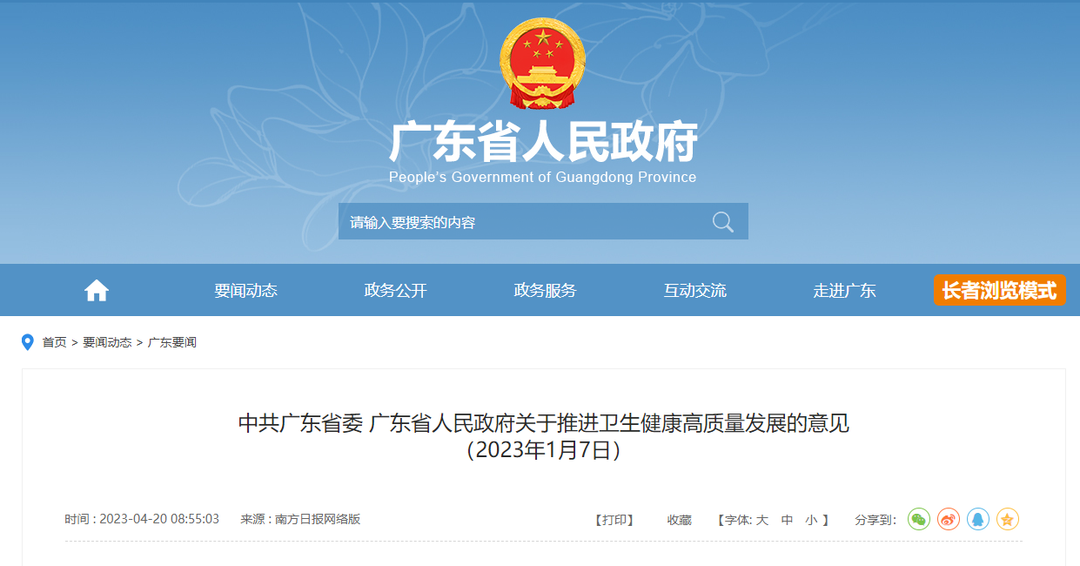
On April 20, 2023, the "Opinions of the Guangdong Provincial Committee of the Communist Party of China and the Guangdong Provincial People's Government on Promoting High-Quality Development of Health and Wellness" (hereinafter referred to as the "Opinions") were officially released. The document comprises 10 key areas and 31 specific measures, covering topics such as the public health system, medical service delivery system, Healthy Bay Area initiatives, the inheritance, innovation, and development of traditional Chinese medicine, a comprehensive health system spanning the entire life cycle, as well as advancements in medical science and technology and the drive toward intelligent, digital transformation.
The "Opinions" aim to deeply implement the important guiding principles of General Secretary Xi Jinping on building a Healthy China, thereby advancing high-quality development of health and wellness in our province under the new circumstances and comprehensively enhancing the health of people across the province. By 2025, the goal is to essentially establish a more robust and secure public health system, a higher-quality healthcare service system, and a more collaborative and efficient innovation ecosystem for health and wellness technologies. At the same time, the basic medical and healthcare system will be fully strengthened and improved, fertility rates will see an appropriate increase, and the overall health of urban and rural residents will significantly improve, ensuring that everyone has equitable, accessible, systematic, continuous, and high-quality healthcare services. By 2030, the vision is to create an integrated urban-rural health system that seamlessly combines medical care with disease prevention, emphasizes both traditional Chinese medicine and Western medicine, and delivers high-quality, efficient services. This will further refine the institutional framework supporting health, maintain moderately balanced fertility levels, and enable all individuals to enjoy higher-quality, more personalized, and precisely tailored health services throughout their entire life cycle. Ultimately, key health indicators are expected to reach the levels seen in high-income countries (or regions).
The opinion clearly states: "4. Promote the construction of a Healthy Bay Area." Promote collaborative innovation in the biopharmaceutical sector. Support hospitals within the province to strengthen partnerships with healthcare providers from Hong Kong and Macao, expanding the implementation of the "Hong Kong and Macao Pharmaceuticals and Medical Devices Facilitation" policy. Encourage the development of high-end health management institutions and medical tourism/healthcare facilities. Additionally, facilitate the streamlined registration and approval process for traditional Chinese medicines already approved for sale in Hong Kong and Macao. Finally, foster the growth of a stem-cell industry cluster in the Guangdong-Hong Kong-Macao Greater Bay Area.
Original text follows:
Opinions of the Guangdong Provincial Committee of the Communist Party of China and the Guangdong Provincial People's Government on Promoting High-Quality Development in Health and Wellness
(January 7, 2023)
To thoroughly implement the important remarks of General Secretary Xi Jinping on building a Healthy China, promote high-quality development of health and wellness in our province under the new circumstances, and comprehensively enhance the health level of people across the province, we hereby present the following recommendations based on practical considerations.
I. General Requirements
(1) Guiding Principles. Uphold Xi Jinping Thought on Socialism with Chinese Characteristics for a New Era as our guiding principle, fully implement the spirit of the 20th National Congress of the Communist Party of China, and deeply carry forward the important speeches and instructions delivered by General Secretary Xi Jinping regarding Guangdong. Adhere to a people-centered development philosophy, follow the Party’s health and wellness guidelines for the new era, prioritize safeguarding people’s health in our national development strategy, and embrace the vision of "greater health" and "comprehensive health." Uphold the public welfare nature of basic medical and healthcare services, use the initiative to build a demonstration province for high-quality health and wellness development as a driving force, and vigorously advance the construction of Healthy Guangdong. Simultaneously, optimize population development strategies, deepen reforms of the medical and healthcare system, promote high-quality growth of public hospitals, enhance the quality and efficiency of medical and healthcare services, and establish a robust public health system. This will enable us to better provide people with comprehensive, all-life-cycle health services, ensuring solid health support for Guangdong to lead the nation and achieve new historic accomplishments as it embarks on a new journey toward building a modern socialist country in all respects.
(II) Main Objectives. By 2025, a more robust and secure public health system, a higher-quality healthcare service network, and a more collaborative and efficient innovation system for health and medical sciences will be essentially established. At the same time, the basic medical and healthcare system will be fully refined, fertility rates will see an appropriate increase, and the health levels of urban and rural residents will significantly improve, ensuring that everyone has equitable, accessible, systematic, continuous, and high-quality healthcare services. By 2030, an integrated urban-rural health system will be in place, combining medical care with disease prevention, emphasizing both traditional Chinese medicine and Western medicine, and delivering high-quality, efficient services. The institutional framework supporting health promotion will be further strengthened, fostering more balanced fertility rates. By then, everyone will enjoy higher-quality, more personalized, and precise health services tailored to every stage of their life cycle, with key health indicators reaching the levels seen in high-income countries (or regions).
II. Advance the Construction of the Public Health System
(III) Strengthen the modernization of the disease prevention and control system. Steadily and prudently advance the reform of the disease prevention and control system by streamlining institutional mechanisms, clarifying functional roles, and enhancing professional capabilities. Establish a robust, integrated system that fosters military-civilian collaboration, combines prevention with treatment, and promotes coordinated efforts across society. Simultaneously, accelerate the development of key platforms such as the Guangzhou Laboratory and the National Key Laboratory for Respiratory Diseases, bolstering research capacity in understanding the patterns of major infectious diseases and advancing scientific approaches to their prevention and control. Support the establishment of national regional public health centers, building specialized facilities for epidemiology, pathogen detection, and training programs for public health physicians. Additionally, drive forward the construction of provincial-level regional public health centers to strengthen laboratory testing capabilities and emergency response capacities in public health. Refine the monitoring, early warning, and response mechanisms for infectious disease outbreaks and public health emergencies, implementing an intelligent, multi-point-triggered early warning system to enhance the ability to detect major epidemics at an early stage. Strengthen the disease prevention and control responsibilities of medical institutions at all levels, while standardizing the setup of public health departments in public hospitals. Finally, establish a stable funding mechanism for public health initiatives and improve the foundational infrastructure supporting disease prevention and control efforts. Leveraging the World Health Organization’s Collaborating Center for Emerging Infectious Diseases, deepen international partnerships in areas such as emerging infectious disease surveillance and control, laboratory diagnostics, emergency response to outbreaks, and capacity-building training programs.
(IV) Strengthen the prevention and control of major diseases. Promote a shift from disease-centered care to people-health-centered care. Strengthen proactive measures to address the root causes of sudden, acute infectious diseases, rigorously prevent major outbreaks from entering the country, and fortify border quarantine defenses. Optimize prevention and control strategies, building on and deepening achievements in combating traditionally prevalent, serious diseases such as HIV/AIDS, tuberculosis, and hepatitis B. Enhance comprehensive management of non-communicable diseases like cardiovascular and cerebrovascular conditions, cancer, and diabetes, while expanding efforts to control and eliminate endemic diseases and eradicate malaria. Emphasize early screening and detection to advance timely diagnosis and treatment. Strengthen mental health services and integrated mental health management, establishing a group of high-quality specialized psychiatric institutions and improving multi-channel support systems for individuals with severe mental disorders. Deeply engage in the patriotic health campaign and the Healthy Guangdong initiative, innovating mechanisms to encourage nationwide physical activity and promoting a civilized, healthy lifestyle.
(5) Establish and improve a robust system for treating major epidemic outbreaks. Grounded in the integration of peacetime and wartime preparedness, we will systematically coordinate the mobilization response of medical and healthcare institutions during emergencies, foster regional collaboration, and efficiently allocate personnel. We will establish and refine a tiered, layered, and triage-based mechanism for treating major epidemic outbreaks. Additionally, we will advance the construction of provincial-level major epidemic treatment centers and provincial integrated traditional Chinese and Western medicine emergency care hubs, while strengthening the development of convertible infectious disease wards in both specialized infectious disease hospitals and general hospitals. We’ll accelerate the establishment of provincial public health medical centers to bolster capacity-building efforts. Furthermore, we’ll build a robust urban network for infectious disease management, enhancing the ability of public hospitals to handle infectious diseases and maintain adequate emergency medical reserves. Localities are encouraged to leverage existing infectious disease hospitals as platforms, integrating resources from chronic infectious disease and specialized care facilities to create a more comprehensive system for managing specific diseases. Finally, we’ll reinforce the governance capabilities of township (subdistrict) health systems, bolstering the infection control capacities of grassroots medical and healthcare facilities, and elevating the diagnostic and treatment standards for infectious diseases at county-level hospitals. To further enhance our readiness, we’ll establish emergency medical rescue bases and health emergency training and exercise centers, ultimately creating a multi-dimensional, well-coordinated health emergency response system.
3. Advance the Development of the Healthcare Service System
(6) Deepen reforms in key areas of the medical and healthcare sector. Promote the coordinated development and governance of medical insurance, healthcare services, and pharmaceuticals. Strengthen five key systems: the tiered diagnosis and treatment system, the modern hospital management system, the universal health insurance system, the drug supply and security system, and the comprehensive regulatory framework. This will help ensure that serious and critical illnesses are treated within the province, common and frequently occurring conditions are managed at the city and county levels, while minor ailments like headaches or fevers are addressed in rural areas. Additionally, build on the pilot experiences of performance-based medical insurance payment reforms within provincially-led, tightly integrated healthcare consortia. Uphold the leadership of Party committees under the院长 responsibility system, deepen public hospital reforms aimed at enhancing public welfare, and establish national pilot hospitals focused on high-quality development, alongside provincial-level demonstration hospitals. Further advance reforms in medical service pricing, while simultaneously fostering the healthy growth of private hospitals. Finally, fully implement the "Category I Public Welfare Fiscal Funding, Category II Public Welfare Performance Management" model for primary-care facilities, exploring more dynamic operational mechanisms to boost efficiency and innovation.
Benchmarking against advanced domestic and international standards, and leveraging Guangzhou and Shenzhen as driving forces, we will establish more National Medical Centers, national and provincial-level Regional Medical Centers, and Clinical Research Centers. We’ll also build a number of provincial International Medical Centers, fostering coordinated development among high-quality hospitals to promote consistency in internal governance, clinical care, and academic advancement. Guided by the clinical needs for addressing critical diseases, we will develop a group of cutting-edge, clinically focused specialties that are strategically positioned, uniquely differentiated, and at the forefront of medical innovation. Additionally, we’ll strengthen the blood service system infrastructure to continuously enhance the equity and accessibility of blood supply保障. Strengthen the alignment of practice regulations and operational mechanisms among healthcare institutions in the Guangdong-Hong Kong-Macao Greater Bay Area, fostering a higher degree of information sharing and resource collaboration. Support the development of international medical cooperation centers in Hengqin, Qianhai, and Nansha. Promote the joint establishment of regional medical consortia and hub hospitals with Hong Kong and Macao, encourage the formation of specialized粤港澳 (Guangdong-Hong Kong-Macao) alliances, and build remote healthcare collaboration networks. Additionally, drive deepened cooperation in areas such as talent training, clinical research, and diagnostic & treatment services. Collaboratively plan and develop a batch of key specialized medical facilities across mainland cities in the Greater Bay Area, while also promoting the "Green Healthcare" model pioneered by the University of Hong Kong-Shenzhen Hospital.
Improve the Guangdong-Hong Kong-Macao Joint Conference System for Infectious Disease Prevention and Control, and strengthen mechanisms for infectious disease cooperation, exchange, and information sharing. Enhance the implementation of regional consultation systems for critically ill infectious patients and emergency medical rescue coordination mechanisms. Explore pilot initiatives at designated public hospitals to facilitate cross-border referrals for infectious disease treatment cases. Innovate the Guangdong-Hong Kong-Macao联动 mechanism for disease prevention and control, and promote the establishment of integrated infectious disease prevention and control systems in regions such as Shenzhen-Hong Kong and Zhuhai-Macau. Strengthen research into the academic ideas and clinical experiences of renowned traditional Chinese medicine practitioners from Lingnan throughout history, while enhancing the preservation, study, and effective utilization of classical medical texts. Deeply explore the essence of Lingnan's time-honored TCM practices. Promote innovation in TCM science and technology, advance the establishment of provincial-ministerial collaborative platforms such as the National Key Laboratory of TCM Wet Syndrome Research, and bolster evidence-based medicine research in TCM to boost South China’s capacity for original innovation in herbal medicine. Implement the "TCM Torch-Relaying Project" to ensure the continuous传承 (transmission) of TCM expertise. Additionally, refine the evaluation system for TCM physician titles, launch the Ge Hong TCM Talent Program, and cultivate a new generation of leading TCM professionals and academic successors.
(9) Strengthen the foundation of primary healthcare services. We will deeply implement the new round of Plan to Enhance Primary-Level Medical and Health Service Capacity, strengthening grassroots efforts in disease prevention, treatment, and health management. Additionally, we'll drive the upgrading and modernization of primary-level medical and health institutions, integrating the rural healthcare system into the broader framework of the Rural Revitalization Strategy for coordinated development. Our goal is to establish a group of high-quality primary-care facilities that meet or exceed nationally recommended standards, thereby solidifying the grassroots healthcare service network. At the same time, we’ll upgrade and expand a number of county-level hospitals, bolstering their capacity to handle critical and emergency conditions such as chest pain, stroke, trauma, severe maternal and newborn care, as well as pediatric emergencies. Finally, we’ll refine and enhance family doctor contracting services, ensuring equitable access to essential public health programs across all communities.
4. Promote the construction of a Healthy Bay Area
(10) Promote collaborative innovation in the biopharmaceutical sector. Support strengthening cooperation between provincial hospitals and healthcare service providers in Hong Kong and Macao, expanding the implementation of the "Hong Kong and Macao Pharmaceuticals and Medical Devices Access" policy, and encouraging the development of high-end health management institutions and medical tourism/healthcare facilities. Additionally, support streamlining the registration and approval process for traditional Chinese medicines already approved for sale in Hong Kong and Macao. Foster the development of a stem-cell industry cluster within the Greater Bay Area. Optimize the development strategy for the Hengqin Guangdong-Macao Cooperation Zone for Traditional Chinese Medicine (TCM) Science and Technology Industry Park, establishing an innovative R&D and translation platform with independent intellectual property rights. Create a TCM technology incubator to promote the global outreach of Lingnan TCM, helping it gain a foothold in countries and regions along the Belt and Road Initiative.
(11) Promote the joint development and shared use of high-quality medical resources. Strengthen the alignment of practice regulations and operational mechanisms among healthcare institutions in the Guangdong-Hong Kong-Macao Greater Bay Area, fostering a higher degree of information sharing and resource collaboration. Support the development of international medical cooperation centers in Hengqin, Qianhai, and Nansha. Promote the joint establishment of regional medical consortia and hub hospitals with Hong Kong and Macao, encourage the formation of specialized粤港澳 (Guangdong-Hong Kong-Macao) alliances, and build remote healthcare collaboration networks. Additionally, drive deepened cooperation in areas such as talent training, clinical research, and diagnostic & treatment services. Collaboratively plan and develop a batch of key specialized medical facilities across mainland cities in the Greater Bay Area, while also promoting the "Green Healthcare" model pioneered by the University of Hong Kong-Shenzhen Hospital.
(12) Strengthen joint prevention and control of major infectious diseases. Improve the Guangdong-Hong Kong-Macao Joint Conference System for Infectious Disease Prevention and Control, and strengthen mechanisms for infectious disease cooperation, exchange, and information sharing. Enhance the implementation of regional consultation systems for critically ill infectious patients and emergency medical rescue coordination mechanisms. Explore pilot initiatives at designated public hospitals to facilitate cross-border referrals for infectious disease treatment cases. Innovate the Guangdong-Hong Kong-Macao联动 mechanism for disease prevention and control, and promote the establishment of integrated infectious disease prevention and control systems in regions such as Shenzhen-Hong Kong and Zhuhai-Macau.
5. Promote the inheritance, innovation, and development of traditional Chinese medicine
(13) Strengthen the construction of the traditional Chinese medicine service system. Implement the Traditional Chinese Medicine (TCM) Inheritance and Innovation Project, leveraging TCM's critical role in preventing diseases before they occur, treating serious illnesses, and aiding patient recovery. Taking the establishment of the National TCM Comprehensive Reform Demonstration Zone as an opportunity, accelerate the development of national-level TCM medical centers, regional medical centers, TCM inheritance and innovation hubs, and "flagship" hospitals that promote collaborative care between TCM and Western medicine—driving high-quality growth in the TCM sector. Foster the integrated development of TCM and Western medicine, deepening clinical collaboration and joint research efforts. Establish specialized TCM wards dedicated to classic TCM treatments. Enhance the emergency response capabilities of TCM hospitals. Speed up the construction of TCM hospitals at city and county levels, ensuring full coverage of TCM medical services across all counties.
(14) Building a Traditional Chinese Medicine industry cluster. Promote the creative transformation and innovative development of traditional Chinese medicine (TCM) health and wellness culture, refine the modernized TCM industry system, and advance the integration of industry, academia, and research. Build a prestigious "golden brand" for Southern Medicinal Herbs, select and promote the "New Eight Flavors of Lingnan," and cultivate Guangdong's signature, high-quality medicinal materials as flagship products. Strengthen the conservation and sustainable use of germplasm resources, driving the establishment of a medicinal plant germplasm bank, a breeding center for superior Southern herbal varieties, a modern seed industry R&D base, and specialized Chinese medicinal herb cultivation sites, along with state-of-the-art South China medicine laboratories. Implement a "one brand, one support" strategy for time-honored Chinese medicine brands, while also supporting intelligent manufacturing in the TCM sector. Develop a national hub for Chinese medicinal herb trading and logistics, and create a globally accessible, digital platform for trading these vital herbs.
(15) Enhancing the soft power of Lingnan Traditional Chinese Medicine. Strengthen research into the academic ideas and clinical experiences of renowned traditional Chinese medicine practitioners from Lingnan throughout history, while enhancing the preservation, study, and effective utilization of classical medical texts. Deeply explore the essence of Lingnan's time-honored TCM practices. Promote innovation in TCM science and technology, advance the establishment of provincial-ministerial collaborative platforms such as the National Key Laboratory of TCM Wet Syndrome Research, and bolster evidence-based medicine research in TCM to boost South China’s capacity for original innovation in herbal medicine. Implement the "TCM Torch-Relaying Project" to ensure the continuous传承 (transmission) of TCM expertise. Additionally, refine the evaluation system for TCM physician titles, launch the Ge Hong TCM Talent Program, and cultivate a new generation of leading TCM professionals and academic successors.
6. Building a Full-Lifecycle Health and Wellness System
(Sixteen) Promote inclusive, high-quality upgrades to maternal and child health services. Fully implement the five key systems for maternal and infant safety, strengthen the standardized construction and standardized management of critical care centers for pregnant and postpartum women and newborns, and strive to prevent and reduce maternal and infant mortality to the greatest extent possible. Enhance the capacity for pregnancy risk prevention, intensify screening and intervention efforts for birth defects, and promote early detection, diagnosis, and treatment. Elevate specialized maternal and child healthcare services, bolster research and application of cutting-edge technologies in areas such as cervical and breast disease prevention and treatment for women, assisted reproductive techniques, and prenatal diagnostics, while fostering safe, comfortable delivery practices and expanding access to essential early neonatal care services. Additionally, effectively curb mother-to-child transmission of HIV, syphilis, and hepatitis B. Finally, launch the Healthy Children Action Enhancement Program.
(17) Accelerate the building of a fertility-friendly province. Improve the life registration and management system, and establish a comprehensive population monitoring framework that covers every individual across their entire lifecycle. Develop a robust policy framework to support childbirth, effectively reducing the costs associated with having, raising, and educating children, thereby helping to achieve an appropriate fertility rate. Deeply implement initiatives to promote breastfeeding, refine policies and regulations for childcare services, enhance community-based childcare offerings, and build a well-planned, high-quality, and easily accessible public childcare network. Create model cities, counties, and institutions dedicated to infant and toddler care—specifically, each city and county will establish one municipal-level demonstration integrated childcare service center and one exemplary childcare facility. Encourage and guide social organizations to deliver diverse, high-quality infant and toddler care services. Finally, optimize maternity leave policies and strengthen the role of maternity insurance in providing essential financial protection.
(18) Strengthen elderly health services. Implement the national strategy for actively addressing population aging. Strengthen collaborative mechanisms between healthcare institutions and elderly care service providers, and enhance integrated services that seamlessly connect acute treatment hospitalization, rehabilitation care, stable-phase living support, and palliative care for seniors. Bolster the development of geriatric medicine disciplines and age-friendly healthcare facilities, establish specialized alliances focused on geriatric medical care and rehabilitation nursing, and steadily expand pilot programs in palliative care. Promote innovative models such as community health service centers offering elderly care services and township health centers managing nursing homes under a "two-in-one" approach, fostering the integration of medical, elderly care, and wellness services. Additionally, cultivate regional elderly health and wellness industry clusters, drive the advancement of smart health and elderly care services, and encourage age-friendly urban renovations to better meet the needs of an aging population.
(19) Strengthen occupational health protection. Strengthen source control measures, enhance monitoring, assessment, and technical support for occupational diseases and hazardous factors, and continuously advance the prevention and treatment of key occupational illnesses such as pneumoconiosis. Foster collaboration between occupational disease prevention institutions and universities, research institutes, and enterprises to elevate the engineering protection capabilities against occupational hazards. Establish a National Occupational Health Medical Center and regional medical centers, while also strategically setting up provincial-level occupational disease prevention and control centers across regions. Additionally, launch public awareness campaigns on occupational health education and promote healthy work practices.
(20) Enhance the health promotion and education system. Enhance residents' ability to manage their own health. Strengthen students' proactive awareness of disease prevention, fostering the physical and mental well-being of children and adolescents. Promote health literacy by disseminating scientific knowledge, reinforcing and standardizing health education efforts, and continuously improving residents' overall health literacy. Bolster nutrition capacity-building initiatives and establish a regional platform for nutrition innovation. Advance the standardized development of professional health education institutions, implement a health impact assessment system, and cultivate a portfolio of reputable health education and outreach projects.
7. Strengthen and Expand the Healthcare Workforce
(21) Strengthen the cultivation and attraction of high-level talent. Implement the Health and Wellness Strategic Talent Development Project, aiming to attract and cultivate a group of leading clinical and public health experts who possess profound scientific expertise, have dedicated themselves for years to frontline research, clinical practice, and public health initiatives, and hold significant international influence. Additionally, develop high-caliber, multidisciplinary talent with innovative potential, as well as outstanding young professionals poised for future breakthroughs. Simultaneously, elevate the quality of medical higher education by enhancing standardized training programs for resident physicians, specialist physicians, and public health practitioners, alongside strengthening continuing medical education systems. Finally, establish a talent cultivation and utilization framework that aligns seamlessly with a modernized disease control and prevention system.
(22) Strengthen the grassroots healthcare workforce. Implement the Health and Wellness Talent Development Foundation Project to enhance the service capabilities and professional competence of grassroots healthcare workers. Continuously address the shortage of talent at the grassroots level through targeted measures such as specialized training programs, job-transition initiatives, on-the-job training, paired support partnerships, and dedicated recruitment efforts—tailoring strategies to meet the unique needs of each county. Strengthen the development of grassroots teams focused on disease prevention and control, cultivating a cadre of experts proficient in epidemiological investigation, laboratory testing, risk assessment, and emergency response. Adopt models like "county-managed, township-used" and "township-hired, village-used" for medical personnel, attracting more medical graduates to serve in primary care settings. Simultaneously, bolster the discipline of general medicine by establishing robust teams of family physicians. Finally, fully implement the system that requires practicing physicians to provide services at the grassroots level.
(23) Implement talent incentive and support policies. Deepen the reform of the health and wellness talent system, implement the "two equal treatments" policy, and promote the establishment of talent development and personnel/compensation systems tailored to the unique characteristics of the industry. Further advance reforms in public hospital personnel, compensation, and performance evaluation systems, introducing distribution policies that emphasize the value of knowledge. As required, grant high-level hospitals greater autonomy in salary allocation and adopt a filing system with their supervisory authorities. Additionally, establish a salary distribution framework within county-level medical communities, fostering revenue-sharing mechanisms between county-level public hospitals and primary-care facilities.
8. Promote innovation in medical science and technology
(24) Strengthen research and development of core medical technologies. Strengthen basic research in medical sciences and application-oriented fundamental research. Foster collaboration between clinical research and clinical care, refine evaluation mechanisms, and ensure that scientific advancements increasingly benefit frontline clinical practice. Build a group of high-level, research-focused hospitals to accelerate the development of cutting-edge technologies for diagnosing and treating major diseases. Leverage medical research institutions as platforms to support leading hospitals in partnering with universities and industry players, pooling multidisciplinary expertise to cultivate a robust pipeline of medical scientists and expedite breakthroughs in critical core technologies across clinical medicine and biopharmaceuticals. Launch pilot initiatives—jointly supported by the Ministry and provincial governments—to enhance the capacity of top-tier hospitals for clinical research and technology commercialization. Additionally, reinforce ethical oversight in medical research.
(25) Enhance innovative research capabilities in biosafety. Strengthen and expand the biosafety risk monitoring and early warning network, enhancing systematic governance and comprehensive, end-to-end prevention and control measures. Improve the scientific research mechanism for addressing biosafety challenges, establish a group of high-level biosafety laboratories, and enhance capabilities in isolating and culturing highly pathogenic microorganisms, conducting whole-genome sequencing, and enabling rapid detection technologies. Collaborate with regional public health centers, preventive medicine research institutions, public health medical centers, and top-tier public health schools to build a cutting-edge platform for public health innovation, fostering collaborative and innovative development of public health initiatives across South China.
(26) Promote the transfer and commercialization of innovative achievements. Strengthen the integration of the medical innovation chain and industry chain. Support universities, research institutions, enterprises, and healthcare organizations in establishing mutual innovation units, fostering robust medical-engineering collaboration. Promote collaborative management of intellectual property rights in biomedicine and health, accelerating the translation of high-quality research outcomes into cutting-edge technologies and innovative products. Drive innovation and development across the medical device industry chain. Jointly establish provincial-city biomedical demonstration parks that integrate R&D innovation, entrepreneurship incubation, and advanced manufacturing. Additionally, explore the implementation of a government procurement system specifically tailored for innovative products.
9. Promote the intelligent and digital transformation of health and wellness
(27) Promote information connectivity applications. To enhance the nationwide health information service system, we will build a seamlessly interconnected national health information platform and establish a comprehensive national health information big data center. This initiative will facilitate data sharing and exchange, enable cross-regional data aggregation, and promote the scientific utilization of health information, ultimately fostering deep integration between diagnostic and treatment technologies, artificial intelligence solutions, and medical devices. We will also strive to become a demonstration province for "Internet + Healthcare," creating a group of exemplary cities, counties (city/districts), and hospitals that lead the way in innovation. Additionally, we will encourage healthcare facilities at all levels to mutually recognize and share test and examination results, while supporting medical consortia in leveraging internet technologies to deliver services such as appointment-based consultations, two-way referrals, and remote healthcare. Finally, we’ll launch the "Fingertip Health Initiative," expanding the application of 5G-enabled healthcare solutions and cutting-edge medical AI technologies. This effort will help develop an integrated online-and-offline healthcare model that spans pre-diagnosis, in-diagnosis, and post-diagnosis care, ensuring seamless access to high-quality medical services for patients.
(28) Advance the construction of an intelligent regulatory system. Establish a comprehensive mechanism that ensures smooth communication among personnel, information, and resources, while fostering mutual checks and balances in supervision and regulation. Develop an integrated regulatory platform covering areas such as medical services and public health, enabling intelligent and digital oversight. Explore the establishment of information-sharing mechanisms among departments like health, medical insurance, and drug regulation. Strictly regulate the management and use of citizens' health information, and strengthen security protections throughout the entire lifecycle of data resources.
10. Organizational Support
(29) Strengthen organizational leadership. Uphold the Party's leadership over health and wellness initiatives. Party committees and governments at all levels must prioritize safeguarding people's health as a strategic development priority and as a key objective of economic and social policies. They should establish and improve a work framework characterized by unified Party leadership and coordinated efforts between the Party and government, while strengthening accountability and ensuring rigorous implementation of tasks. Relevant provincial departments should fulfill their respective roles, collaborate effectively, and develop practical, highly actionable supporting measures to fully integrate health considerations into all policy areas, thereby fostering a robust synergy that drives high-quality development in health and wellness.
(30) Strengthen financial support. Secure funding through multiple channels, fully implement the government's responsibility to provide basic public health services, and establish a healthcare investment mechanism that aligns with economic and social development, fiscal conditions, and key health indicators. Additionally, effectively roll out financial and tax policies aimed at supporting the health sector. Finally, create diversified funding mechanisms and actively attract private capital to provide crucial support.
(31) Strengthen performance evaluation. Establish a health impact assessment system. Scientifically develop high-quality development evaluation standards for cities, counties (cities, and districts) in the health sector, integrating them into the annual performance assessments of the healthcare system reform. Additionally, create a regular, ongoing monitoring, inspection, and evaluation mechanism to strengthen both incentives and accountability.
Reprint Notice: This article is reprinted from the official website of the Guangdong Provincial People's Government. If any infringement occurs, please contact us for removal.
Related News

Here is the title—h1 placeholder text


Copyright © Jiuzhitang Maker (Beijing) Cell Technology Co., Ltd.
Powered by: 300.cn SEO | Privacy Policy