

News
News Center
The National Medical Products Administration officially released: Guidelines for Quality Management in the Production of Cell Therapy Products (Trial).
2022-11-01
On October 31, the National Medical Products Administration's Inspection Center officially released the "Guidance on Quality Management for Cell Therapy Products (Trial)," which consists of 13 chapters. The document covers essential principles of GMP management for cell therapy products, as well as key areas such as personnel, facilities, equipment, donor screening and material handling, raw materials and product control, production processes, quality assurance, and the product traceability system. Detailed information is provided below:
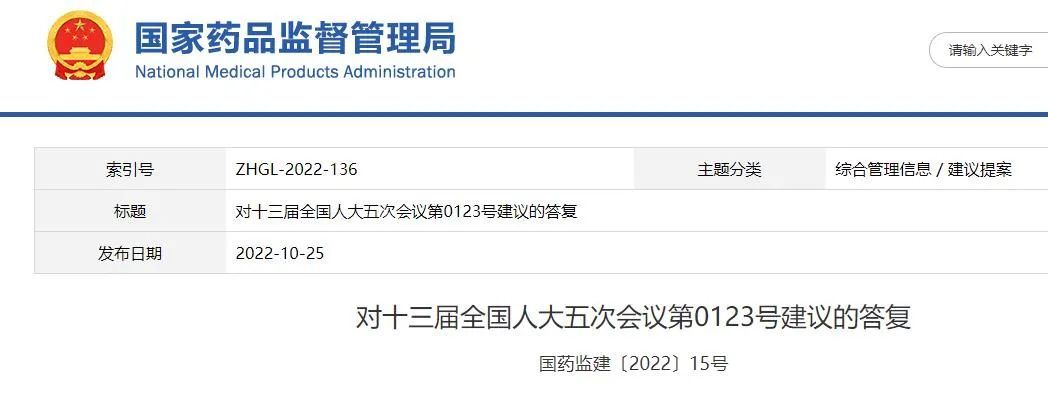
Guidelines for Quality Management in the Manufacturing of Cell Therapy Products (Trial)
National Medical Products Administration Center for Drug and Food Supervision and Inspection
October 2022
I. Purpose
Currently, China's cell therapy product sector is experiencing rapid growth. To further promote the healthy development of this field, this guideline has been developed based on current scientific understanding and the latest advancements in cell therapy-related technologies. Its primary purpose is to refine and enhance the technical requirements for production quality management during the industrialization phase of cell therapy products, providing valuable guidance for manufacturers while also serving as a crucial reference for regulatory agencies conducting on-site inspections. Given the industry's rapid evolution and the continuous emergence of innovative technologies, it’s likely that more advanced and sophisticated production quality management approaches will arise in the future—approaches that may even diverge from the current guidelines. In such cases, manufacturers are encouraged to submit detailed explanations along with robust, scientifically sound justifications and supporting evidence to demonstrate the controllability of their production quality management systems. As science and technology continue to advance, our understanding deepens, and practical experience accumulates, this guideline itself will be gradually revised and improved over time to better align with emerging best practices and industry standards.
II. Legal Basis
1. The People's Republic of China Drug Administration Law
2. Implementation Regulations of the Drug Administration Law of the People's Republic of China
3. The People's Republic of China Biosecurity Law
4. The Pharmacopoeia of the People's Republic of China
5. Measures for the Administration of Drug Registration
6. Measures for the Supervision and Administration of Pharmaceutical Production
7. "Good Manufacturing Practice for Pharmaceutical Products" and its Appendices
8. Regulations on the Inspection and Verification Management of Drug Registration
9. Measures for the Reporting and Monitoring of Adverse Drug Reactions
10. Measures for the Administration of Drug Recall
11. Regulations on the Management of Drug Instructions and Labels
12. Principles for Risk Assessment in On-site Inspections of Pharmaceutical Manufacturing Enterprises
13. Regulations on the Management of Medical Waste
14. Regulations on Biosafety Management for Pathogen Microbiology Laboratories
15. Manufacturing and Testing Procedures Approved by the Pharmaceutical Regulatory Authority
3. Scope
(1) The cell therapy product referred to in this guide (hereinafter referred to as the cell product) refers to Human-derived live cell products prepared through appropriate in vitro manipulations (such as isolation, culture, expansion, genetic modification, etc.) after the drug has been approved for market, including cells that have or have not undergone genetic modification—such as autologous or allogeneic immune cells, stem cells, tissue cells, or cell lines, among other products. ; Excluding blood components used for transfusion, hematopoietic stem cells already regulated for transplantation, reproductive-related cells, as well as tissue and organ products composed of cells.
(II) This guideline applies to the entire process of cell products—from the transportation and receipt of donor materials, through product manufacturing and testing, to finished-product release, storage, and shipment.
The processes involved in the production, testing, and release of gene-modified vectors or other materials—such as viruses, plasmids, RNA, antigen peptides, antigen proteins, protein-RNA complexes, and more—that are directly used in cell product manufacturing must comply with the requirements of the "Pharmaceutical Production Quality Management Regulations" and its relevant appendices.
(III) Since the donor materials for cell products originate from human sources, their production must also comply with national regulations regarding biosafety and the management of human genetic resources, to prevent the introduction or spread of infectious disease pathogens.
4. Principles
(1) Cell product manufacturing has the following specific characteristics:
1. Donor materials are derived from the human body and may contain pathogens that cause infectious diseases.
2. The quality of donor materials varies depending on factors such as their source, type, and characteristics. Therefore, the manufacturing process for autologous cell products must carefully account for these individual differences among donor materials, establishing appropriate process steps and parameters—and implementing production strictly within approved limits.
3. Depending on the source of donor materials and the product type, batch sizes for production can vary significantly. As a result, the production organization model is relatively flexible, allowing for a closer alignment between manufacturing and clinical needs.
4. Temperature and duration have a more significant impact on the quality of donor materials and products.
5. Since cell products consist of living cells containing nutrients essential for cell survival, contamination during the manufacturing process after donor material collection can significantly promote microbial growth and spread—and because terminal sterilization is not possible, these contaminants become particularly difficult to eliminate.
6. Autologous cell products or products manufactured using allogeneic donor materials that require patient matching—once misidentified or mishandled, leading to a mismatch between donor materials/cell products and the patient—could result in life-threatening complications for the patient.
(II) Given the unique characteristics of cell products outlined above, companies should implement special control measures throughout the entire process—from donor material collection to patient use—these measures should include at least:
1. Conduct a risk assessment of the entire process—from receiving donor materials to storing and transporting the finished product—and develop corresponding risk control strategies to ensure the product remains safe, effective, and of consistent quality.
2. Establish a biosafety management system and documentation, equip facilities and devices that ensure biosafety, and implement measures to prevent and control biosafety risks during the product manufacturing process, thereby safeguarding against the introduction and spread of pathogens.
3. Monitor the temperature and operational time limits of donor materials, products, or the production environment throughout the entire process—from donor material transportation and receipt to product manufacturing, storage, and shipping—ensuring that all operations are completed within the specified temperature ranges and time constraints.
4. The entire product manufacturing process should pay particular attention to preventing microbial contamination or cross-contamination, including potential contamination or cross-contamination risks posed by the carrier production process itself, as well as any cross-contamination risks that may arise during the production of different carriers.
5. Throughout the entire process—from donor material collection to patient use—donor materials, intermediate products, or finished products must be properly labeled and traceable to prevent confusion and errors.
5. Personnel
(1) The head of production management, the head of quality management, and the quality authorization person must possess relevant professional knowledge (such as microbiology, biology, immunology, biochemistry, or biopharmaceutical sciences) and be fully capable of fulfilling their responsibilities in production and quality management.
(II) Personnel involved in cell product manufacturing, quality assurance, quality control, and other related tasks—including cleaning and maintenance staff—must undergo training in biosafety protection and receive authorization. All training materials must comply with national regulations on biosafety, with particular emphasis on education regarding the prevention of infectious disease pathogen transmission.
(3) During production, personnel involved in vector production must not enter the cell product manufacturing area unless they have implemented effective decontamination measures as required. Additionally, individuals who come into direct contact with donor materials containing infectious disease pathogens are prohibited from entering any other production areas.
6. Factory Buildings, Facilities, and Equipment
(1) Gene-modified viral vectors directly used in cell product manufacturing should be kept separate from cell products, other vectors, or biological materials, with each being produced in its own dedicated facility equipped with an independent air-conditioning and purification system.
(2) When producing cell products using donor materials containing infectious disease pathogens, the manufacturing operations must be conducted in a dedicated, separate production area equipped with an independent air conditioning and purification system. Additionally, the production area where the product is exposed to the environment should maintain negative pressure relative to surrounding areas.
(3) Cell product manufacturing operations should be conducted using closed systems or equipment. While the cleanliness level of the environment where these systems or equipment are located may be appropriately reduced, their integrity must be regularly monitored and verified.
(4) The cleanliness level of the production environment for cell products, gene-modified vectors directly used in cell product manufacturing, or other materials that confer specific functions can be selected based on the examples provided in the table.
(5) Donor materials containing infectious disease pathogens, along with their corresponding cell products, must be stored in a separate isolation area or dedicated equipment, kept apart from storage areas for other donor materials and cell products, and housed in independent storage devices. Both the isolation area and storage equipment should be clearly labeled.
(6) Laboratories conducting infectious disease pathogen marker tests on donor materials and cell products, or testing samples containing infectious agents, must comply with national regulations regarding laboratory biosafety and must be equipped with in-situ inactivation or disinfection facilities.
7. Donor Screening and Donor Materials
(1) Enterprises should establish donor screening and testing standards, as well as quality criteria for donor materials. They must also conduct a risk assessment that comprehensively considers factors such as the biosafety level of microorganisms, the category of infectious diseases, and the intended use of cell products, while regularly reviewing the suitability of these measures.
Enterprises must not accept donor materials that do not meet quality standards.
(2) Enterprises should select medical institutions with legitimate qualifications as the facilities for donor material collection and cell product usage, clearly defining the responsibilities of both parties. The quality management department shall conduct regular quality assessments of these medical institutions and, based on the assessment results, collaborate with relevant internal departments to carry out on-site quality audits. This ensures that the medical institutions comply with all applicable requirements regarding donor screening and testing, donor material collection, and product utilization.
(3) Enterprises should establish operational procedures for assessing and accrediting the quality of medical institutions, clearly defining the qualifications required of these institutions, the principles for selection, the methods of quality assessment, the evaluation criteria, and the procedures for recognizing qualified medical facilities. Additionally, the content, frequency, composition, and qualifications of personnel involved in on-site quality audits must be explicitly outlined.
(4) The enterprise's quality management department shall assign a dedicated person to oversee on-site quality audits of medical institutions, identify a list of accredited and qualified medical facilities, and establish a comprehensive quality file for each institution.
(5) Enterprises shall sign a quality agreement with a recognized, qualified medical institution. The quality agreement must include at least the responsibilities of both the medical institution and the enterprise, as well as details on donor material collection methods, storage conditions, quality standards, acceptance procedures, and/or the use of cell products.
(6) Enterprises should regularly review and assess the collection of donor materials and the use of cell products by medical institutions. If any non-compliance with operational procedures is identified—particularly situations that could adversely affect patients—enterprises must promptly require the medical institution to implement corrective and preventive measures, and, if necessary, remove the institution from the list of qualified medical facilities.
(7) Enterprises shall establish written requirements for the collection, storage, transportation, and receipt of donor materials, detailing the methods for collecting donor materials, as well as the specific conditions for storage and transport, and outlining the criteria for acceptance.
(8) Enterprises should inspect at least the following items for each batch of donor materials received:
1. Sourced from qualified medical institutions that are legally established and approved by the company's evaluation.
2. Temperature and time-limit monitoring records during transportation are complete, ensuring that temperature and duration comply with regulatory requirements. If there are specific storage temperature and time constraints for donor materials collected after collection, complete temperature and time-monitoring records must also be maintained, adhering to the applicable standards.
3. Packaging is intact and undamaged.
4. The packaging label must include complete information, including at least the donor’s unique identification code, the date and time of collection, the volume collected, and the name of the medical institution where the collection was performed—enabling traceability to these details. If a computerized system is used, the packaging label must also allow easy retrieval of the aforementioned information.
5. Donor Material Collection Record.
6. Donor screening and clinical test results must include at least the findings for markers specific to pathogens of certain infectious diseases.
(9) It is known that autologous donor materials containing infectious disease pathogens must be kept separate from other donor materials during transportation, receipt, storage, distribution, or transfer, and each package should bear clear identification labels.
(10) Before putting into production and use, the company shall conduct a quality assessment of each batch of donor materials, which should include at least the following:
1. Verify that the donor materials originate from legally operating medical institutions approved by the company and that the donors meet the screening criteria, and cross-check the relevant information as outlined in Article 4 of Section (8) above.
2. The storage temperature and duration for donor materials, from the end of collection at the medical facility until release by the company for production, must comply with the specified requirements.
3. Donor material is packaged intact, with no damage.
4. Deviations occurring during transportation and storage have been investigated and addressed according to the relevant procedures.
8. Materials and Products
(1) For biological materials used in cell product manufacturing—such as cell lines/cultures, genetically engineered bacteria, vectors, and animal-derived reagents and sera—companies must ensure that their sources are legal, safe, and compliant with quality standards, thereby preventing the introduction of exogenous factors.
(2) Enterprises should conduct risk assessments for all materials and identify key materials (such as gene-modified vectors directly used in cell product manufacturing, or other materials that confer specific functions; cytokines, growth factors, enzymes, sera, feeder cells, single-use consumables, etc.). The identification of key materials must be documented. Incoming inspections should be carried out for these key materials, and depending on the specific risks involved, additional measures to mitigate risks—such as enhanced quality control—may also be considered.
(III) In vitro diagnostic reagents used for detecting markers of specific infectious disease pathogens (such as HIV, HBV, HCV, and Treponema pallidum) should prioritize products approved by the drug regulatory authority, with preference given to those specifically approved by the authority for blood-borne pathogen screening.
(4) The transportation of donor materials and cell products must be verified.
(5) Operational procedures should be established for the safe and efficient handling of nonconforming donor materials, intermediate products, and finished goods, with all handling activities properly documented.
9. Production Management
(1) Based on their process characteristics, cell products can be defined as follows: A batch refers to a specific quantity of homogeneous-quality product manufactured within the same production cycle, using the identical manufacturing process and under consistent production conditions. The total number of cells produced in a single batch constitutes the batch size for that particular production run.
(II) Sterile process simulation tests for cell products, gene-modified vectors directly used in the production of cell products, or other materials that confer specific functions on them must meet at least the following requirements:
1. For sterile production operations conducted in non-enclosed systems, the aseptic process simulation test should include all exposure steps involving manual handling.
2. For facilities using closed systems for aseptic production operations, the aseptic process simulation study should focus specifically on the steps involving connections to the closed system. If any aseptic production activities remain un-simulated, a risk assessment must be conducted, and the rationale for not performing the aseptic process simulation must be documented in writing.
3. Sterile production operations that require a longer duration should, in conjunction with a risk assessment, clearly explain the rationale for shortening the duration of certain simulated steps (such as centrifugation or cultivation).
4. Sterile production practices (such as cryopreservation) that inhibit microbial growth and could potentially affect the results of sterile process simulation tests may, following a risk assessment, be excluded from the sterile process simulation study.
5. For areas with multiple identical production lines, each line can conduct a sterility process simulation test at least once every six months per shift—using either the extreme-value method, the matrix method, or a combination of both—following successful initial validation of the sterile process simulation for that specific line. Each test must involve at least one batch.
When producing different products using the same equipment and process steps—for example, conducting sterile process simulation tests via the extreme-value method, one should simulate the worst-case conditions of specific production operations. Alternatively, if the matrix method is employed for sterile process simulation, the worst-case conditions for similar process steps should be modeled. If both methods are used in combination, the rationale and its scientific justification must be clearly documented in writing. Importantly, the simulation must cover all sterile manufacturing operations under the most challenging conditions, as well as encompass every type of equipment utilized in production.
(III) Cell product manufacturing processes should be validated, and such process validation must meet the following requirements:
1) The manufacturing process for cell products using autologous donor materials has certain unique characteristics; therefore, the donor materials used for validation can be sourced from healthy volunteers. If derived from patients, a simultaneous validation approach may be employed.
2) For cell products manufactured using autologous donor materials, the worst-case conditions during actual production should be considered based on a risk assessment. For instance, if multiple identical production lines are located in the same production area, or if several isolators are installed within the same production room, the maximum number of production lines—or isolators—that can operate simultaneously must be determined. Additionally, factors such as the production environment, personnel capabilities, and laboratory testing capacity should also be evaluated as part of these worst-case scenarios and thoroughly validated.
(4) The production processes for gene-modified vectors or other materials directly used in cell product manufacturing—and which confer specific functions to these products—must be validated. This process validation should include at least three consecutive batches representing a complete production cycle.
(5) Measures should be implemented during the production of cell products to minimize contamination and cross-contamination as much as possible, while controlling quality risks—for example:
1. Autologous donor materials containing infectious disease pathogens should be kept separate from other donor materials or cell products that do not contain such pathogens during production and transportation.
2. When producing using non-enclosed systems or equipment, different cell products cannot be manufactured simultaneously within the same production area, and different batches of the same cell product cannot be produced concurrently in the same production room.
3. When cell product manufacturing of the same batch for the same product is conducted simultaneously in different production areas within the same facility, it is recommended to use closed systems. If full containment throughout the entire production process cannot be ensured, a thorough risk assessment must be conducted, accompanied by the implementation of effective control measures—such as sealed transfer procedures, room pressure differential management, strict prohibition of cross-room operations, avoidance of direct cross-movement among operators, rigorous sterilization and disinfection protocols, and the use of unidirectional airflow systems for material transfer.
4. When producing different batches of the same cell product within the same production area using a closed system, multiple identical or distinct production steps should be avoided simultaneously in the same operational room—except for the cell culture step itself. After completing each production step, timely cleaning and sanitization of the area are essential. Additionally, effective control measures must be implemented, such as maintaining appropriate room pressure differentials, strict personnel management, alternating operations, designated workstation management, sterilization and disinfection protocols, and unidirectional airflow transfer systems.
5. When multiple isolators are located within the same production area, their integrity should be checked regularly. Isolators must not exhaust air directly into the operational room, and the exhaust air cannot be recycled. Additionally, effective control measures should be implemented, such as sealed transfer systems, alternating operations, designated storage areas, sterilization and disinfection procedures, and unidirectional airflow transfer systems.
6. When using a closed system for cell culture, different batches of products can be cultured and stored simultaneously in the same production area or incubator—as long as effective measures are in place to prevent confusion. In contrast, if an open (non-closed) system is used for cell culture, physical separation of different batches within the incubator is required (e.g., by using a honeycomb-style incubator), or each batch should be maintained in a dedicated incubator located in a separate production area. Additionally, the incubator must maintain a high level of cleanliness and be suitable for disinfection or sterilization. A thorough risk assessment must also be conducted to implement robust measures that minimize the risks of cross-contamination and product mix-ups.
7. In the event of accidental opening or leakage in a closed system or equipment, a risk assessment must be conducted, followed by the implementation of effective emergency measures.
(6) Operational procedures for monitoring environmental microbial contamination in each production step should be established, along with clear guidelines on the measures to be taken. When handling contaminated products or materials, microorganisms detected during the production process must be identified, and their potential impact on product quality should be assessed. All records of microbial contamination and associated corrective actions throughout the production process must be maintained.
(7) Measures should be implemented during the production of cell products to minimize the risk of confusion and errors, such as:
1. Donor materials and products used in the manufacturing process should all be properly labeled, and products stored at low temperatures must also bear appropriate identification.
2. The identification information for donor materials and products of autologous cell therapies must include a unique, identifiable number (or code) specific to the donor.
3. Before production, carefully verify the donor materials and product identification information, especially the unique identifier (or code) used to recognize the donor. Verification must be documented.
4. If products require labeling during the manufacturing process, the accuracy of the labeled information must be verified. For autologous cell products, the identification number (or code) used to uniquely identify the donor on the donor material must match the product label—this verification must be documented.
(8) Packaging containers used for cell product manufacturing, along with any connecting containers (if applicable), shall undergo immediate visual inspections both before use and immediately after filling to check for signs of damage or contamination. Visual inspection results must be documented.
(9) Sterile consumables that come into direct contact with cell products should, whenever possible, be single-use items.
(10) For intermediate products and materials in the production process that have special handling requirements—such as temperature or time constraints—clear regulations on transportation conditions must be established. Additionally, appropriate monitoring should be conducted during transit, accompanied by thorough documentation.
(11) Contaminated materials, waste products, or potentially contaminated items containing infectious disease pathogens during the production process must be disinfected in situ and fully inactivated before being removed from the work area. The handling procedure must comply with national regulations governing medical waste disposal.
10. Quality Management
(1) Donor materials, critical raw materials, and finished cell products should be retained according to established regulations. In special circumstances—such as when donor materials or raw materials are scarce, product batches are small, shelf life is short, or clinical needs urgently require it—the volume of retained samples, packaging requirements, storage conditions, and retention period for donor materials, raw materials, and cell products may be appropriately adjusted as follows:
1. Retained samples of donor materials
Donor materials from both autologous and allogeneic sources should generally be retained as samples. For rare donor materials, if there is a need to adjust the sample retention requirements or decide against retaining samples altogether, the rationale must be documented in writing.
2. Sample retention of materials
Critical materials—such as gene-modified vectors directly used in cell product manufacturing, or other materials that confer specific functions, including cytokines, growth factors, enzymes, serums, and feeder cells—are essential for identifying potential quality issues in the investigated product. Therefore, companies should retain sample records of these critical materials throughout their shelf life or validity period.
3. Sample retention of finished products
① The amount of finished product retained for sampling can be appropriately reduced depending on the batch size of each cell product.
② If it is genuinely impossible to retain a sample due to clinical necessity, a photo of the finished product should be included in the sampling record, clearly showing all the information from the product label.
③ If the retention period for samples needs to be shortened, the company must conduct an evaluation and provide a corresponding report.
④ If the product has a short shelf life and its retained sample needs to be stored for an extended period, appropriate methods (such as low-temperature cryopreservation) should be employed to ensure the sample continues to serve its intended purpose. For instance, fresh cells that have been cryopreserved cannot be used as quality-assessment samples but may still be suitable for virus testing. Similarly, if finished-product samples stored under frozen conditions no longer meet their original purpose, companies should explore alternative approaches—such as using intermediate-product samples as a substitute for finished-product samples.
⑤ If finished-product samples cannot be used, intermediate products with the same composition as the finished product may be selected for sampling. The packaging, storage conditions, and shelf life of these samples must meet the intended purpose and requirements for retention. Additionally, the packaging method and materials should be identical to or similar to those used for the marketed product.
(II) Quality testing must be conducted and meet the required standards before cell products are released. Prior to release, the quality evaluation should confirm that all information about each batch is complete, accurate, and traceable; otherwise, the product shall not be released.
Cell products derived from the patient’s own cells, or those produced using allogeneic donor materials intended for patient-matched use, must have their donor material or cell source information verified by the company prior to release—and their compatibility with the patient confirmed.
Quality evaluation before release should assess the impact of donor materials on the final product quality when cell products are manufactured using donor materials that enter use even before inspection is completed.
(III) Batch records for cell products shall be retained for at least five years beyond the product’s expiration date. Critical traceability records or documentation—such as donor materials, key material tracking, and the identification of the link between donors and patients—must be kept for a minimum of 30 years.
(4) Enterprises should establish emergency response procedures. If quality risks are identified during the transportation or use of cell products—such as damaged packaging bags, incorrect or missing label information, or temperature deviations exceeding specified limits during transit—they must immediately activate the emergency response and initiate an investigation. All relevant emergency responses and investigations must be documented and reported. If necessary, a product recall should also be initiated.
11. Product Traceability System
(1) Companies should establish product identification and traceability systems to ensure that products from different donors are not mixed up or misidentified throughout the entire process—from donor material transportation and receipt to product manufacturing and use. This will also guarantee the proper matching between donor materials/cells and patients, while maintaining full traceability at every stage.
The system should utilize a validated computerized system capable of enabling two-way traceability of products—from donor to patient or from patient to donor. This includes the entire process, from receiving donor materials, through transportation, manufacturing, testing, and release, all the way to the final product’s shipment and use.
(II) Companies shall assign a unique number (or code) to each donor, used to identify the donor’s materials and products.
(3) Enterprises shall establish written operating procedures that specify the proper labeling and verification of donor materials and products—covering processes such as receipt, transportation, manufacturing, testing, release, storage, and distribution—as well as the associated documentation. These procedures must ensure that uniquely identifiable donor numbers (or codes) are correctly applied without errors or omissions, guaranteeing accurate matching between donor materials/cell products and patients, and maintaining full traceability throughout the entire process.
(4) Enterprises should establish an information exchange mechanism with medical institutions to promptly share key details such as donor material collection, product usage, and critical information related to product quality.
12. Other
(1) Companies should develop detailed product usage instruction manuals. For products that require on-site preparation before use in medical facilities, the operational procedures must be described thoroughly—such as cell recovery, dilution and washing methods, the preparation environment, aseptic handling requirements, storage temperature and duration for temporary preservation, and transportation methods. Where necessary, instructions may also be supplemented with images or videos.
(II) Enterprises should establish appropriate policies to regularly provide training and assessments for medical institution personnel on donor material collection requirements and product usage. Records of these training sessions and assessments must be maintained.
13. Terms
The meanings of the following terms are:
(1) Donor : Refers to an individual who provides cells or tissues used in the production of cell-based products, and this individual can be either healthy or a patient.
(II) Donor material : Refers to cells or tissues—among other materials—obtained from donors who meet the screening criteria, intended for use in cell product manufacturing.
(3) Carrier : Refers to tools composed of or derived from biological materials, such as plasmids, viruses, or bacteria, that can be used to deliver genetic material—these have been engineered to facilitate genetic transfer. In the case of CAR-T cells, the vector serves as a critical component responsible for delivering therapeutic efficacy in disease treatment.
(4) Autologous cell product : Refers to cell products that are produced and processed from cells collected from a patient, then reintroduced back into the same patient's body.
(5) Production Area : Refers to a specific set of rooms within a building designated for production operations, typically equipped with a relatively independent HVAC system (including ventilation, temperature control, and essential humidity regulation, as well as necessary air filtration and purification) and dedicated pathways for personnel and materials.
(6) Production Operation Room : Refers to several physically isolated areas or rooms within the production zone, dedicated to specific product or process operations. These areas are typically equipped with fixed equipment and instruments, and access—and the transfer of materials and products—are strictly controlled to minimize risks of contamination, cross-contamination, mix-ups, and errors.
(7) Closed system :A system designed and operated to prevent products or materials from being exposed to the indoor environment, with verifiable validation. When products or materials are transferred into this enclosed system, they must be handled in a non-exposed manner—such as via sterile connectors or a sealed transfer system—to ensure no exposure to the indoor environment occurs. If it becomes necessary to open the sealed system—for activities like performing exposed aseptic procedures, installing filters, or connecting components—the system must be disinfected or sterilized before returning to its sealed state or being used again (in cases where exposure occurred outside a sterile environment). Additionally, the system’s ability to reliably return to its sealed condition must undergo appropriate verification or validation as needed.
Reprint Statement: This article is reprinted from the Center for Drug and Food Supervision and Inspection under the National Medical Products Administration. If there is any infringement, please contact us for removal.
Related News

Here is the title—h1 placeholder text


Copyright © Jiuzhitang Maker (Beijing) Cell Technology Co., Ltd.
Powered by: 300.cn SEO | Privacy Policy