

News
News Center
Cell therapy makes headlines at the 2022 Two Sessions across China! Stem cells emerge as a key direction in medical advancement.
2022-03-08
It is recommended that the municipal medical insurance department explore establishing a multi-dimensional evaluation method to assess the medical insurance coverage of cell therapy products, while also considering partial医保 coverage or targeted subsidies for cell therapies that have been formally approved and launched as pharmaceuticals. Additionally, support should be provided to include cell therapy products from companies registered and manufactured in Shanghai within the "Hu Huibao" special drug protection program, thereby helping to ease patients' financial burden. Finally, the government could collaborate with pharmaceutical companies, health technology platforms, commercial insurance providers, and other stakeholders to jointly develop innovative payment models, such as installment plans or outcome-based reimbursement systems.
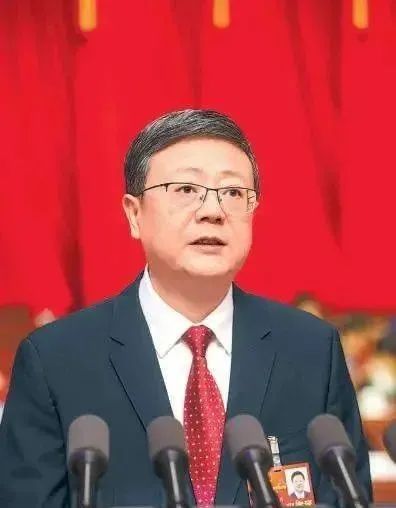
Beijing government report: Accelerating the translation and application of cutting-edge biotechnologies such as novel cell therapies and gene editing.
On January 6, 2022, the fifth session of the 15th Beijing Municipal People's Congress opened at the Beijing Convention Center. In his report on the work of the Municipal People's Government, Beijing Mayor Chen Jining emphasized the need to further strengthen the "dual-engine" strategy of next-generation information technology and pharmaceuticals & healthcare, while also driving breakthroughs in critical "bottleneck" technologies across fields such as integrated circuits, artificial intelligence, and communications. Accelerate breakthroughs and transformative applications of cutting-edge biotechnologies such as novel cell therapies and gene editing. , accelerating the industrialization of innovative drugs and high-end medical devices.
Shanghai Two Sessions | Committee Member Chen Qiyu: Make cell therapy drugs affordable for patients, and establish a diversified payment system.
On January 19, the fifth session of the 13th Shanghai Municipal Committee of the Chinese People's Political Consultative Conference (CPPCC) opened. Chen Qiyu, a member of the Standing Committee of the Shanghai CPPCC and Co-CEO of Fosun International, submitted a proposal titled "Multiple Measures Needed to Drive Shanghai in Building a Global Hub for Cell Therapy Industry Development."
Chen Qiyu suggests that, at a time when China's cell therapy industry is thriving and its technologies are becoming increasingly mature, Shanghai could introduce a series of policy measures aimed at encouraging cell therapy companies to deepen their roots in the city, fostering the development of Shanghai as a global hub for the cell therapy industry—and thereby solidifying the city's leading edge in the global competition within this sector.
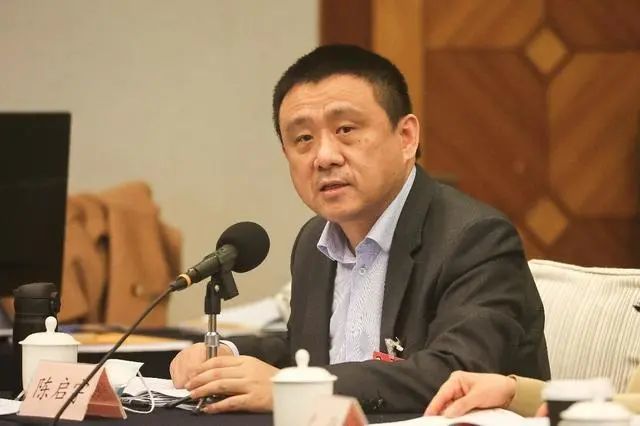
Chen Qiyu specifically proposed five points:
First, A specialized policy framework aimed at supporting the development of the cell therapy industry, introduced by government authorities. Policy support is provided across various fronts, including industry guidance funds, key talent recruitment, research funding assistance, clinical research support, industrialization incentive policies, industrial land support, tax incentives, and payment system enhancements.
Second, Encourage and support innovative cell therapy companies with differentiated, distinctive technologies to start businesses in Shanghai. , encouraging Shanghai's research hospitals, universities, research institutions, and pharmaceutical companies to collaborate on translating innovative findings into practical applications, while optimizing their collaborative mechanisms.
Third, Expand the network of hospitals authorized for clinical use, encourage high-level, differentiated medical institutions to adopt cell therapy in clinical settings, and further drive industry growth. It is recommended that relevant authorities introduce corresponding policies to encourage medical institutions across Shanghai that meet the criteria (including some qualified private hospitals) to develop clinical capabilities in cell therapy.
Fourth, Establish a diversified payment system for cell therapies, making cell-based treatments more accessible and affordable for the broader patient population. It is recommended that the municipal medical insurance department explore establishing a multi-dimensional evaluation method for assessing医保 (medical insurance) coverage of cell therapy products, while also providing partial医保 coverage or targeted subsidies for cell therapies formally approved and launched as pharmaceuticals. Additionally, support should be given to include cell therapy products from companies registered and manufactured in Shanghai within the "Hu Huibao" special drug protection program, thereby alleviating patients' financial burden. Finally, the government could collaborate with pharmaceutical companies, health technology platforms, commercial insurance providers, and other stakeholders to jointly develop innovative payment models, such as installment payments or outcome-based reimbursement systems.
Fifth, it is recommended that relevant Shanghai authorities take the lead in coordinating industry associations, pharmaceutical companies, and hospitals—key market players— Review and Accreditation Standards for Medical Institutions Engaged in Commercial Cell Therapy Policy discussions were held on topics such as patient treatment guidelines and adverse reaction management protocols, pharmaceutical supply chain and cold-chain logistics management systems, and regulatory standards for cell therapy drug distributors, ultimately leading to the development of industry-recognized benchmarks.
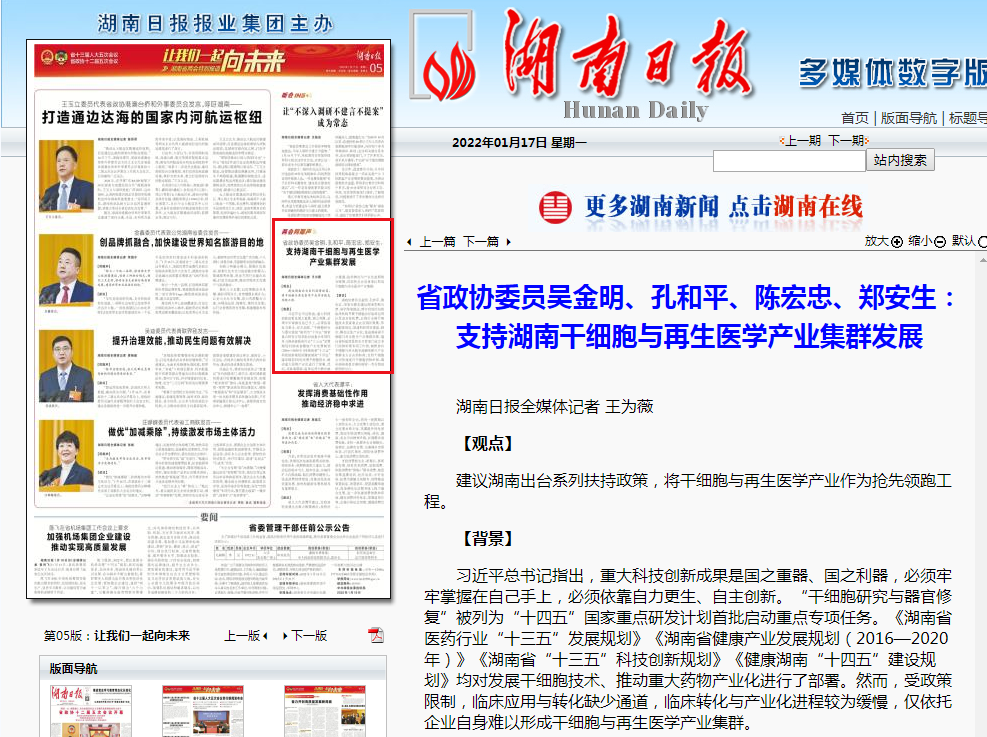
Hunan: CPPCC Members Support the Development of Hunan's Stem Cell and Regenerative Medicine Industry Cluster
Provincial Political Consultative Conference members Wu Jinming, Kong Heping, Chen Hongzhong, and Zheng Ansheng jointly proposed that Hunan follow the practices of cities like Tianjin and Shenzhen. Clinical institutions within the pilot free trade zone are conducting clinical applications of stem cell therapies and offering cost-based pricing to attract nationwide stem cell technology firms and registered companies to cluster in the park, creating a siphon effect that accelerates the localization, commercialization, incubation, and industrialization of research projects. , fostering the development of Hunan Province's stem cell and regenerative medicine industry cluster. It is recommended that the Provincial Drug Administration and relevant authorities establish a dedicated task force for drug applications, aligning with the criteria set for leading enterprises in the province’s strategic emerging industrial cluster of stem cells and regenerative medicine. This initiative would support stem cell companies in swiftly advancing their stem cell drug applications, helping to fill the gap in Class 1 innovative biological drugs—both within Hunan Province and across China.
Liaoning, Dalian: Boosting "Stem Cells" to Build a Complete Industrial Chain
Currently, cities like Beijing and Shenzhen are all focusing their efforts on cutting-edge industries such as cell and gene technologies. City People's Congress representative Liu Jing has suggested that Dalian… Leveraging our existing strengths—such as advanced technology, talented professionals, and cutting-edge research platforms—we will accelerate the commercialization of scientific and technological innovations, fostering a comprehensive industrial chain that spans "stem cell storage, R&D, and application." Dalian, one of Liaoning's three major bio-industry clusters, has now preliminarily established two distinctive, specialized clusters—pharmaceuticals and healthcare. The city has accumulated robust core technologies and a substantial pool of skilled professionals in areas such as stem cells, traditional Chinese medicine, and genetic testing. Additionally, Dalian has set up cutting-edge research platforms, including a national-level clinical stem cell research institute, a gene-testing demonstration center, and an international collaboration base, laying a strong foundation for advanced industrial applications.

Heilongjiang: Making Big Strides in Stem Cell Technology Research and Industrialization
The Heilongjiang Provincial Government Work Report emphasized accelerating the development and strengthening of new growth drivers. In response, Provincial People's Congress representative Wang Chunmei called for leveraging the province’s advanced R&D platforms—such as the China Center for Stem Cell Engineering Technology in Geriatric Diseases and the Northeast Regional Clinical-Grade Cell Preparation Center—to drive forward the advancement and industrialization of life sciences.
Wang Chunmei, speaking from her practical work experience, noted that stem cell technology and its industrial development have been incorporated into the nation’s major science and technology strategic plans. It is projected that by 2020, the global market potential for stem cell-based medical treatments will reach US$174.5 billion. China’s stem cell industry currently ranks second in the world, with an estimated value of 120 billion RMB by 2020. In contrast, our province’s stem cell research and related industries remain relatively small-scale. If our province lags behind in the field of life sciences, it will lack the momentum needed to drive future growth in the broader health industry—and will struggle to achieve meaningful industrial scale.
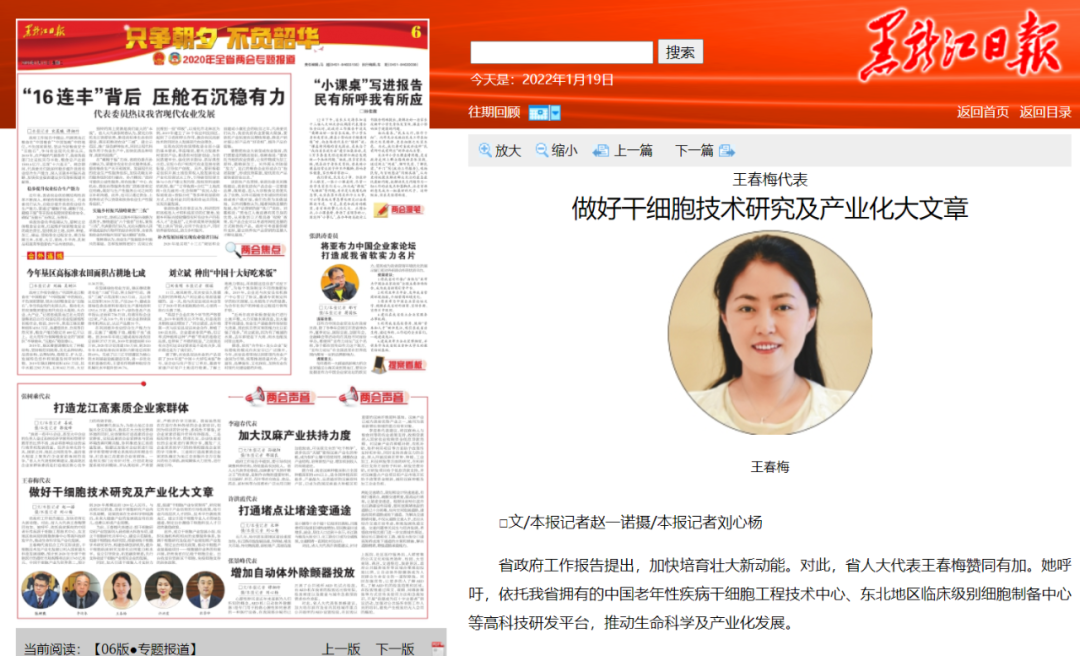
To this end, Representative Wang Chunmei suggests: Include stem cell research and industry development as a major provincial science and technology initiative, establish a shared stem cell research center, build demonstration bases, set up a Stem Cell Technology Research Institute, create a provincial-level academic platform for stem cell research, and develop a coordinated innovation mechanism to enhance the clinical research capabilities and application potential of stem cells. Additionally, allocate guiding funds, expand financing channels, and provide early-stage support to leading stem cell enterprises in our province.
Reprint Notice: This article is compiled from the 5th Session of the 15th Beijing Municipal People's Congress, People's Political Consultative Conference Online, Hunan Daily, Dalian Evening News, and Heilongjiang Daily. If there are any copyright issues, please contact us for removal.
Related News

Here is the title—h1 placeholder text


Copyright © Jiuzhitang Maker (Beijing) Cell Technology Co., Ltd.
Powered by: 300.cn SEO | Privacy Policy