

News
News Center
New Advances in Domestic Stem Cell Therapy: A Man with Spinal Cord Injury Receives Treatment at West China Hospital
2022-02-11
Recently, the WeChat official account "Huaxi Doctors" reported that Huaxi Hospital has successfully treated a spinal cord injury patient using clinical stem cell research.
The patient is a middle-aged man who became one of the first individuals to participate in the clinical study on "allogeneic umbilical cord mesenchymal stem cell therapy for spinal cord injury" at the Department of Spinal Surgery, West China Hospital of Sichuan University, in May 2021. To date, the patient has completed four injections of the mesenchymal stem cell preparation, and no adverse reactions have been reported so far.
According to reports, the man suffered a chest-level spinal cord injury after falling off his bicycle. By the time he began treatment, it had been more than four years since the injury occurred, and he was already in the late chronic stage of the condition. The study will last for 15 months, during which the patient is expected to be hospitalized eight times—four visits for injections and four for follow-up appointments. During the injection phase, the medical team will first remove a small amount of cerebrospinal fluid to relieve pressure on the spinal cord, then inject the mesenchymal stem cell preparation directly into the spinal canal, carefully monitoring the treatment’s effectiveness.
This research group was jointly established by four institutions, including West China Hospital of Sichuan University, with the aim of treating spinal cord injury patients through injections of allogeneic umbilical cord mesenchymal stem cells.
In preliminary research, the Third Affiliated Hospital of Sun Yat-sen University has already made significant progress—after three mesenchymal stem cell injection treatments, a long-term wheelchair-bound paraplegic patient has managed to stand up again.
Mesenchymal stem cell therapy is offering new, "root-cause" hope to patients with spinal cord injuries.
Jiuzhitang Maker's U.S. partner, Stemedica Corporation—a well-known stem-cell drug development company—has also been conducting foundational research and clinical exploration into stem-cell therapies for spinal cord injuries, achieving groundbreaking results. In 2013, a collaborative study between Stemedica and Stanford University demonstrated that neural stem-cell therapy showed remarkable efficacy in treating spinal cord injuries. After treatment with human neural stem cells from Stemedica, paralyzed mice with spinal cord injuries showed nearly complete recovery of motor function!
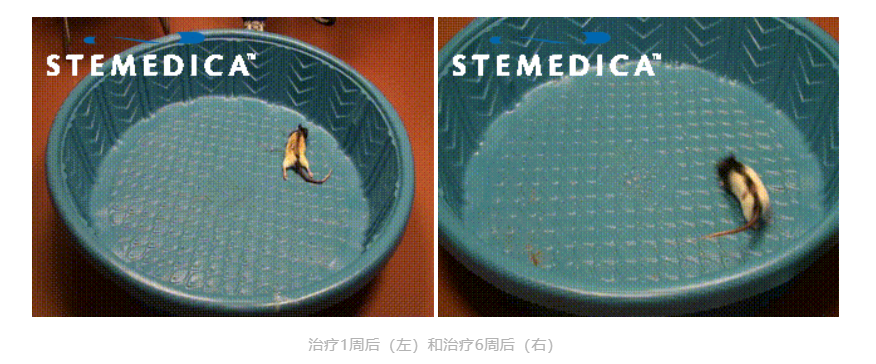
The study received the American Society of Plastic Surgeons' Best Research Award that year. The groundbreaking findings of the study include:
1. Demonstrated that treating spinal cord injuries with neural stem cells is effective across all stages—acute, subacute, and chronic (where traditionally it was believed recovery was nearly impossible in the chronic phase).
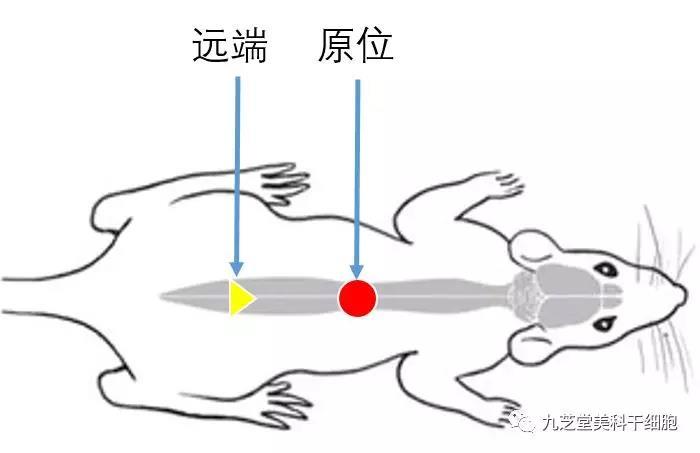
2. Remote intramedullary injection of neural stem cells can effectively treat spinal cord injuries (traditionally, treatment is typically administered via in-situ injection at the injury site).
These two groundbreaking research findings pave the way for clinical applications. Timing of treatment And Path Their choice provides crucial evidence.
Additionally, to help patients in critical condition, Stemedica partnered with relevant hospitals to submit an Emergency IND application for spinal cord injury to the U.S. FDA—and it was approved. Here’s how the patient treatments are progressing:
Former U.S. professional gymnast Gellert Tanna was once expected to compete in the Olympics. However, on November 14, 2007, Gellert suffered a serious accident while coaching young athletes. He gradually began losing control of his bodily functions—first his arms, then his legs—and eventually became completely paralyzed from the neck down.
After three years of physical therapy yielded no signs of recovery, Gellott opted for stem-cell treatment from the U.S.-based company Stemedica. In May 2011, after a full year of treatment, he experienced significant improvement in his back condition—now able to raise his arms much higher, with far greater control over his body compared to before—and even managed to eat using a fork again.
In 2016, Gellott finally got his wish by competing in the Rio Paralympics, where he achieved outstanding results and reignited his career as an athlete.
We look forward to scientists conducting more extensive, large-scale clinical studies and trials on stem cells, further exploring and unlocking their medical potential—so that more patients with spinal cord injuries can truly benefit.
References:
1. Park D, Mayle R, Smith R, et al. Combined Transplantation of Human Neuronal and Mesenchymal Stem Cells Following Spinal Cord Injury[J]. Global Spine Journal, 2013, 03(01):001-006.
2. Cheng I, Park D Y, Mayle R E, et al. Does the timing of neural stem cell transplantation following spinal cord injury influence outcomes in an animal model?[J]. Journal of Spine Surgery, 2017, 3(4):567-571. Stem Cell Research & Therapy, Volume 10, Article number: 238 (2019)
3. Ivan Cheng, Robert E. Mayle, et al. Functional Assessment of Acute Local and Distal Transplantation of Human Neural Stem Cells Following Spinal Cord Injury. SpineJ 2012; 12(11): 1040-4
4. D Y Park; R E Mayle; R L Smith, et al. Combined Transplantation of Human Neuronal and Mesenchymal Stem Cells Following Spinal Cord Injury. Global Spine J 2013; 3(1): 1-6
5. "Huaxi Doctors" Official Account
Related News

Here is the title—h1 placeholder text


Copyright © Jiuzhitang Maker (Beijing) Cell Technology Co., Ltd.
Powered by: 300.cn SEO | Privacy Policy