

News
News Center
From "stem cell research" to "stem cell pharmaceuticals": Century-old Jiuzhitang—Pioneering Global Regenerative Medicine
来源:Biovalley
2018-09-14
On September 14, 2018, Jiuzhitang Yonghe Qihang Fund—established by the traditional Chinese medicine pharmaceutical company Jiuzhitang—signed an investment agreement with U.S.-based Stemedica Cell Technologies, Inc., a San Diego-based biopharmaceutical company with over a decade of experience in stem cell research, development, manufacturing, and marketing. According to the agreement, Jiuzhitang Maker (Beijing) Cell Technologies Co., Ltd. will introduce cutting-edge stem cell production technologies and a state-of-the-art preparation platform from one of the world’s leading stem cell companies. Over the next 3 to 5 years, Jiuzhitang Maker plans to build a commercial-grade stem cell production facility at the Daxing Biomedical Industry Base in Beijing, adhering to both U.S. and EU cGMP standards. This strategic move marks Jiuzhitang, a century-old Chinese medicine enterprise, officially entering the rapidly growing fields of stem cell drug research, clinical development, and industrialization—and signals that China’s era of stem cell-based pharmaceuticals is fast approaching.
Strategic Transformation: Ushering in a New Era for China's Stem Cell Pharmaceutical Industry
Increasingly, clinical cases demonstrate that stem cell technology holds groundbreaking significance for the advancement of human medicine. As a result, countries around the world are positioning stem cells as a strategic emerging industry aimed at enhancing their international competitiveness in the healthcare sector. In the U.S. alone, publicly traded companies listed on the Nasdaq have seen their stem cell-related stocks collectively surpass $30 billion in market value. By 2020, the global stem cell market is projected to reach $400 billion, with China's stem cell market expected to grow to as much as 120 billion RMB.
On October 25, 2016, the Central Committee of the Communist Party of China and the State Council jointly issued the "Healthy China 2030" Planning Outline, vigorously promoting pharmaceutical innovation and industrial transformation in China. Among these efforts, regenerative medicine—led by stem cell technology—is emerging as a key direction for the future of medical advancement. Stem cell technology has been continuously highlighted as a research priority, featured for many consecutive years in various national and local science and technology development plans and specialized guidelines.
As a century-old pharmaceutical company, Jiuzhitang has positioned itself perfectly at the right moment. As early as 2015, it strategically announced its ambitious plan: leveraging its strong expertise in traditional Chinese medicine while tapping into the global advantages of stem-cell technology to make a bold move into the regenerative medicine sector. The company aims to seamlessly integrate China’s time-honored traditional medical practices with cutting-edge stem-cell biotechnology, paving the way for an innovative growth trajectory tailored specifically for this iconic Chinese pharmaceutical enterprise. To accelerate its R&D efforts and seize a leading edge in China’s rapidly growing stem-cell drug market, Jiuzhitang initiated and established the Yonghe Qihang Fund, which has already invested in Stemedica Cell Technology Inc., a U.S.-based leader in stem-cell innovation. Concurrently, Jiuzhitang founded Jiuzhitang Maker (Beijing) Cell Technology Co., Ltd., becoming the exclusive Chinese partner entrusted with adopting and implementing Stemedica’s groundbreaking stem-cell technologies within the country. Through this strategic partnership, Jiuzhitang (Meike) has successfully introduced Stemedica’s world-class stem-cell production technologies and advanced manufacturing platforms, enabling large-scale, scalable expansion of stem cells—crucial for turning them into viable pharmaceutical products. Currently, Jiuzhitang is actively constructing a state-of-the-art, cGMP-compliant facility in Beijing’s Daxing District, designed to meet both U.S. and EU regulatory standards. This facility will specialize in producing allogeneic human bone marrow-derived mesenchymal stem cells and neural stem cells. With a total area of 4,500 square meters, the new plant is expected to become operational by 2019, marking a significant milestone in Jiuzhitang’s mission to revolutionize regenerative medicine in China.
The establishment of Jiuzhitang (Meike) marks a significant step for a leading traditional Chinese medicine enterprise toward pharmaceutical innovation. In the future, the company will launch several international, multi-center clinical trials to further advance the development of stem-cell-based drug technologies.
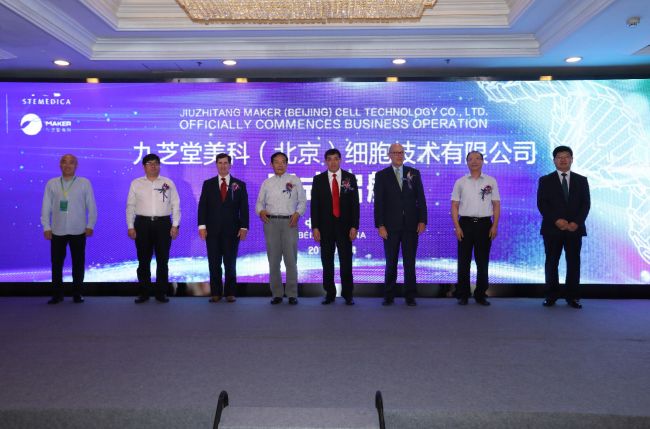
Jiuzhitang Maker (Beijing) Cell Technology Co., Ltd. Unveils Its New Facility
Seize the Frontier: Invest in World-Leading Stem Cell Companies
U.S.-based Stemedica Corporation, located in San Diego—the epicenter of the U.S. biotechnology and pharmaceutical industry—has become the first U.S. company approved to conduct clinical research using stem cells for Alzheimer’s disease treatment. It is also one of only a handful of U.S. biotech firms certified by the FDA to carry out stem-cell drug trials, and one of the few global companies capable of producing both human bone marrow mesenchymal stem cells and human neural stem cells. Since its establishment in 2005, Stemedica has invested hundreds of millions of dollars over the past 13 years in cutting-edge research and development, culminating in the creation of an innovative, low-oxygen stem-cell production platform that boasts proprietary intellectual property rights and has earned cGMP certification from the U.S. FDA. This state-of-the-art facility ensures not only superior stem-cell quality but also enables large-scale, standardized, and fully traceable production processes—achieving unprecedented efficiency in stem-cell expansion. In addition to its headquarters in San Diego, where it also operates a dedicated manufacturing facility, Stemedica has established strategic footholds in Singapore and Lausanne, Switzerland, further solidifying its global presence and commitment to advancing regenerative medicine solutions.
Given Stemedica Corporation of the U.S.'s advanced hypoxia-based cell culture and manufacturing process, its stem cell products have demonstrated exceptional safety and therapeutic efficacy in clinical trials. Stemedica has conducted six stem cell therapy clinical trials in the U.S., targeting conditions such as ischemic stroke, chronic heart failure, Alzheimer’s disease, photoaging of the skin, acute myocardial infarction, and traumatic brain injury. Notably, the trials for ischemic stroke and chronic heart failure have already completed Phase IIa clinical studies, with multiple high-quality academic papers published as a result. Additionally, Stemedica’s clinical research on Alzheimer’s disease marks the first-ever FDA-approved stem cell therapy trial for this condition in the U.S. Meanwhile, Stemedica has also initiated 10 additional clinical studies in countries including Switzerland, Kazakhstan, and Mexico. Beyond clinical applications, the company is leveraging stem cell-derived secreted factors to develop a range of health-focused products, which are being utilized in areas like cosmetic enhancement, anti-aging treatments, and aesthetic medicine. Currently, Stemedica is also pioneering research into cancer vaccines, leveraging its proprietary stem cell technology. Thanks to the superior performance of its stem cell products—measured by key industry benchmarks—Stemedica’s offerings have been recognized as "best in class" by the renowned life sciences company Life Technology, which now exclusively handles the company’s scientific research and distribution channels.
Turning stem cells into pharmaceuticals is the strategic development path that Jiuzhitang has chosen for its stem-cell product initiatives. By investing in the U.S.-based company Stemedica, Jiuzhitang has swiftly positioned itself at the cutting edge of international research into stem-cell-based drug development. It’s important to acknowledge that cell-based therapies represent some of the most complex medicines in human history—and remain a significant technical challenge for scientists worldwide. In recent years, stem-cell drugs have experienced rapid advancements, ushering in transformative changes that are reshaping healthcare, preventive medicine, and wellness industries. This breakthrough technology is driving disruptive innovations across these sectors, offering unprecedented hope for healthier, longer lives. As scientific exploration deepens and technological capabilities continue to evolve, countries around the globe are gaining greater insights into cell-based therapies, while regulatory frameworks and pathways are steadily improving. According to incomplete statistics, there are currently 13 stem-cell therapies approved globally. Yet, regrettably, China has not yet received approval for any stem-cell-based medications.
In recent years, China has steadily accelerated the pace of its pharmaceutical system reform, introducing a series of policies aimed at encouraging innovation in drug development. The CFDA has progressively released a set of guiding principles specifically tailored to stem cell technology, further refining the regulatory framework. As a result, the agency has resumed accepting applications for clinical trials involving stem cells, effectively opening the door for stem cell-based therapeutics to enter the market. With technology steadily advancing and transferring, Jiu Zhi Tang is currently constructing a state-of-the-art production facility in Daxing, designed and built entirely in accordance with both U.S. and EU cGMP standards. Once operational, this facility will be capable of producing 900,000 consistent, highly active therapeutic-grade stem cells from just one donated bone marrow sample—marking a significant breakthrough that addresses the critical challenge of scalable stem cell manufacturing on an industrial scale. This achievement positions Jiu Zhi Tang (Meike) as a global leader in large-scale stem cell expansion, paving the way for transformative treatments across various medical fields. Building on the existing expertise and achievements of Stemedica, a U.S.-based company, Jiu Zhi Tang (Meike) is committed to continuous innovation. The company plans to initiate clinical trials in key therapeutic areas such as neurology, cardiovascular and cerebrovascular diseases, endocrinology, and orthopedics. Currently, the company is diligently preparing the necessary documentation and logistical arrangements, with plans to submit its application to the CFDA within the year.
Initiating Clinical Trials: Accelerating the Early Market Launch of Stem Cell Drugs
Jiuzhitang (Meike) will collaborate with top domestic hospitals to conduct multi-center clinical trials. Based on the positive clinical trial results of the US company Stemedica, stem cell clinical research will be conducted targeting neurological and cardiovascular diseases, ultimately promoting the early domestic market launch of stem cell drugs to benefit the people through regenerative medicine research achievements.
At the same time, Jiuzhitang Maker (Beijing) Cell Technology Co., Ltd. has signed cooperation agreements with Mexico's Novastem Cell Technology Company and Kazakhstan's ALTACO Cell Technology Company respectively, to jointly establish an international stem cell R&D platform. Novastem, which has cooperated with Stemedica for many years, is a leading stem cell clinical research and treatment center in Mexico. Its Santa Clarita Hospital is located in Tijuana, Mexico, adjacent to San Diego, California, USA. The Santa Clarita Hospital clinic has passed Mexico's GCP certification and Global Healthcare Accreditation (GHA), holds licenses for regenerative medicine, cell banking, and stem cell transplantation, and can provide medical services such as stem cell transplantation therapy. Currently, Santa Clarita Hospital has been approved by the Mexican drug regulatory authority to conduct clinical trials using stem cells to treat osteoarthritis, frailty syndrome, and diabetes.
Kazakhstan has a good relationship with China and is an important node in President Xi Jinping's Belt and Road Initiative. Kazakhstan's ALTACO company is a long-term partner of Stemedica in Kazakhstan. As the applicant, ALTACO has conducted multiple stem cell clinical trials in Kazakhstan using Stemedica's stem cells. Earlier this month, the Kazakhstan Ministry of Health signed a document approving a mesenchymal stem cell therapy for acute myocardial infarction, marking the official commercialization of stem cell therapy in Kazakhstan. This is the first approved stem cell therapy in the five Central Asian countries and serves as an important demonstration for the future development of stem cell technology in Central Asia and the Middle East.
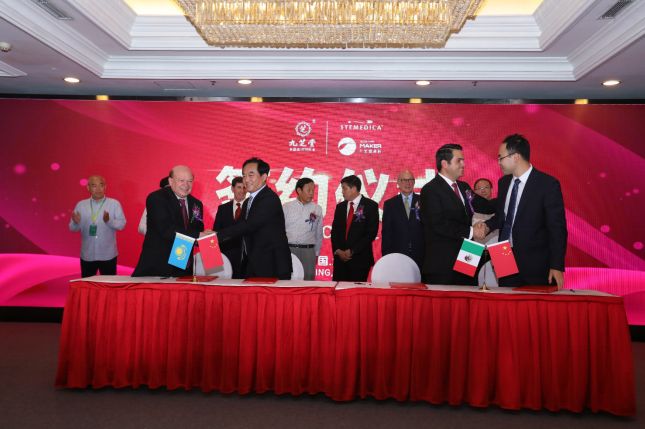
Signing Ceremony
Global Cooperation: Creating a Better Future for Human Health Together
Riding the momentum of Jiuzhitang's entry into the stem cell field, Jiuzhitang Co., Ltd. and Zhongguancun Science Park Daxing Biopharmaceutical Industry Base jointly hosted, with the support of Zhongguancun Medical Device Park, the “Global Stem Cell Industry Development Summit Forum.” This was a grand academic feast where top domestic and international stem cell experts shared insights with attendees. Renowned experts in basic and clinical stem cell research from China and the US jointly interpreted the development path of the stem cell industry from R&D to drug approval from perspectives including venture capital, basic research, clinical application, and policy regulation.
2004 Nobel Laureate Professor Aaron Ciechanover delivered a speech titled "The New Medical Revolution: At What Cost Will We Cure All Diseases?" In 2004, Professor Aaron won the Nobel Prize in Chemistry along with other researchers for the groundbreaking discovery of how human cells control the "waste disposal" process of certain useless proteins.
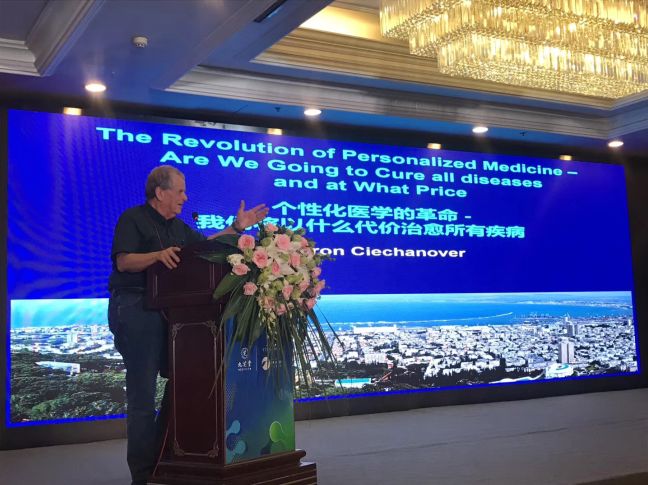
Nobel Laureate Professor Aaron Ciechanover
International stem cell clinical research expert Dr. Joseph Maroon gave an excellent presentation titled "Can Stem Cells Be a Treatment for Traumatic Brain Injury?" Dr. Maroon's main research focus is regenerative medicine. Due to his outstanding achievements in neurosurgery, he has been named one of the best doctors in the US for many consecutive years. Dr. Maroon currently serves as Senior Vice President of the American Academy of Anti-Aging Medicine and was formerly president of the American Association of Neurological Surgeons, the world's largest neurosurgical society.
Professor Michael Levy delivered a keynote speech on "Efficacy Analysis of Stem Cells for Stroke and Other Serious Diseases," systematically introducing clinical trials of stem cell drugs for stroke indications. Professor Michael Levy is a well-known pediatric neurosurgeon in the US, specializing in the treatment of refractory pediatric brain tumors and cerebrovascular malformations. He is also the first surgeon in the history of the University of California, San Diego, to be promoted two academic ranks consecutively.
Dr. Alex Kharazi, Chief Medical Officer of Stemedica, introduced the hypoxia technology and preparation platform for stem cells. Dr. Kharazi is the Chief Technology Officer of Stemedica in the US, a member of the American Association for Cancer Research, a renowned expert in immunotherapy and cell therapy, former professor at UCLA, and chief scientist of the immunotherapy laboratory. He is one of the earliest researchers to discover the immunosuppressive effect of the thymus in aged mice, has published multiple papers on this topic, and holds 8 US patents and several international patents.
Professor Zhang Yanan from Beijing Tiantan Hospital affiliated with Capital Medical University introduced domestic clinical trial plans and protocols for stem cells in neurology and neurosurgery. Professor Tian Ye from the First Affiliated Hospital of Harbin Medical University introduced the application prospects of stem cells in cardiology and the regulation of exosomes and sonodynamic therapy. Professor Tian holds a PhD in cardiovascular medicine from Harbin Medical University, a postdoctoral degree in materials physical chemistry from Harbin Institute of Technology, a postdoctoral degree in cardiovascular medicine from Johns Hopkins University School of Medicine, and serves as director of the Heilongjiang Institute of Basic Medical Research and head of the Department of Pathophysiology at Harbin Medical University. His main work involves clinical, research, and teaching in coronary heart disease, vascular biomedical engineering materials, heart failure, and pacing therapy.
Professor Yuan Baozhu, Director of the China National Institute for Food and Drug Control's Cell Resource Storage and Research Center, explained stem cell quality control. Professor Yuan is a member of the National Stem Cell Expert Committee with over 30 years of experience in basic and translational medical research. She currently focuses on quality control research and evaluation of various cell therapy products, including product quality attribute research, quality control technology development, and the research and formulation of standard materials and evaluation specifications for quality assessment. She has participated in national regulatory and technical guidance drafting and revision for cell therapy products, including leading the drafting and revision of the "Guidelines for Quality Control and Preclinical Research of Stem Cell Preparations (Trial)" (implemented since August 2015). She has undertaken various national and local research projects and, as chief scientist, received the first batch of national key funding for "Stem Cell and Translational Research" in 2016 for the "Clinical-grade Stem Cell Standardized Evaluation System" project.
Attendees jointly witnessed the launch ceremony of Jiuzhitang's entry into the stem cell pharmaceutical field. As a pioneer of stem cell drug development in China, Jiuzhitang remains committed to becoming a global leader in regenerative medicine. It will continue to actively build an international R&D, production, and application layout to enhance the competitiveness of China's stem cell drugs and promote the development of the regenerative medicine field in China. (Bioon.com)
Previous:
Next:
Related News

Here is the title—h1 placeholder text


Copyright © Jiuzhitang Maker (Beijing) Cell Technology Co., Ltd.
Powered by: 300.cn SEO | Privacy Policy