

News
News Center
Big news! Pioneering the way, Shenzhen is set to become the first city in China to legislate regulations for cell and gene therapy management!
来源:Shenzhen TV Deep Vision News
2020-12-14
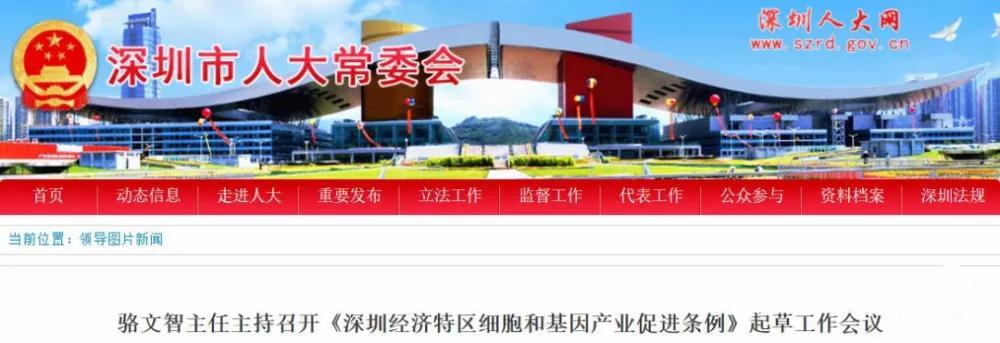
Shenzhen TV and Yishenzen client reporters have just learned from the Standing Committee of the Shenzhen Municipal People's Congress that Shenzhen will take the lead nationwide in enacting legislation to regulate cell and gene therapies!
Shenzhen accelerates legislative efforts in emerging fields.
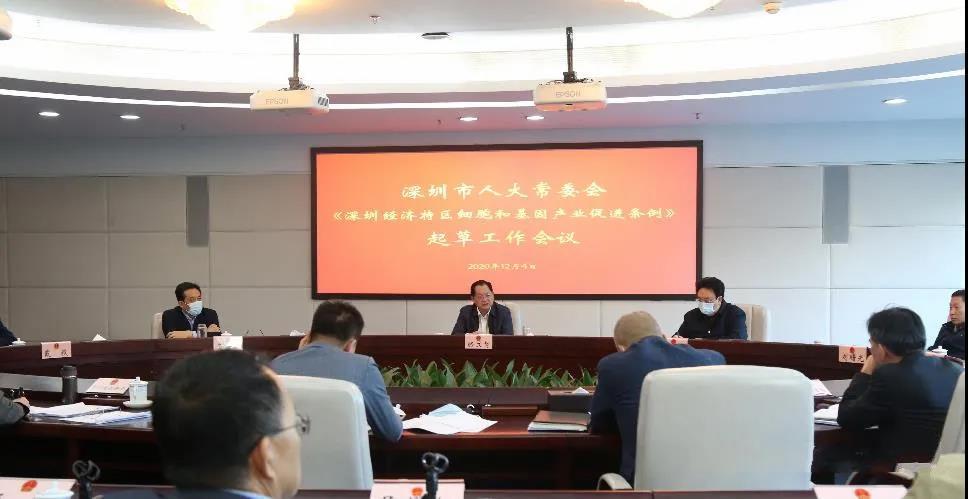
According to a recent announcement on the official website of the Shenzhen Municipal People's Congress Standing Committee, in order to implement the requirements outlined in the "Implementation Plan for the Comprehensive Reform Pilot Program of Shenzhen as a Demonstration Zone for Socialism with Chinese Characteristics (2020-2025)" and to deepen the biopharmaceutical development strategy while strengthening the regulation of cell and gene therapies, the Standing Committee recently convened a drafting meeting for the "Shenzhen Special Economic Zone Regulations on Promoting the Cell and Gene Industry" (provisional title). During the meeting, officials from relevant departments and experts were invited to share their insights.
At the meeting, responsible officials from the Municipal Development and Reform Commission, the Municipal Science and Technology Innovation Commission, the Municipal Bureau of Industry and Information Technology, the Municipal Health Commission, and the Municipal Market Supervision Administration, along with clinical experts from Shenzhen University General Hospital and Sami International Medical Center, and technical experts from Inno Translational Medicine Research Institute and the Shenzhen Cell Therapy Technology Association, jointly offered their insights and suggestions on the legislative process.
The meeting emphasized that the pilot implementation plan for comprehensive reforms grants Shenzhen pioneering authority in emerging fields such as artificial intelligence, autonomous driving, big data, biopharmaceuticals, healthcare, information services, and personal bankruptcy, encouraging the city to fully leverage its legislative powers as a special economic zone to drive innovation. Shenzhen should seize this opportunity to accelerate the advancement of legislation in these cutting-edge areas.
The meeting emphasized the need to optimize the dedicated team by not only retaining existing experts but also broadly recruiting top-tier biopharmaceutical specialists from across China and around the globe, forming a legislative task force to provide expert guidance for lawmaking. Additionally, the meeting urged accelerating the legislative process, actively gathering relevant data and conducting thorough research. Based on a clear understanding of the industry's current state, the team should draft a foundational regulatory framework and continuously refine it through iterative revisions.
Cell and gene therapy
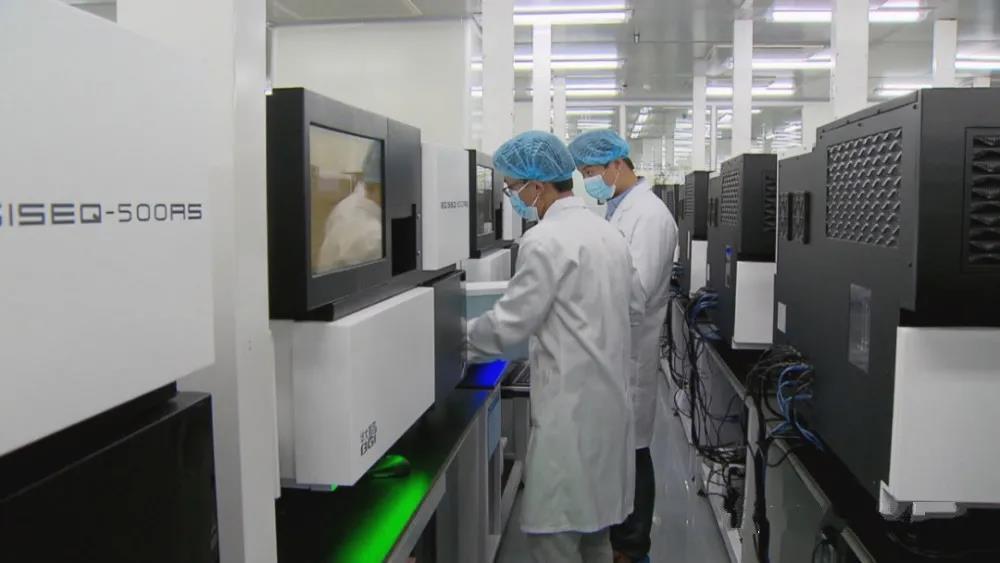
The U.S. journal *Science* once ranked stem-cell research as the world's top scientific achievement. Meanwhile, the COVID-19 pandemic has also spurred greater societal attention on cell and gene therapies.
The world-renowned German Bayer Group officially announced on December 3 this year the establishment of a cell and gene therapy platform, aiming to accelerate innovation in prescription drugs. The new platform, powered by its Cell & Gene Therapy (C>) platform, will drive groundbreaking technological advancements to deliver transformative, patient-focused treatment solutions.
National Political Consultative Conference member and Chinese Academy of Sciences academician Rao Zihua stated that, with China's growing investment in scientific research and steadily strengthening technological capabilities, the number of domestic clinical studies on cell and gene therapies has been increasing year by year. Currently, China ranks second only to the United States in the annual growth of new clinical research projects, making it one of the most dynamic regions in the world for cell therapy clinical studies.
Rao Zihé stated that recent incidents involving cell therapy and gene editing in China highlight a significant gap between the country's clinical benefits and industrial development in cell and gene therapies and the internationally advanced standards. He emphasized the need for continued efforts to standardize clinical research guidance and regulatory oversight in these rapidly evolving fields.
According to statistics, as of now, the European Union and the U.S. Food and Drug Administration (FDA) have jointly approved six cell and gene therapy products. The FDA also anticipates approving 40 gene therapies by 2022. Meanwhile, China has yet to approve a single safe and effective cell or gene therapy product for market use.
As a member of the National Committee of the Chinese People's Political Consultative Conference, Rao Zihua put forward his suggestions in the People's Political Consultative Conference Daily:
Introduce and cultivate national experts in the regulatory field of cell and gene therapies, empowering them with the authority to make professional decisions.
Increase support for funding clinical research and industrial translation of cell and gene therapy products;
Standardize clinical products in the cell and gene therapy fields, bolstering the industry's confidence and commitment to translating cell therapies into practical applications.
Establish an incentive mechanism to encourage regulatory authorities to approve nuclear gene therapies, along with a system of limited liability under legal protection for regulators—systematically fostering innovation and industrialization.
Promote earlier engagement and communication with R&D companies, providing guidance and standardizing the product development process to help enterprises better and more quickly meet clinical translation requirements, thereby accelerating the R&D timeline.
Is Shenzhen a suitable place to take the lead in legislation?
Following the IT industry, biotechnology and biopharmaceuticals are now regarded as the sectors with the greatest potential for growth and development. The biopharmaceutical industry is also one of Shenzhen's seven strategic emerging industries, holding significant strategic importance and promising vast opportunities for future expansion.
Shenzhen's biopharmaceutical industry started developing relatively early; in 2005, it was recognized by the National Development and Reform Commission as one of the first national biopharmaceutical industry bases. In 2018, Shenzhen's biopharmaceutical sector saw an impressive 22.3% increase in value added, ranking first among the city's seven major strategic emerging industries.
In 2019, Shenzhen established more than 300 innovative platforms in the biopharmaceutical sector, with cutting-edge technologies such as high-end biomedical engineering, gene sequencing, and bioinformatics analysis placing the city among the world’s leaders. Throughout the year, the biopharmaceutical industry achieved an added value of 33.781 billion yuan, representing a robust 13.3% growth. Amidst the COVID-19 pandemic, this industry—often hailed by the sector as a "never-fading sunrise industry"—actually managed to achieve growth against the odds.
As early as the beginning of this year, the Shenzhen municipal government introduced the "1+3" policy document aimed at boosting the clustering and development of the biopharmaceutical industry. The document explicitly emphasizes addressing the common needs and key challenges facing Shenzhen's biopharmaceutical sector, while also focusing on building a comprehensive, specialized service platform that spans the entire biopharmaceutical industry chain. This initiative is designed to provide robust support for the concentrated growth of Shenzhen's biopharmaceutical industry and its enterprises.
On April 29, the Standing Committee of the Municipal People's Congress adopted the "Decision on Accelerating the High-Quality Development of the Biopharmaceutical Industry," which emphasizes strengthening support for key industry development factors. The decision calls for robust safeguards in areas such as talent, funding, and land to drive the industry forward.
Effective October 1, the nation’s first legislation specifically tailored for a free trade zone—The Shenzhen Special Economic Zone Qianhai-Shekou Free Trade Pilot Zone Regulations—has been enacted, providing a fresh boost to Shenzhen’s rapidly growing cell and gene therapy industry. The regulations explicitly state that medical and research institutions within the free trade zone may, based on their technical capabilities and in accordance with relevant guidelines, conduct cutting-edge research and translational applications in areas such as stem cells, immune cells, gene therapies, monoclonal antibodies, and tissue engineering.
At the 2020 Shenzhen BT (Biotechnology) Industry Leaders Summit held on November 18, Academician Zhong Nanshan also specifically praised Shenzhen's epidemic prevention efforts and the city's thriving biomedical industry development.
Zhong Nanshan said that Shenzhen is currently making significant strides in developing the biopharmaceutical industry, having established a number of high-quality, specialized industrial clusters such as the Pingshan National Biotechnology Base. These initiatives have laid a solid foundation for accelerating Shenzhen's role as a key engine driving the biopharmaceutical sector within the Greater Bay Area.
The comprehensive reform pilot implementation plan grants Shenzhen pioneering authority in emerging fields such as artificial intelligence, autonomous driving, big data, biopharmaceuticals, healthcare, information services, and personal bankruptcy. At this critical juncture, Shenzhen’s decision to take the lead in enacting legislation specifically for cell and gene therapy management is both timely and entirely justified—undoubtedly the right move at the right moment to further foster the healthy and sustainable growth of this vital industry.
Shen Weixing, Dean of Tsinghua University's School of Law and Vice President of the Chinese Society of Health Law, previously told a reporter from Shenzhen TV: "While we must prioritize the development of biopharmaceutical technologies, ensuring safety should always come first. With this in mind, Shenzhen has tremendous potential to thrive as it continues to advance cutting-edge technologies—provided they are developed with safety as the top concern."
He said that the rule of law itself cannot generate technology or cure diseases, but it can ensure that people’s fundamental rights are fully protected, enabling innovations in healthcare and medical technology—and indeed, all fields—to thrive sustainably over the long term.
Related News

Here is the title—h1 placeholder text


Copyright © Jiuzhitang Maker (Beijing) Cell Technology Co., Ltd.
Powered by: 300.cn SEO | Privacy Policy