

News
News Center
World Diabetes Day | @Diabetes Patients, Confidential Documents Are Ready for Your Review!
2020-11-16
Today is World Diabetes Day—let’s talk about the flagship version of "lifestyle diseases": diabetes.
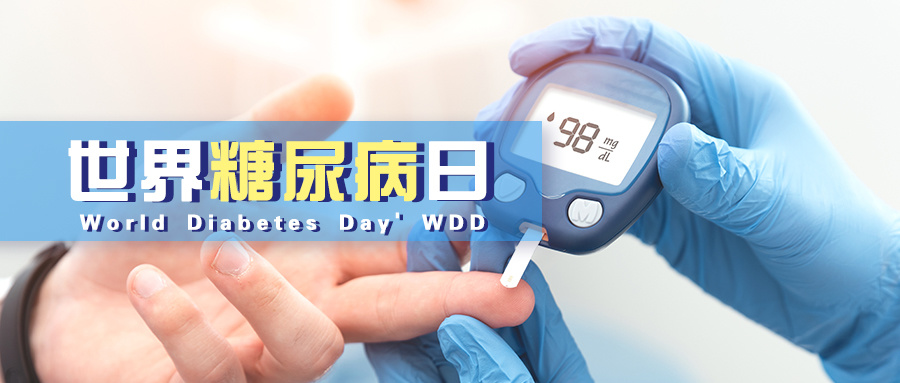
Diabetes is often referred to as the "second leading cause of death" among modern diseases. According to the latest report released by the Diabetes Federation's survey: nearly 10% of adults aged 20 and older are living with diabetes, yet about half of them remain undiagnosed. Meanwhile, one in every 13 people shows abnormal glucose tolerance, while for every six newborns, one pregnant mother experiences elevated blood sugar levels during pregnancy. Tragically, every 8 seconds, someone dies from diabetes or its related complications.
Currently, there are 463 million diabetes patients worldwide, and China accounts for one-quarter of this number—approximately 116.4 million people living with diabetes. What’s more, the disease is increasingly affecting younger individuals and continues to rise rapidly, placing a heavy burden on both health systems and economies.
Current Status and Limitations of Diabetes Treatment
Diabetes is a group of metabolic disorders characterized by high blood glucose levels. This hyperglycemia results from either a deficiency in insulin secretion, impaired biological action of insulin, or both. Persistent high blood sugar, combined with long-term metabolic abnormalities, can lead to dysfunction or failure of tissues and organs throughout the body. Common chronic complications of diabetes include diabetic retinopathy (DR), diabetic neuropathy, diabetic kidney disease (DKD), diabetic foot (DF), diabetic cardiomyopathy, and diabetic bone disease, among others. [1] 。
Currently, diabetes is associated with over 100 known complications, making it the disease with the highest number of documented complications. Clinical data show that approximately 10 years after the onset of diabetes, 30% to 40% of patients will develop at least one complication—and once these complications arise, they are often difficult to reverse even with medication. To date, diabetes management in clinical practice has largely focused on symptom-based treatments, relying primarily on dietary and exercise interventions, along with various medications aimed at lowering blood sugar levels. While these approaches can help delay or reduce the occurrence of complications, their effectiveness remains limited, significantly impacting the optimal timing for initiating more effective, long-term treatment strategies for diabetic patients.
But did you know? Stem cell therapy has already demonstrated tremendous potential across various fields, offering new hope to diabetes patients. For instance, when using exogenous insulin to treat diabetes, insufficient insulin doses often lead to poor blood sugar control, which can subsequently damage systems throughout the body. Conversely, overdosing may cause dangerously low blood glucose levels—or even fainting. As a result, relying solely on insulin to manage blood sugar levels struggles to mimic the natural way pancreatic beta cells regulate glucose in a healthy, physiological state. This is precisely why novel cell-replacement therapies have become a hot topic of research.
Mechanisms of Bone Marrow Mesenchymal Stem Cell (BMSC) Transplantation in Treating Diabetes
Research shows that after BMSC transplantation, these cells can home in on the site of injury and migrate directionally to it. Once there, BMSCs primarily prevent pancreatic islet cell damage by secreting a variety of cytokines, inhibit islet cell apoptosis, promote islet cell regeneration, and stimulate angiogenesis as well as exogenous islet revascularization following injury. Additionally, they exert immunomodulatory effects, improve insulin resistance, and even activate endogenous stem cells to differentiate into insulin-producing cells (IPCs), thereby offering a therapeutic approach for diabetes. [2-6] 。
1. Possesses non-HLA-restricted immunosuppressive properties, enabling it to modulate the balance among various cell types, reduce the secretion of inflammatory cytokines, and inhibit the activation and proliferation of T cells, dendritic cells, and NK cells at the receptor level—thereby diminishing the attack by autoimmune cells on pancreatic islet cells.
2. By secreting cytokines such as TGF-β, hepatocyte growth factor (HGF), and IL-6, it promotes the expression of protective genes that confer resistance to hypoxia while inhibiting cell apoptosis.
3. By secreting vascular endothelial growth factor (VEGF), IL-6, IL-8, hepatocyte growth factor (HGF), platelet-derived growth factor (PDGF), transforming growth factor-beta (TGF-β), and other angiogenic paracrine factors, as well as matrix metalloproteinases, the graft undergoes immune modulation and vascular network formation.
4. Reverse IR by influencing key target molecules in the insulin signaling pathway, such as insulin receptor substrate 1 (IRS-1), serine/threonine protein kinase B, and the expression and phosphorylation levels of Glut4.
5. BMSCs can be induced to differentiate into insulin-secreting cells (IPCs) via a two-step process in an environment rich with numerous transcription factors and signaling molecules. Notably, BMSCs are capable of generating more IPCs compared to adipose-derived mesenchymal stem cells.
Clinical Application of Bone Marrow Mesenchymal Stem Cell (BMSC) Transplantation in the Treatment of Diabetes
Case 1: Bone Marrow Mesenchymal Stem Cells for the Treatment of Type 1 Diabetes
In 2003, Malmegrim et al. [7] First, BMSCs transplantation was clinically applied to treat Type 1 Diabetes Mellitus (T1DM), demonstrating both safety and efficacy. Participants: 20 individuals who maintained well-controlled blood glucose levels without the use of exogenous insulin. Results: Twelve participants remained insulin-independent for an average of 31 months (ranging from 14 to 52 months), while eight participants required only low-dose insulin therapy (0.1–0.3 IU/kg) to manage their blood sugar. Notably, these recipients showed increased C-peptide levels and reduced HbA1c levels. Conclusion: A median follow-up period of 29.8 months (ranging from 7 to 58 months) among the study participants firmly confirms the safety and effectiveness of BMSCs transplantation as a therapeutic approach for diabetes.
Case 2: Bone Marrow Mesenchymal Stem Cell Therapy for Type 2 Diabetes
In 2015, to evaluate the safety, tolerability, and feasibility of BMSCs in treating type 2 diabetes mellitus (T2DM) in adults, Skyler and colleagues conducted a multicenter, single-blind, randomized controlled study. The study involved 61 T2DM patients—recruited from 18 centers—who had inadequate glycemic control despite treatment with metformin alone or in combination with other antidiabetic medications (HbA1c levels ranging from 7.0% to 10.5%). Results showed that intravenous administration of varying doses of BMSCs led to significant reductions in blood glucose levels within one week across all treatment groups. By week 12, eight patients in the treatment group achieved relatively normal blood sugar levels, whereas no such improvement was observed in the control group (P < 0.05). Importantly, no serious adverse reactions were reported during the study, and recipients did not develop specific antibodies against the donor’s HLA antigens. Conclusion: BMSC therapy represents a safe and effective approach for managing adult T2DM. [8] 。
Bone Marrow Mesenchymal Stem Cell Transplantation for Treating Diabetic Complications
1. Bone Marrow Mesenchymal Stem Cell Transplantation for the Treatment of Diabetic Kidney Disease (DKD)
DKD is a common chronic microvascular complication of diabetes, and renal fibrosis is a major contributing factor in the development of DKD. BMSCs exhibit significant inhibitory effects on renal fibrosis in DKD rats, effectively slowing down the progression of kidney damage. When administered via transplantation in diabetic animal models, BMSCs demonstrate robust kidney-protective effects, helping to prevent and treat DKD.
2. Bone Marrow Mesenchymal Stem Cell Transplantation for the Treatment of Diabetic Cardiomyopathy
Research [9] Proof demonstrates that BMSCs delivered via intravenous transplantation can engraft into the myocardium of a diabetic cardiomyopathy rat model, reducing endothelial cell dysfunction and apoptosis while promoting regeneration of cardiomyocytes and blood vessels, thereby improving myocardial remodeling and cardiac function.
3. Bone Marrow Mesenchymal Stem Cell Transplantation for the Treatment of Diabetic Peripheral Vascular Disease
Diabetic peripheral vascular disease results from high blood sugar and metabolic abnormalities, leading to vascular hardening and plaque formation that cause severe arterial narrowing. It primarily affects the small and medium-sized arteries in the limbs, with lesions progressing in a widespread, stage-by-stage manner. Ultimately, this can lead to limb ischemia, tissue necrosis, and a high rate of amputation (of toes or feet)—making it a major cause of disability among diabetic patients.
Patients with distal arterial vessel stenosis or occlusion suffer from poor blood circulation, making conventional drug treatments less effective. BMSCs can secrete a variety of cytokines that promote angiogenesis and neurogenesis. Prochazka et al. [10] Treating diabetic peripheral vascular disease by injecting BMSCs into the lower limb muscles of patients resulted in symptom improvement in 81% of cases, significantly reducing the amputation rate.
4. Bone Marrow Mesenchymal Stem Cell Transplantation for the Treatment of Diabetic Osteopathy
Research shows that in diabetic bone disease, adiponectin (APN), granulocyte colony-stimulating factor (G-CSF), TGF-β, DF-1, and other factors released by damaged tissues can stimulate BMSCs to migrate toward the injury site. Under the influence of APN, these cells can differentiate into osteoblasts, contributing to tissue regeneration. Meanwhile, BMSC transplantation is increasingly being applied in the treatment of other orthopedic conditions, such as femoral head necrosis, degenerative disc disease, osteoarthritis, and more.
Summary
BMSCs transplantation therapy for diabetes and its complications has already been applied clinically with promising results, but the following issues still require further investigation:
1. How to optimize the cell culture environment to enhance cells' survival and functionality within the body;
2. How to determine the number of BMSCs required for transplantation to effectively lower blood sugar levels, enabling personalized treatment;
3. How to address the potential issue of tumor formation after BMSC transplantation;
4. Explore new mechanisms by which BMSCs regulate blood glucose levels in vivo;
5. The safety and efficacy of BMSCs transplantation for treating diabetes still require validation through large-scale, randomized controlled studies.
Although there are still many critical challenges to overcome in using stem cell therapy for diabetes and its complications, with ongoing advancements in scientific research and increasing investments in development, we can confidently anticipate that a new era of stem cell-based treatments for diabetes and related conditions is on the horizon—and humanity is one significant step closer to finding a cure for this chronic disease!
Statement: The images are sourced from the internet. If any infringement occurs, please contact us immediately for removal.
References:
[1] Sordi V. Mesenchymal stem cell homing capacity. Transplantation, 2009, 87:S42-S45.
[2] Bell GI, Broughton HC, Levac KD, et al. Transplanted human bone marrow progenitor subtypes stimulate endogenous islet regeneration and revascularization. Stem Cells Dev, 2012, 21:97-109.
[3] El-Tantawy WH, Haleem EN. Therapeutic effects of stem cells on hyperglycemia, hyperlipidemia, and oxidative stress in alloxan-treated rats. Mol Cell Biochem, 2014, 391:193-200.
[4] Ito T, Itakura S, Todorov I, et al. Mesenchymal stem cell and islet co-transplantation enhances graft revascularization and function. Transplantation, 2010, 89:1438-1445.
[5] Si Y, Zhao Y, Hao H, et al. Infusion of mesenchymal stem cells ameliorates hyperglycemia in type 2 diabetic rats: identification of a novel role in improving insulin sensitivity. Diabetes, 2012, 61:1616-1625.
[6] Ramnath RD, Maillard E, Jones K, et al. In vitro assessment of human islet vulnerability to the instant blood-mediated inflammatory reaction (IBMIR) and its use to demonstrate a beneficial effect of tissue culture. Cell Transplant, 2015, 24:2505-2512.
[7] Malmegrim KC, de Azevedo JT, Arruda LC, et al. Immunological balance is associated with clinical outcome after autologous hematopoietic stem cell transplantation in type 1 diabetes. Front Immunol, 2017, 8:167.
[8] Lang Hong, Dai Chun. The Effects of Bone Marrow Mesenchymal Stem Cells on Matrix Metalloproteinase-9 Expression and Fibrosis in the Kidneys of Diabetic Rats. Chinese Journal of Experimental Surgery, 2016, 33:447-452.
[9] Lupachyk S, Shevalye H, Maksimchyk Y, et al. PARP inhibition alleviates diabetes-induced systemic oxidative stress and the accumulation of 4-hydroxynonenal adducts in neural tissue: correlation with peripheral nerve function. Free Radic Biol Med, 2011, 50:1400-1409.
[10] Prochazka V, Gumulec J, Chmelova J, et al. Autologous bone marrow stem cell transplantation in patients with end-stage chronic critical limb ischemia and diabetic foot. Vnitr Lek, 2009, 55:173-178.
Related News

Here is the title—h1 placeholder text


Copyright © Jiuzhitang Maker (Beijing) Cell Technology Co., Ltd.
Powered by: 300.cn SEO | Privacy Policy