

News
News Center
Our province's Youbo Pharmaceutical has taken control of Jiuzhitang, launching its "masterpiece" and becoming the first in China to pioneer "stem-cell-based pharmaceuticals."
来源:Heilongjiang Daily
2018-09-17

On the 14th, a piece of news that sent ripples through China's pharmaceutical industry was officially unveiled to the public by the media during the "Global Stem Cell Industry Development Forum": Jiuzhitang Yonghe Qihang Fund, initiated and established by Jiuzhitang, a renowned domestic traditional Chinese medicine enterprise, signed an investment agreement with Stemedica Cell Technology, a San Diego-based company with over a decade of experience in stem cell research, development, manufacturing, and marketing—known as "Biotech Valley" in the U.S. Under the terms of the agreement, Jiuzhitang Maker (Beijing) Cell Technology Co., Ltd. will introduce cutting-edge stem cell production technologies and a state-of-the-art preparation platform from one of the world’s leading stem cell firms. Over the next 3 to 5 years, the company plans to build a commercial-grade stem cell production facility at the Beijing Daxing Biomedical Industry Base, adhering to both U.S. and EU cGMP standards. This landmark move marks Jiuzhitang, a century-old Chinese medicine giant, officially entering the rapidly growing field of stem cell drug research, clinical development, and industrialization. It also heralds the true beginning of stem cell-based pharmaceutical innovation in China.
This is Youbo Pharmaceutical, the company behind the Longjiang Medicine legend. Back then, it made headlines with its audacious "snake swallowing an elephant" acquisition—taking full control of Jiuzhitang—and has since firmly committed to a path of innovative development. Today, it’s at the forefront of global regenerative medicine, once again embarking on a journey to write its own extraordinary story.
Innovation: Ushering in a New Era of Stem-Cell Pharmaceuticals in China
Increasingly, clinical cases demonstrate that stem cell technology holds groundbreaking significance for the advancement of human medicine, while the stem cell field itself is also emerging as a strategic, high-growth industry in the global health sector. Among U.S.-listed companies on the Nasdaq alone, the market capitalization of stem cell-related stocks has already surpassed $30 billion. By 2020, the global stem cell market is projected to reach $400 billion, with China’s stem cell market expected to grow to as much as 120 billion RMB.
On October 25, 2016, the Central Committee of the Communist Party of China and the State Council jointly issued the "Healthy China 2030" Planning Outline, vigorously promoting pharmaceutical innovation and industrial transformation in China. Among these efforts, regenerative medicine—led by stem cell technology—is emerging as a key direction for the future of medical advancement. Stem cell technology has been continuously highlighted as a research priority, featured for multiple consecutive years in various national and local science and technology development plans and specialized guidelines.
As a century-old pharmaceutical company, Jiuzhitang strategically announced as early as 2015 that it would leverage its strong traditional Chinese medicine industry advantages while tapping into the global expertise of stem cell technology, boldly repositioning itself in the regenerative medicine field. The company aims to seamlessly integrate China’s time-honored traditional medicine with cutting-edge stem cell biotechnology, paving the way for an innovative growth trajectory tailored to this iconic Chinese pharmaceutical enterprise. The establishment of Jiuzhitang (Meike) marks a significant milestone as a leading Chinese traditional medicine company takes a bold step toward driving pharmaceutical innovation. Looking ahead, the company plans to launch several international, multi-center clinical trials, further accelerating the development of stem cell-based drug technologies.
Perspective: Mastering World-Leading Stem Cell Technology
"In today’s global stem-cell field, 'technology reigns supreme'—whoever masters the mature techniques for turning stem cells into viable medicines will seize control of the immensely lucrative pharmaceutical market of the future." Li Zhenguo, founder of our province’s Yubo Pharmaceutical and now Chairman of Jiuzhitang, explained that Jiuzhitang’s chosen strategy for developing stem-cell products represents the best example of how traditional Chinese medicine companies can drive innovative growth. And at the heart of this successful approach? Securing a leading-edge position in cutting-edge global stem-cell technology.
In recent years, China has steadily accelerated the pace of its pharmaceutical system reform, frequently introducing policies that encourage innovation in drug development. Relevant authorities have progressively unveiled a series of guiding principles specifically tailored to stem cell technology, while the regulatory framework continues to strengthen. As a result, applications for clinical trials involving stem cells are once again being accepted, signaling that the door is now open for stem cells to advance into the realm of therapeutic drugs.
According to industry experts, Stemedica Cell Technology, based in San Diego—the epicenter of the U.S. biotechnology and pharmaceutical industries—has become the first U.S. company approved to conduct clinical research using stem cells for Alzheimer's disease treatment. It is also one of only a handful of U.S. biotech firms certified by the FDA to carry out stem-cell drug trials, and one of the few global companies capable of producing both human bone marrow mesenchymal stem cells and human neural stem cells. Notably, the company has successfully scaled up, standardized, and ensured full traceability of its stem-cell production process while maintaining uncompromising quality standards—achieving an unprecedented level of stem-cell expansion efficiency.
The company’s advanced hypoxia-based cell culture production process has enabled its stem cell products to demonstrate exceptional safety and therapeutic efficacy in clinical trials. Currently, six ongoing clinical trials are exploring stem cell therapies for conditions such as ischemic stroke, chronic heart failure, Alzheimer’s disease, photoaging of the skin, acute myocardial infarction, and traumatic brain injury—each of which is already at the cutting edge of global research.
According to reports, as technology is steadily transferred, Jiuzhitang will establish a production facility in Beijing's Daxing district capable of industrializing stem-cell-based pharmaceuticals. The facility will be designed and constructed entirely in accordance with U.S. and EU cGMP standards. Once operational, it will enable the preparation of 900,000 consistent, highly active therapeutic-grade stem cells from a single donated bone marrow sample—truly achieving world-leading scalable expansion of stem cells and addressing a critical technical challenge in turning stem cells into viable medicines.
Accelerating: Bringing stem cell therapies to market sooner
It must be acknowledged that cell-based therapies are the most complex drugs in human history—and also represent a major technological challenge for scientists worldwide. In recent years, stem cell therapies have seen rapid advancements, ushering in groundbreaking changes for human health and the medical field. According to incomplete statistics, there are currently 13 stem cell-based drugs approved globally. However, it’s regrettable that no stem cell therapies have yet been approved in China.
According to reports, to accelerate the development of pharmaceutical products, Jiuzhitang has launched the Yonghe Qihang Fund, which has invested in and gained controlling stakes in the U.S.-based Stemedica Cell Technology Company through capital increases and equity expansions. Simultaneously, Jiuzhitang Maker (Beijing) Cell Technology Co., Ltd. was established as the sole Chinese entity entrusted with taking over Stemedica's cutting-edge stem cell technology and manufacturing platform. This strategic move enables Jiuzhitang (Meike) to leverage Stemedica’s globally advanced stem cell production technologies and preparation platforms, achieving scalable expansion of stem cells on a world-leading level—and ultimately addressing a critical technical hurdle in turning stem cells into viable pharmaceutical products.
To accelerate stem cell technology toward pharmaceutical-grade development, high-quality clinical trials are essential. Currently, Jiuzhitang (Meike) has signed clinical collaboration agreements with top-tier hospitals in China, including the Tiantan Hospital affiliated with Capital Medical University and the First Affiliated Hospital of Harbin Medical University. Building on Stemedica's successful clinical trial outcomes in the U.S., the company plans to conduct stem cell-based clinical research focused on neurological and cardiovascular diseases, ultimately paving the way for the early launch of stem cell therapies in China—and enabling the nation to benefit from groundbreaking advances in regenerative medicine.
Meanwhile, Jiuzhitang (Meike) will also collaborate with Kazakhstan’s National Medical Science Center and Mexico’s Santa Clarita Clinic to provide them with FDA-approved, medical-grade stem cells, offering overseas medical services to both patients and health-conscious individuals.
Clinical experts from Beijing Tiantan Hospital, Affiliated to Capital Medical University, and the First Affiliated Hospital of Harbin Medical University have separately unveiled domestic clinical trial plans and protocols for stem cells in the fields of neurology, neurosurgery, and cardiology.
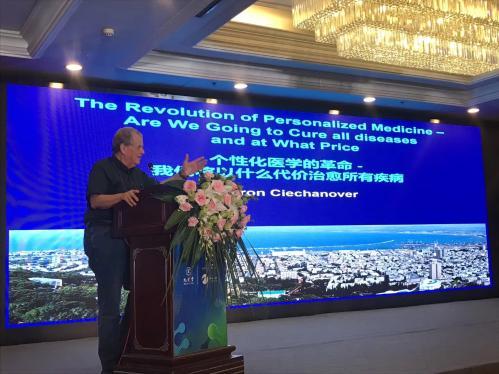
According to reports, at the recent "Global Stem Cell Industry Development Forum," renowned experts from both domestic and international fields—specializing in basic and clinical stem cell research—jointly explored the path of stem cell industry development, from research and development to drug commercialization, from perspectives spanning venture capital, fundamental studies, clinical applications, as well as policy and regulatory frameworks. These discussions undoubtedly provided Jiuzhitang with a valuable opportunity to "recharge" its own stem cell-based pharmaceutical initiatives.
"As an entrepreneur who hails from Heilongjiang, it’s my greatest wish to contribute fully to the development of the province’s pharmaceutical industry," introduced Li Zhenguo, Chairman of Jiuzhitang. He added that the company has already initiated strategic planning to enable Jiuzhitang’s Yubo Pharmaceutical—based in Heilongjiang—to increasingly engage in production and manufacturing activities related to the rapidly expanding stem-cell industry, aiming to forge a replicable path for innovative growth among Heilongjiang’s pharmaceutical enterprises.
Related News

Here is the title—h1 placeholder text


Copyright © Jiuzhitang Maker (Beijing) Cell Technology Co., Ltd.
Powered by: 300.cn SEO | Privacy Policy