

News
News Center
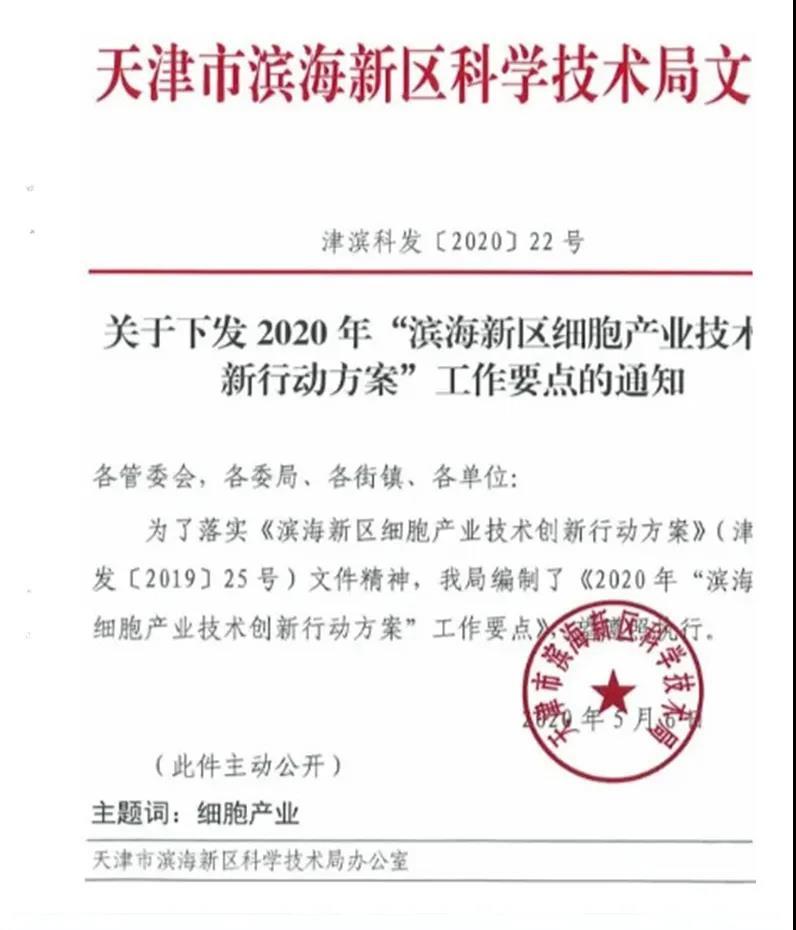
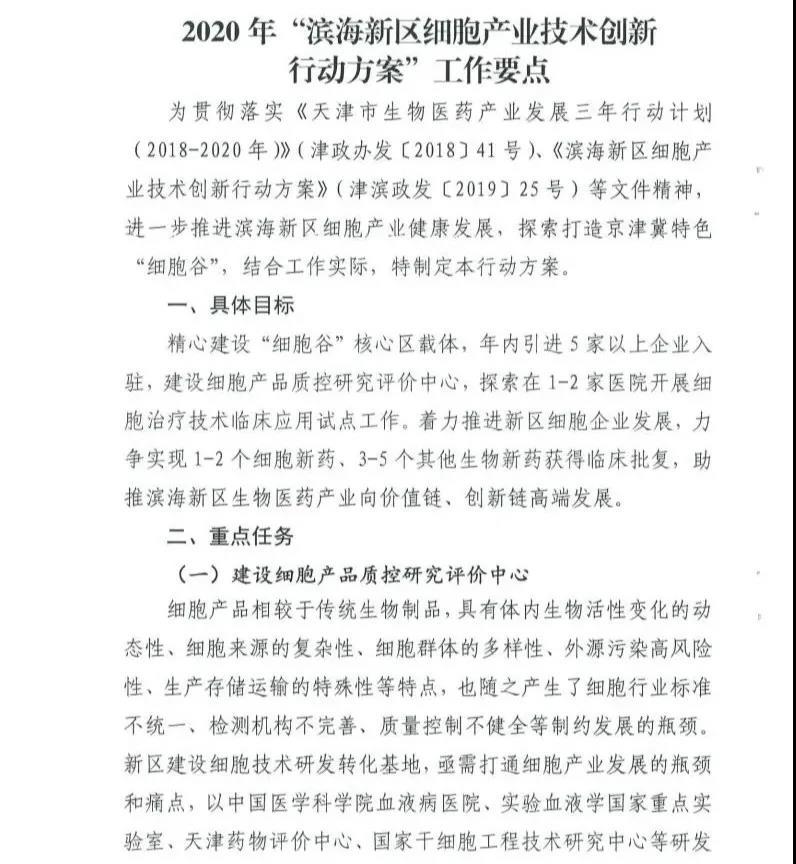
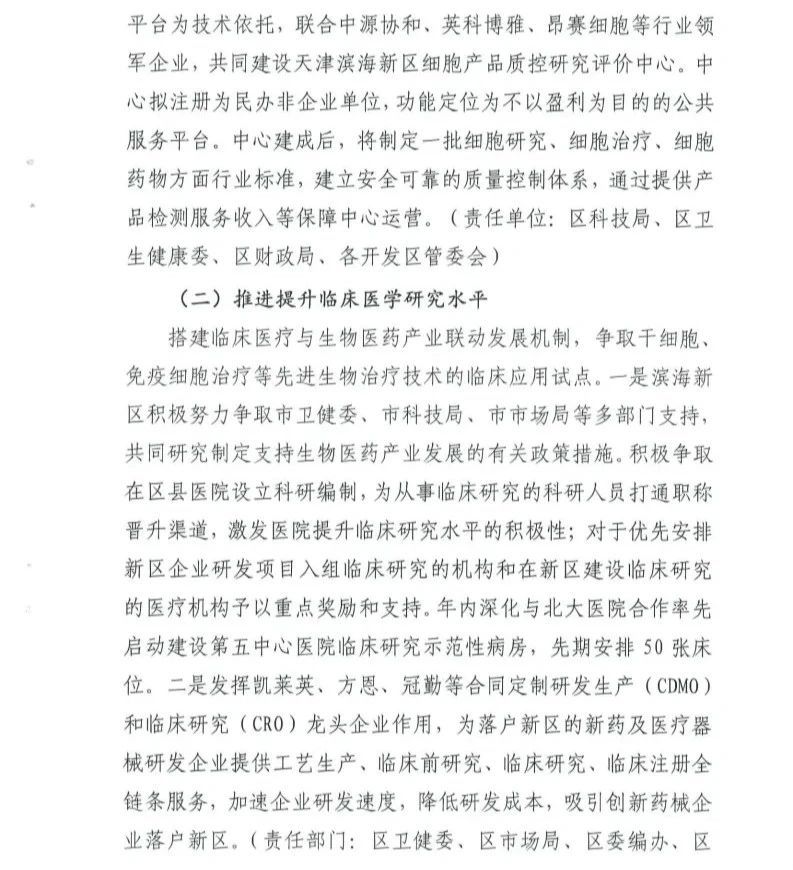
Piloting the clinical application of advanced biotherapies such as stem cell and immune cell therapies! — Notice on Key Work Priorities for the 2020 "Binhai New Area Cell Industry Technology Innovation Action Plan"
来源:Tianjin Binhai New Area Science and Technology Bureau
2020-06-17
Last year, the Binhai New Area People's Government of Tianjin officially launched the "Binhai New Area Cell Industry Technology Innovation Action Plan," aiming to position Binhai New Area as a leading demonstration zone for cell therapy. The plan envisions establishing a hub for clinical trials and applications of cutting-edge biomedical technologies—especially cell and gene therapies—while developing a national-level health and medical innovation示范区 that will set a regional benchmark for the entire country.
The notice clearly states: "Efforts will be made to pilot the clinical application of advanced biotherapies such as stem cell and immune cell treatments." The Binhai New Area is actively working to secure support from multiple municipal departments, including the Municipal Health Commission, the Municipal Science and Technology Bureau, and the Municipal Market Supervision Administration, to jointly develop and implement favorable policies aimed at boosting the growth of the biopharmaceutical industry. (A photo version of the document is included at the end.)
Last year, the Binhai New Area People's Government of Tianjin officially released the "Binhai New Area Cell Industry Technology Innovation Action Plan," aiming to establish Binhai New Area as a demonstration zone for cell therapy. The plan envisions building a clinical trial and application hub for cutting-edge biomedical technologies—particularly cell and gene therapies—while creating a national-level health and medical innovation示范区 that will serve as a regional benchmark for the entire country.
Additionally, the Binhai New Area will be developed into a pioneering zone for policy innovation. This includes innovating the regulatory framework for policies, exploring tiered and categorized management of cell therapies, and fostering the safe, standardized, and high-quality growth of the cell industry.
In terms of policy innovation, we will strive to secure nationally recognized pilot policies. Details are as follows:
Based on the development of technical guidelines and evaluation standards for each stage of cell storage, preparation, and application, we will pilot a "risk-based classification and access categorization" management system for cell therapies. Additionally, we will explore establishing a regulatory policy framework for cell therapies, grounded in principles such as compassionate use and orphan drug regulations. Our goal is to achieve breakthroughs in cell therapy regulatory policies across the following areas. (Responsible units: District Market Supervision Bureau, District Health Commission, Office of the Free Trade Zone Administration Committee)
1. Seek approval from relevant national ministries and commissions to allow low-risk, allogeneic-use autologous cell therapy applications—when conducted within the new district—as medical technologies eligible for clinical implementation with fee-based services.
2. Advocate to relevant national ministries and commissions to allow cell therapy products registered as pharmaceuticals to be used, under the orphan drug and compassionate use principles—and modeled after the EU hospital exemption system—specifically at designated medical institutions within the new zone, for treatment of select patients, with the option for cost-based reimbursement.
3. Advocate to relevant national ministries and commissions to "allow cell therapy products that have already received implicit approval for clinical trials of new drugs to conduct clinical research at designated medical institutions within the New Area, with the option for cost-based fees."
4. Advocate to relevant national ministries and commissions for the pilot implementation of cell therapy products and medical devices already approved for marketing abroad in designated medical institutions within the New Area, allowing cost-based fees.
5. Seek approval from relevant national ministries and commissions to allow qualified medical professionals holding foreign professional qualifications to provide services in the New Area after registration, with their overseas work experience recognized as equivalent to domestic work experience.



Related News

Here is the title—h1 placeholder text


Copyright © Jiuzhitang Maker (Beijing) Cell Technology Co., Ltd.
Powered by: 300.cn SEO | Privacy Policy