

News
News Center
National People's Congress delegate Li Zhenguo: Promoting the Integration of Traditional Medicine and Precision Medicine
2020-05-28
Economic Daily – China Economic Net, May 28 (Reporters Zhu Guowang and Guo Wenpei) — In the process of diagnosing and treating COVID-19, a new trend has emerged with the full-scale launch of precision medicine. Leading the way are innovative cell therapy technologies, such as stem cells, which offer a fresh approach and provide novel methods and models for the 2019-nCoV COVID-19 treatment guidelines. In light of this, Li Zhenguo, a member of the National People's Congress and Chairman of Jiuzhitang Co., Ltd., once again proposed promoting the integration of traditional medicine with precision medicine to enhance capabilities in addressing critical illnesses.
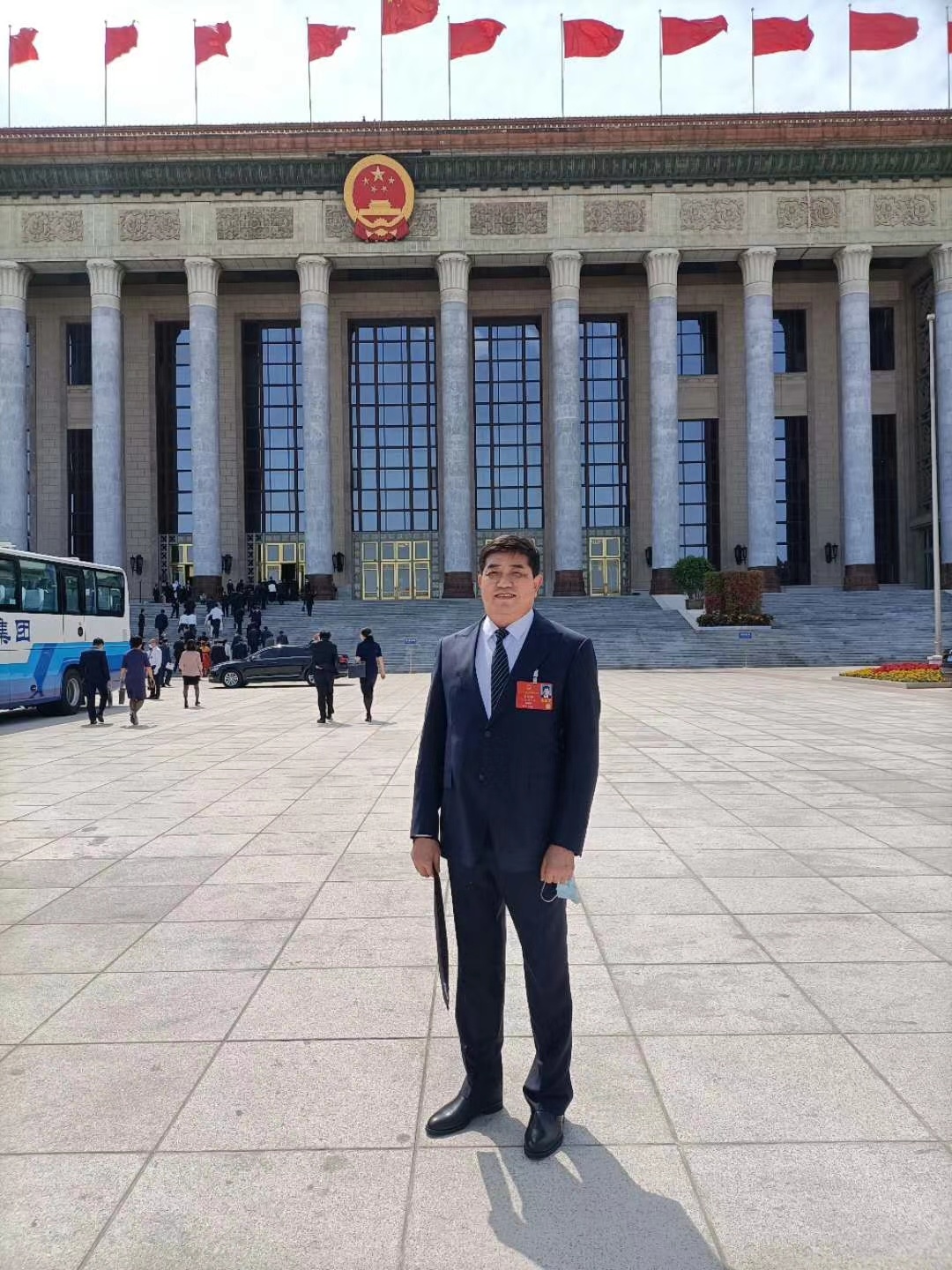
Li Zhenguo, representing the delegation, noted that traditional medicine and precision medicine are at different stages of development in China—but they share many commonalities. In fact, the essence of traditional medicine forms the very foundation of precision medicine. The core principles of Traditional Chinese Medicine, such as "treating the same disease with different methods," "treating different diseases with the same method," and "individualized treatment based on syndrome differentiation," essentially embody the very concept of precision medicine. To this end, he suggested that, first, at the national level, we should establish a positive public opinion framework to effectively promote the complementary strengths of traditional and precision medicine, encouraging their dynamic integration and mutual inspiration. This collaboration will not only enhance our country's capacity to treat critical illnesses but also contribute significantly to advancing global health initiatives. Second, it’s crucial to fully leverage the unique advantages of both traditional and precision medicine—whether in health management, disease prevention, or the treatment of serious conditions. By fostering innovation and adopting cutting-edge technologies and novel approaches, healthcare institutions can seamlessly integrate these two fields, delivering more efficient and effective health services to the public.
It is reported that in 2019, the "Drug Administration Measures of the People's Republic of China" classified stem cells under "Registration Category III for Therapeutic Biological Products," placing them under pharmaceutical regulation. Stem cells, derived directly from the human body, possess remarkable capabilities to repair, intervene in, and regenerate human cells and tissues. The rapid advancement of stem cell technology has opened up new avenues and possibilities for treating many serious diseases. In light of this, Representative Li Zhenguo emphasized the need to stay at the cutting edge of global innovation, proactively plan ahead, and accelerate the high-quality development of precision medicine.
So, how can we effectively drive the high-quality development of precision medicine in practice? Representative Li Zhenguo believes that, given the current state and environment of stem-cell technology both domestically and internationally, efforts should be focused on five key areas.
First, it provides guidance for development direction and clearly identifies key areas of focus. Representative Li Zhenguo explained that China's stem-cell drug industry is currently still in its early stages. He suggested providing policy support and strategic guidance to pinpoint primary development areas and research priorities, with a particular emphasis on addressing critical and rare diseases—especially those for which no effective treatments currently exist. Additionally, he highlighted the importance of prioritizing research and applications that demonstrate high safety profiles and remarkable therapeutic efficacy. By accelerating the clinical adoption of stem-cell therapies and expediting clinical trials to rigorously validate their safety and effectiveness, we can ensure these innovative treatments better serve public health needs.
Second, accelerate the establishment and implementation of national-level standards to promote the orderly development of the industry. Representative Li Zhenguo proposed building a national-level demonstration base for stem cell research, application, and industrialization, while also speeding up the rollout of national standards for stem cell production and preparation—key steps to foster the industry's steady, standardized, and high-quality growth.
Third, we must accelerate the implementation of China’s version of Good Tissue Practice guidelines for human-derived cells and tissues, thereby fostering the advancement of regenerative medicine. Li Zhenguo, the representative, explained that human-derived cells and tissues serve as the foundational building blocks for cutting-edge medical fields such as tissue engineering and regenerative medicine. Drawing from the U.S. experience, the FDA’s “Good Tissue Practice (GTP)” guidelines establish comprehensive standards for the proper handling, processing, storage, and transportation of human-derived cells, tissues, and their derivatives. These guidelines provide both technical guidance and quality benchmarks for every stage of the donation, collection, processing, storage, and distribution processes, significantly propelling the growth of regenerative medicine in the United States. In China, the National Medical Products Administration issued the "GB/T 36988-2018 Guidelines for Good Tissue Practice in Human-Derived Tissues for Tissue Engineering" at the end of 2018. It is imperative to expedite the implementation of this standard along with the development of complementary regulations, addressing at the root the critical bottlenecks currently hindering the growth of regenerative medicine in our country.
Fourth, further strengthen the review and regulatory oversight of clinical stem cell registration. Representative Li Zhenguo explained that since the Wei Zexi incident, the state has continuously refined the clinical approval process for stem cells, implementing a "dual-track system." However, certain issues still persist within the "clinical research" pathway—such as discrepancies in the preparation processes and quality control of stem cells used in some registered clinical research projects, which fail to meet GMP standards. Additionally, there’s a lack of sufficient capacity or qualified third-party testing institutions, and currently, no clear commercialization pathway exists for these studies. To prevent the "bad money driving out good" phenomenon caused by inconsistent standards, it is recommended that non-compliant practices—whether in manufacturing, clinical operations, or other areas—be rigorously investigated and addressed. At the same time, qualifications for third-party testing organizations should be streamlined, enabling R&D entities to more easily obtain preliminary human trial data through the clinical research pathway.
Fifth, increase financial and policy support to accelerate talent development. Representative Li Zhenguo emphasized that stem-cell drug research requires a long development cycle and substantial investment, making funding, technology, and human resources the key drivers of industry growth. He expressed hope that the national government would bolster financial and policy support for related industries, while also encouraging universities and research institutions to step up efforts in attracting and nurturing top talent—thus ensuring high-quality advancement for the regenerative medicine sector.
Previous:
Related News

Here is the title—h1 placeholder text


Copyright © Jiuzhitang Maker (Beijing) Cell Technology Co., Ltd.
Powered by: 300.cn SEO | Privacy Policy