

News
News Center
What are stem cells?
What are stem cells?
You may have heard about stem cells in the news, or perhaps seen posts on social media touting their incredible abilities. Maybe you’re wondering whether they could help a loved one struggling with a serious illness—or even if they might hold the key to reversing the aging process yourself. But first, you’ll want to understand exactly what stem cells are.
To understand what stem cells are, you first need to grasp what cells are. Our bodies are made up of various organs and systems—such as skin, muscles, bones, the heart, and the brain—and these organs and systems, in turn, are composed of diverse functional cells arranged in intricate structures. Cells are the fundamental building blocks of both the body’s structure and its physiological functions; in fact, the human body contains roughly 40 to 60 trillion cells.
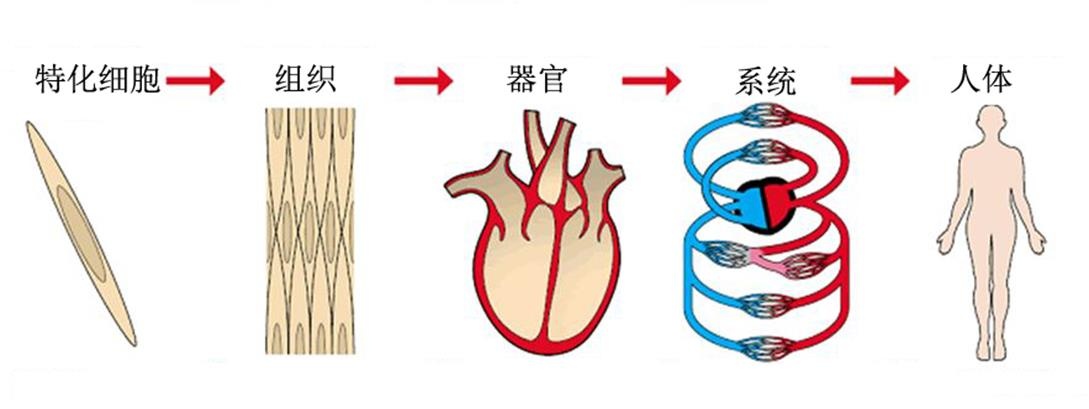
Illustration of Human Body Structure
Since cells are so tiny—too small to be seen without a microscope—it’s difficult for us to grasp their true scale. However, we can still appreciate their presence through the subtle details of everyday life: for instance, our ability to smell odors relies on the function of olfactory cells, while our capacity to see images depends on the role played by pigment cells in the retina. And those pesky dandruff flakes you deal with? They’re simply clusters of dead epithelial cells!
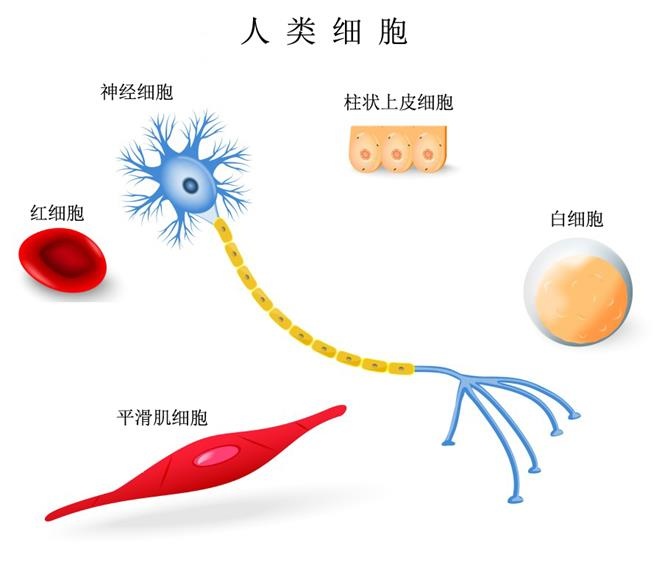
Cell Diagram
The lifespan of cells that make up the human body varies widely—some can survive throughout a person’s entire life, like nerve cells, while others last only a few days—or even less, such as intestinal epithelial cells and red blood cells. When these cells die, they need to be replaced by newly formed ones to ensure the body maintains its normal physiological functions. But where do these new cells come from? The answer is stem cells—these are the source of all other cells in the body. Adult stem cells exist in very low numbers within various tissues, serving as a reserve pool of cells ready to replenish damaged or aging tissue. Stem cells possess two remarkable abilities: first, they can divide and multiply while retaining their own unique characteristics; and second, they can differentiate into specialized functional cells, acquiring specific cellular roles and losing their stem cell properties in the process.

Illustration of stem cell self-renewal and differentiation
Related News

Here is the title—h1 placeholder text


Copyright © Jiuzhitang Maker (Beijing) Cell Technology Co., Ltd.
Powered by: 300.cn SEO | Privacy Policy